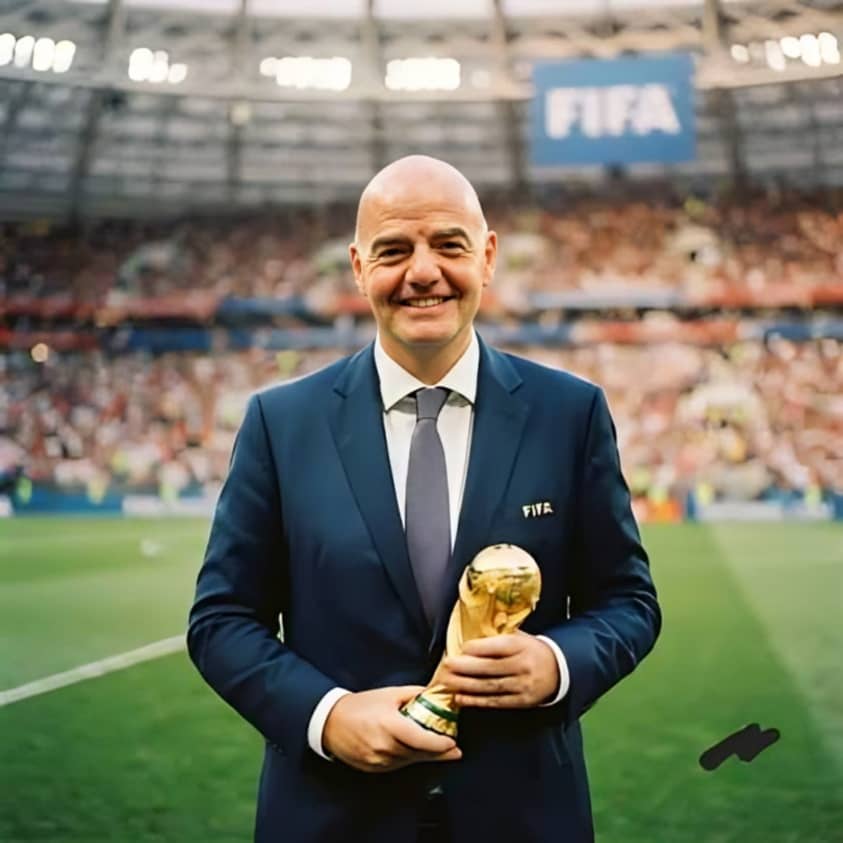

India's relationship with FIFA president Gianni Infantino has attracted attention amid a wider debate within international football over FIFA leadership and the direction of the global game. Despite reported differences among major football confederations, India has maintained a supportive relationship with Infantino, with financial considerations forming an important part of the country's football development strategy.
The All India Football Federation, the governing body for football in India, operates with financial limitations compared with the major football associations in Europe and other established football markets. As a result, international development funding plays an important role in supporting football infrastructure and programmes across the country.
One of the key sources of support is FIFA's Forward development programme. The programme provides financial assistance to member associations for projects designed to develop football at the national and grassroots levels. Funding can support areas such as infrastructure, administration, competitions, technical development and youth football, subject to FIFA's programme requirements.
For India, access to such development funding can be particularly important because the country's football ecosystem requires investment across multiple levels. Stadium infrastructure, training facilities, grassroots programmes, coaching development and youth competitions all require sustained financial resources.
The financial relationship between FIFA and national associations therefore goes beyond direct funding. Development programmes can provide associations with the resources needed to establish long term projects that may otherwise be difficult to finance through domestic revenues alone.
This background helps explain why India's relationship with FIFA leadership is strategically important. Maintaining a constructive relationship with FIFA can help the AIFF access international development programmes and participate effectively in global football structures.
The discussion surrounding Gianni Infantino has gained attention because FIFA's leadership has faced differing views from football organisations in various regions. European football bodies, including UEFA, have at times taken positions that differ from FIFA on governance, competitions and the broader direction of international football.
CONCACAF, the confederation responsible for football in North America, Central America and the Caribbean, is also an influential body within the global football structure. Differences between confederations can create complex political dynamics within FIFA.
India's position must therefore be viewed in the context of its own football development priorities. The AIFF has to balance international relationships with domestic requirements, including the need to strengthen football at the grassroots level and improve the national team's competitiveness.
The financial figures associated with Indian football illustrate the scale of the challenge. A relatively limited domestic budget means that external development support can have a substantial impact on the federation's ability to undertake projects.
FIFA's Forward programme is designed to provide predictable development support to member associations. The funding structure has become an important part of FIFA's strategy to reduce differences in football development between countries with different financial capabilities.
For India, the potential value of such funding extends beyond individual projects. Long term investment in football infrastructure can help create better training environments, improve youth development and provide opportunities for players and coaches.
However, reliance on international funding also creates questions about financial independence. A national federation needs sustainable domestic revenue sources to ensure that football development does not depend excessively on external grants.
India's football authorities have therefore faced the challenge of expanding domestic commercial opportunities while also making effective use of international development programmes.
The country's large population represents a significant potential market for football. However, converting that potential into sustainable football revenue requires investment in leagues, broadcasting, sponsorship, grassroots participation and professional infrastructure.
The relationship with FIFA is consequently important from both a financial and institutional perspective. India benefits from being part of the global football system and from the development opportunities available through FIFA programmes.
The reported financial stakes associated with FIFA funding highlight why the issue has attracted attention. Development support can represent a substantial amount for a federation operating with a comparatively limited budget.
At the same time, political support for FIFA leadership should not be viewed solely through a financial lens. National football federations also consider governance, international relationships, tournament opportunities and the interests of their players and teams when determining their positions within global football.
For India, maintaining influence within FIFA can also provide opportunities to participate in discussions affecting the future of international football. A constructive relationship with FIFA leadership can potentially help the country pursue its long term football objectives.
The broader debate therefore involves more than individual political alliances. It concerns how developing football nations can secure resources, build infrastructure and improve their international competitiveness.
India's continued engagement with FIFA reflects the country's need to strengthen its football ecosystem. Development funding can provide important support, but sustainable progress will ultimately require stronger domestic structures and investment.
The AIFF's financial position makes FIFA's Forward programme particularly relevant. The programme can help bridge funding gaps and support projects that contribute to the development of football across different levels.
As global football politics continue to evolve, India's position within FIFA will remain important. The country will have to balance relationships with international football authorities with its domestic development priorities.
The financial dependence on FIFA development support provides one explanation for India's approach to the organisation and its leadership. However, the long term objective remains the development of a stronger and more sustainable football system in India.
For Indian football, the challenge is to use international funding effectively while gradually building independent sources of revenue. Success in that effort could reduce financial dependence and allow the country's football administration to pursue development projects with greater flexibility.
The debate over India's relationship with Infantino therefore reflects a wider question about the future of Indian football. International support can provide valuable resources, but the ultimate goal is to build a football ecosystem capable of sustaining itself and competing more effectively on the global stage.