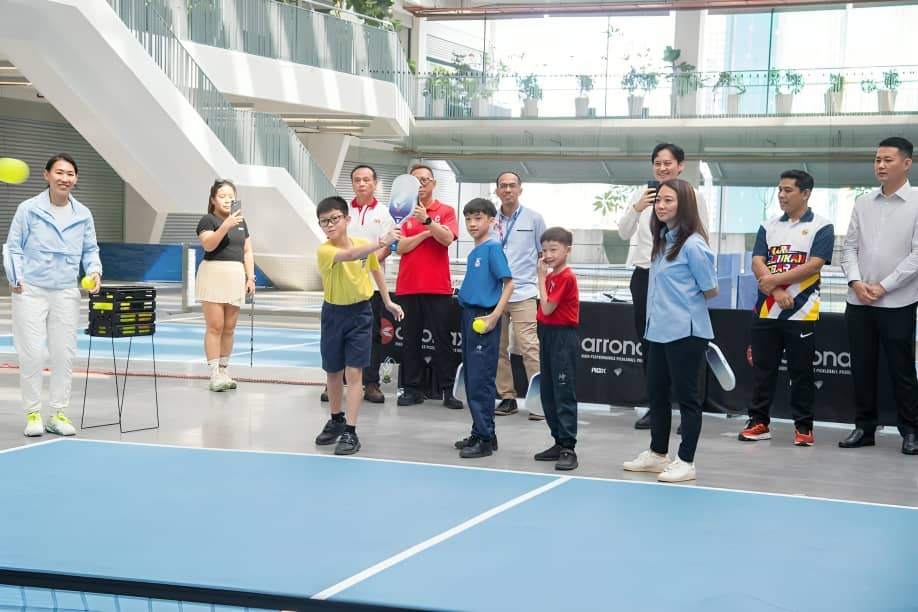
Malaysia has rolled out a nationwide initiative to introduce pickleball to primary school students, marking a major effort to tackle rising screen time and declining physical activity among children. The programme, launched in Kuala Lumpur, provides students with free weekday access to the sport, including professional-grade courts and structured coaching sessions. Backed by the Ministry of Youth and Sports and developed as part of a public-private partnership, it represents one of the most comprehensive school-linked pickleball efforts in Asia.
The initiative comes amid growing concern among policymakers about inactivity during school hours, a period when many students spend prolonged time sitting and using digital devices. By integrating pickleball into the school routine, authorities aim to make movement and physical activity a standard part of the day rather than an optional extracurricular activity.
Unlike programmes designed to identify elite athletes, Malaysia’s approach focuses on accessibility, participation, and engagement. Every child, regardless of skill level, can participate, ensuring that the benefits of physical activity are widely available. Coaches guide students through drills, games, and structured lessons, making it easy for beginners to learn the sport while maintaining an element of fun.
Pickleball, a paddle sport that blends elements of tennis, badminton, and table tennis, has grown in popularity globally due to its simplicity and adaptability. Its fast pace and shorter court size make it suitable for children and beginners, while still offering opportunities for skill development and competitive play. Malaysian authorities have chosen the sport because of its potential to encourage teamwork, coordination, and cardiovascular exercise within a school-friendly framework.
The programme has been introduced during the spring season, ensuring that outdoor and indoor courts are accessible to all students. Schools across Kuala Lumpur and other regions participating in the initiative can schedule sessions during weekdays, making the sport a regular feature of students’ daily routines. Officials hope this will gradually reduce sedentary habits and establish lifelong patterns of physical activity.
Education experts have praised the initiative for its inclusive and health-focused approach. By embedding sports into daily school schedules, it aims to counterbalance the increasing hours children spend on mobile phones, tablets, and computers. The initiative also helps to create a sense of community, with students learning to cooperate and compete in a structured yet enjoyable environment.
Looking ahead, the Ministry of Youth and Sports plans to expand the programme to more schools across Malaysia, monitoring participation and engagement while exploring additional ways to promote physical activity in primary education. By making pickleball a regular part of the school experience, the initiative seeks to position exercise as a natural part of children’s daily routines rather than a peripheral activity.
This school-linked approach highlights Malaysia’s commitment to addressing childhood inactivity and screen dependence through innovative and inclusive sports programmes, positioning pickleball as a key tool in fostering healthy habits among the nation’s youth.