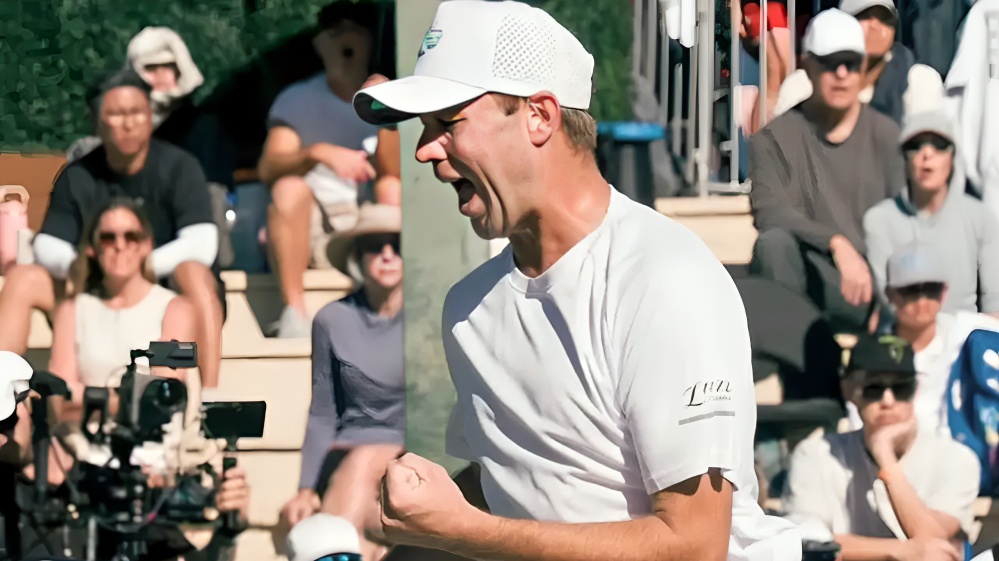
The recently concluded PPA Pickleball Indoor National Championships at Life Time Lakeville in Minnesota witnessed a significant shift in competitive dynamics, as a new generation of players delivered a string of surprising results. The tournament became a showcase for emerging talent, with young competitors challenging and defeating seasoned professionals across multiple categories.
Among the most talked-about performers was 14-year-old Camden Chaffin, whose impressive run to the quarterfinals stood out as one of the defining stories of the event. Competing against more experienced opponents, Chaffin displayed maturity beyond his years, combining sharp shot selection with calm decision-making under pressure. His performances earned praise from players and spectators alike, reinforcing the belief that pickleball’s future is being shaped by an increasingly young and fearless talent pool.
The Indoor Nationals featured intense competition from the opening rounds, with several top-seeded players facing early exits. These upsets underlined the growing depth of the sport, where rankings no longer guarantee progression deep into tournaments. Young athletes, many of whom have trained extensively in both singles and doubles formats, demonstrated adaptability and confidence against higher-ranked opponents.
Pickleball officials and analysts noted that the indoor setting added an additional layer of challenge, requiring precise control, quick reflexes, and strategic awareness. Younger players appeared comfortable with the fast-paced conditions, often using aggressive net play and consistent baseline rallies to unsettle their rivals. This approach proved effective throughout the championship, particularly in matches where experience alone was not enough to secure victory.
Camden Chaffin’s journey through the tournament symbolised a broader trend within the sport. His ability to compete at a high level against established professionals highlighted the success of youth development programmes and the increasing popularity of pickleball among younger athletes. Coaches present at the event pointed out that early exposure to competitive environments is accelerating skill development and raising overall playing standards.
Beyond individual performances, the tournament reflected pickleball’s evolving competitive landscape. With more young players entering professional circuits, matches are becoming faster and more unpredictable. This shift is pushing veteran players to adapt their strategies and physical preparation to stay competitive.
Organisers described the championships as one of the most competitive editions to date, citing close matches, dramatic turnarounds, and strong spectator engagement. The results reinforced pickleball’s growing appeal as a dynamic sport capable of producing fresh storylines and emerging stars at every major event.
As the PPA Tour continues, attention will remain on players like Camden Chaffin and other young competitors who have proven they can compete at the highest level. Their performances at the Indoor Nationals suggest that the next phase of professional pickleball will be defined by youthful energy, fearless competition, and a rapidly expanding talent base.