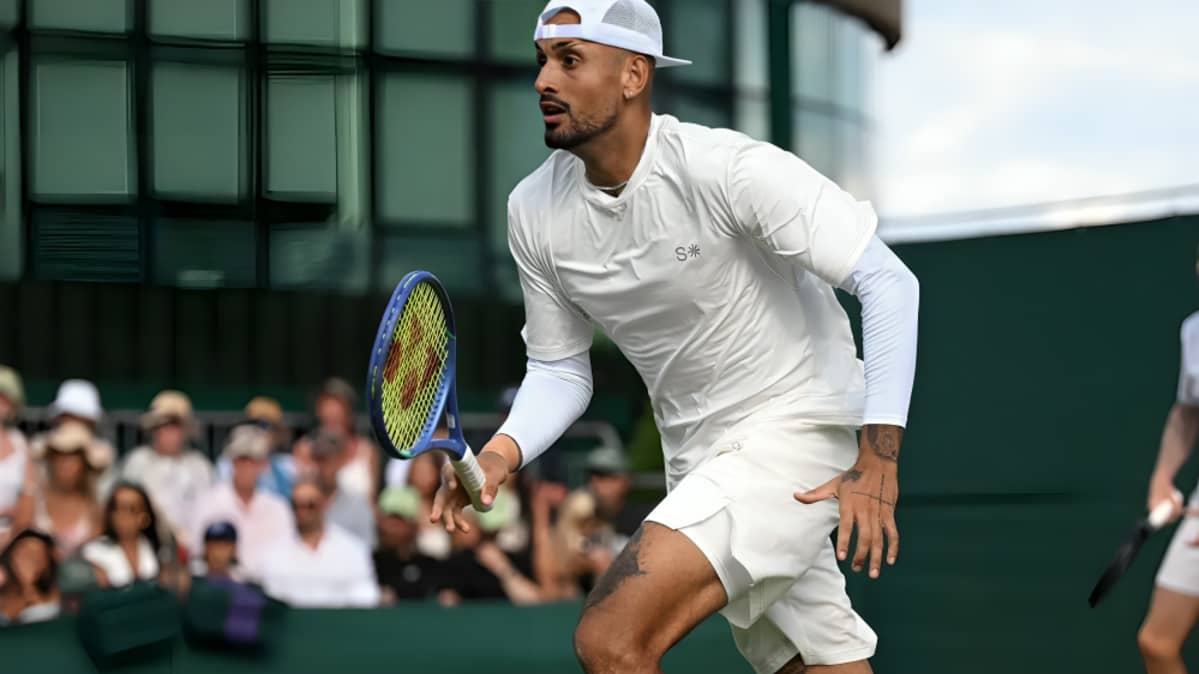
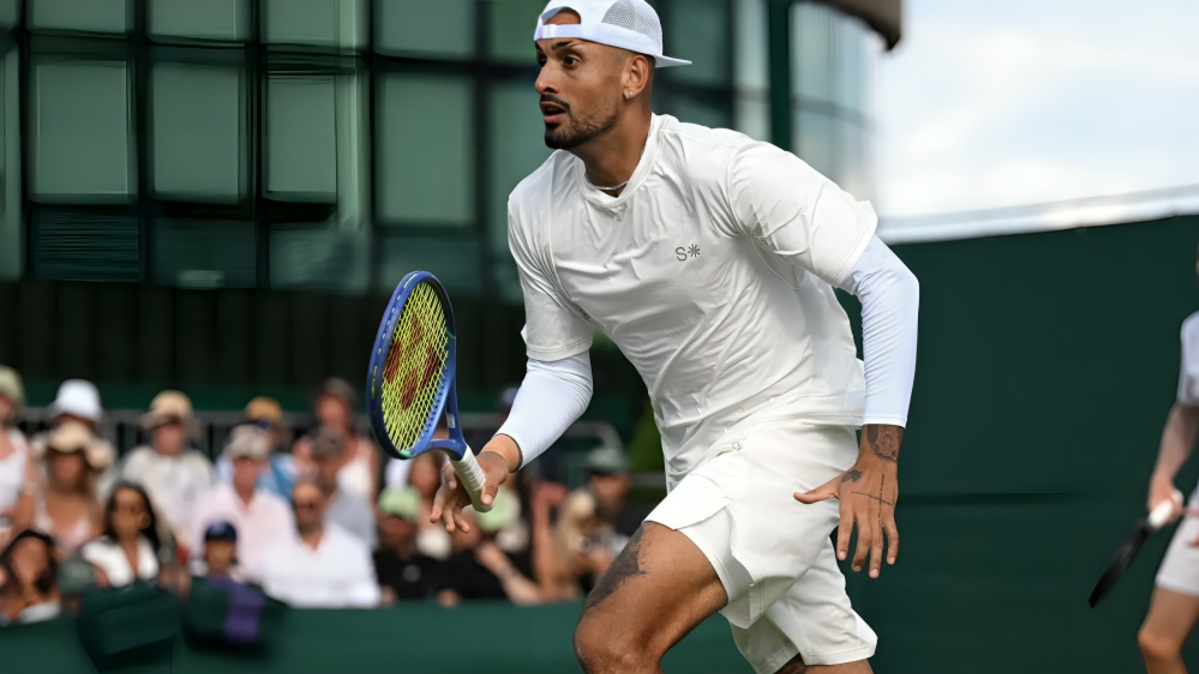
Australian tennis player Nick Kyrgios has been cleared to return to competitive tennis after serving a reduced one-month suspension following a positive test for a cocaine metabolite. The decision was announced by the International Tennis Integrity Agency, which accepted that the substance was used outside competition and applied the relevant provisions of tennis anti-doping regulations.
The case relates to a sample provided by Kyrgios during an ATP 250 tournament in Mallorca, Spain, on June 22, 2026. According to the ITIA, a World Anti-Doping Agency accredited laboratory confirmed on July 17 that the sample contained benzoylecgonine, a metabolite of cocaine. Cocaine is classified as a substance of abuse on the WADA Prohibited List and is prohibited in competition under the Tennis Anti-Doping Programme.
Kyrgios was provisionally suspended from August 4 while the case was being considered. At the time, the Australian tennis player acknowledged the incident and described his conduct as a serious mistake.
Under the applicable anti-doping rules, the standard sanction for an in-competition violation involving a substance of abuse can be different when an athlete establishes that the substance was used outside competition. In Kyrgios's case, the ITIA accepted his explanation that the cocaine had been used socially during a night out before he was scheduled to compete in Mallorca. An independent scientific expert also considered the level of the substance detected in the sample consistent with his explanation.
The ITIA initially imposed a three-month period as the applicable sanction after determining that the use occurred outside competition. However, Kyrgios entered an approved treatment programme, which allowed the suspension to be reduced to one month under the rules.
The ITIA confirmed that the suspension ended on September 3, 2026, subject to completion of the treatment programme. As a result, Kyrgios became eligible to compete again from September 4.
The decision does not mean that the positive test was dismissed. Kyrgios accepted the one-month suspension, and the anti-doping authority formally recorded the sanction. The reduction was connected to the circumstances surrounding the use and his participation in the treatment programme.
The Mallorca tournament will also have consequences for the Australian. The ITIA stated that Kyrgios will forfeit the ranking points and prize money he earned from the event. He had been competing at the ATP 250 tournament when the sample was collected.
The case has attracted significant attention because Kyrgios has had a difficult period on the professional circuit in recent years. Injuries and limited match activity have restricted his appearances, while his return to full competitive tennis has been repeatedly interrupted.
Kyrgios remains one of the most recognisable and unpredictable players of his generation. He reached a career-high singles ranking of world No. 13 in 2016 and has won seven ATP Tour singles titles. His biggest singles achievement came at Wimbledon in 2022, when he reached his first Grand Slam final.
His powerful serve, aggressive baseline game and unconventional playing style have made him a major attraction on the tennis tour. However, his career has also been affected by injuries and periods away from competition.
The latest ITIA decision gives Kyrgios an opportunity to restart his competitive career. His eligibility to return does not necessarily mean that he will immediately play at his previous level. After limited competition, he will need to regain match fitness, confidence and consistency.
Kyrgios has played only a small number of competitive matches during 2026, making his physical preparation an important factor in determining when and where he returns. The Australian has previously spoken about the difficulties of maintaining his body through the demands of professional tennis.
His comeback will therefore involve more than simply being cleared by the anti-doping authority. He will also have to establish his fitness and find a suitable tournament schedule.
The timing of the ruling could allow Kyrgios to focus on the remainder of the 2026 season. However, his exact tournament plans have not been confirmed as part of the ITIA announcement.
The case also highlights the distinction between an anti-doping violation involving prohibited substances and the circumstances in which the substance was used. Cocaine remains a prohibited substance in competition under tennis anti-doping regulations, but the rules provide different sanctions when its use is established to have occurred outside competition.
The ITIA's decision was therefore based on the specific facts of Kyrgios's case rather than a general change to the rules governing cocaine violations.
Kyrgios's public response to the original suspension also formed part of the wider discussion surrounding the case. After the provisional suspension was announced, he acknowledged responsibility for his actions and apologised to those affected by the incident.
The one-month sanction is considerably shorter than the maximum penalty Kyrgios could have faced under anti-doping regulations. Reports noted that he could initially have faced a significantly longer suspension depending on how the case was assessed. The eventual outcome followed the ITIA's acceptance that the use occurred outside competition and Kyrgios's agreement to participate in treatment.
The decision means that the immediate uncertainty over Kyrgios's eligibility has been resolved. He is now permitted to compete, although his ranking position and tournament opportunities will remain important challenges.
For a player who has spent significant time away from the tour, returning to competition can be difficult. Match rhythm is particularly important in professional tennis, where players need regular competitive exposure to maintain timing, movement and endurance.
Kyrgios will also need to manage expectations. His previous success, including his Wimbledon final appearance, means that fans will naturally expect him to produce the explosive tennis that made him one of the sport's most popular figures.
At the same time, his recent injury history means that a cautious approach may be necessary. A gradual return could help him rebuild physical conditioning before attempting a demanding full tournament schedule.
The ITIA decision has therefore provided Kyrgios with an opportunity rather than a guarantee of an immediate return to top-level success.
The Australian's future on the ATP Tour will now depend on his fitness, tournament planning and ability to regain competitive form. His eligibility is no longer the primary obstacle, but his performance on court will determine whether he can return to the level he reached earlier in his career.
The case also serves as a reminder of the responsibilities professional athletes have under anti-doping rules. Players are required to understand the regulations governing prohibited substances and the distinction between in-competition and out-of-competition use.
For Kyrgios, the focus now shifts from the disciplinary process back to tennis. After completing the relevant suspension and treatment requirements, he is free to prepare for his next competitive appearance.
His return will be closely followed by tennis fans because of his unique playing style and previous Grand Slam success. Whether he can remain healthy and regain his best form will be one of the major questions surrounding the remainder of his career.
The latest development can therefore be viewed as a fresh opportunity for Kyrgios. The one-month suspension has been completed, the ITIA has confirmed his eligibility to compete, and the Australian can now concentrate on rebuilding his professional tennis career.