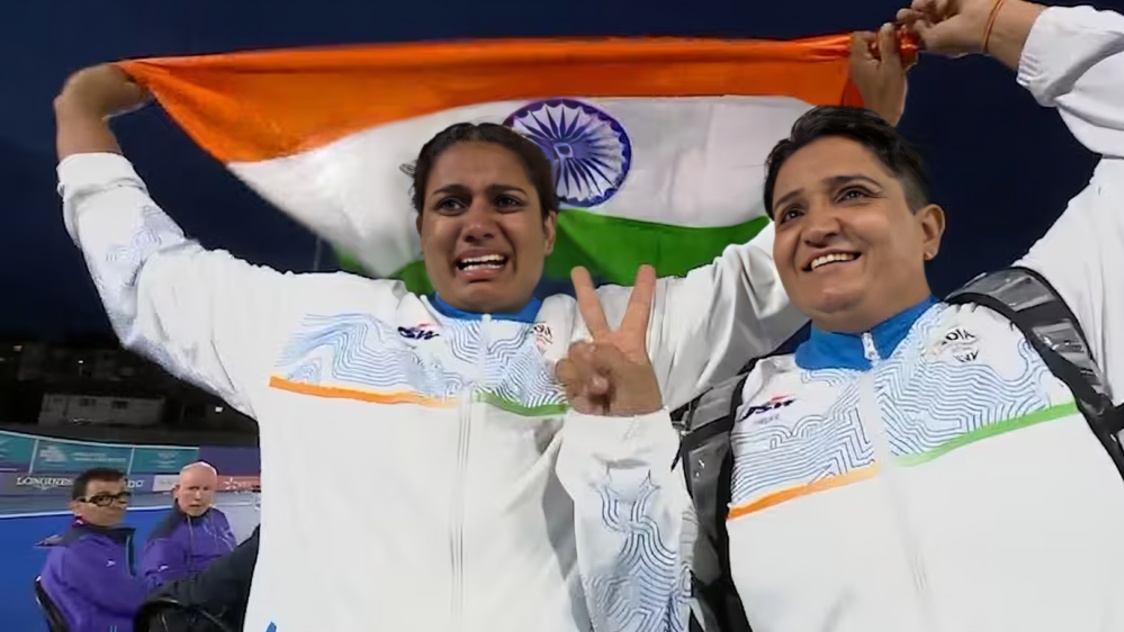
India's para-athletes continued their impressive run at the Commonwealth Games 2026, producing a landmark performance in Glasgow as Sharmila Dhankar claimed a historic gold medal and Shilpa K. Shyla secured a bronze medal in the women's F57 shot put event. The achievement marked one of India's finest moments at the Games and highlighted the growing strength of the country's para-athletics programme.
Sharmila Dhankar created history by becoming India's first Commonwealth Games para-athletics gold medallist. Her winning throw in the women's F57 shot put final earned her the top spot on the podium, making it a memorable occasion for the Indian contingent. The gold medal also reflected years of dedication, perseverance, and consistent performances at the national and international levels.
Adding to India's success, Shilpa K. Shyla delivered an impressive performance to claim the bronze medal in the same event. Her podium finish ensured a double celebration for India and demonstrated the depth of talent among the country's para-athletes. Winning two medals in a single para-athletics event underlined India's growing competitiveness on the international stage.
The medal-winning performances received congratulations from President Droupadi Murmu, Prime Minister Narendra Modi, Union Sports Minister Mansukh Mandaviya, and several other leaders, who praised the athletes for bringing pride to the nation. Their achievements were widely celebrated across the sporting community, with officials describing the victories as an inspiration for aspiring para-athletes throughout India.
India's success in para-athletics came during one of the country's strongest days at the Commonwealth Games. Along with medals in athletics and weightlifting, the performances by Sharmila Dhankar and Shilpa K. Shyla helped India improve its position in the overall medal standings. The country's growing medal tally reflects consistent performances across multiple sporting disciplines.
Para-athletics has witnessed remarkable progress in India over the past decade through improved coaching facilities, better training infrastructure, and increased participation in international competitions. Indian para-athletes have consistently delivered medal-winning performances at the Paralympic Games, World Championships, Asian Para Games, and now the Commonwealth Games, demonstrating the country's emergence as a strong force in adaptive sports.
Sports administrators have credited the success to sustained investment in athlete development, scientific training methods, and expanded support systems for para-sport competitors. These initiatives have enabled Indian athletes to compete confidently against some of the world's best performers.
The historic gold medal by Sharmila Dhankar is expected to encourage greater participation in para-athletics across India and inspire the next generation of athletes. Likewise, Shilpa K. Shyla's bronze medal serves as another example of the determination and excellence displayed by Indian para-sport athletes on the international stage.
With more events remaining at the Commonwealth Games 2026, the Indian contingent will aim to build on this momentum and add further medals in the coming days. The performances of Sharmila Dhankar and Shilpa K. Shyla will remain among the defining highlights of India's campaign, symbolizing resilience, excellence, and sporting achievement.