The selection of India’s tennis squad for the 2026 Asian Games has triggered a growing debate between sports authorities and the tennis fraternity. The controversy centres on the exclusion of five players from the final Indian contingent and conflicting claims over whether their names were included in the recommendation submitted by the All India Tennis Association.
The five players involved are Manas Dhamne in men’s singles, Vaishnavi Adkar and Sahaja Yamalapalli in women’s singles, and Vaidehee Chaudhari and Prarthana Thombare in women’s doubles.
A Sports Authority of India source has said that these players were not part of the shortlist submitted by AITA to the Indian Olympic Association. According to the source, their rankings did not satisfy the selection requirements laid down by the Sports Ministry for the Asian Games.
However, the All India Tennis Association has rejected this version of events. AITA has maintained that it did seek the inclusion of the players and said that any suggestion that the association failed to recommend them was incorrect. The tennis body referred to its written representation to the Indian Olympic Association dated July 3, 2026.
The conflicting statements have added another layer to an already contentious selection process.
Why Were Five Players Excluded
The Sports Ministry has introduced specific selection criteria for participation in major multi-sport events such as the Asian Games. The policy was announced in September 2025 with the stated objective of creating a transparent and equitable framework and focusing on athletes considered to have a realistic medal opportunity.
For tennis, the criteria require individual players to meet prescribed continental ranking benchmarks. Singles players need to be among the top six in Asia, while doubles players are required to be within the top eight over the specified 12-month evaluation period.
The government has maintained that the criteria should be applied consistently rather than making individual exceptions.
The Sports Ministry has therefore defended its decision despite criticism from sections of the tennis community.
Rohan Bopanna Questions the Decision
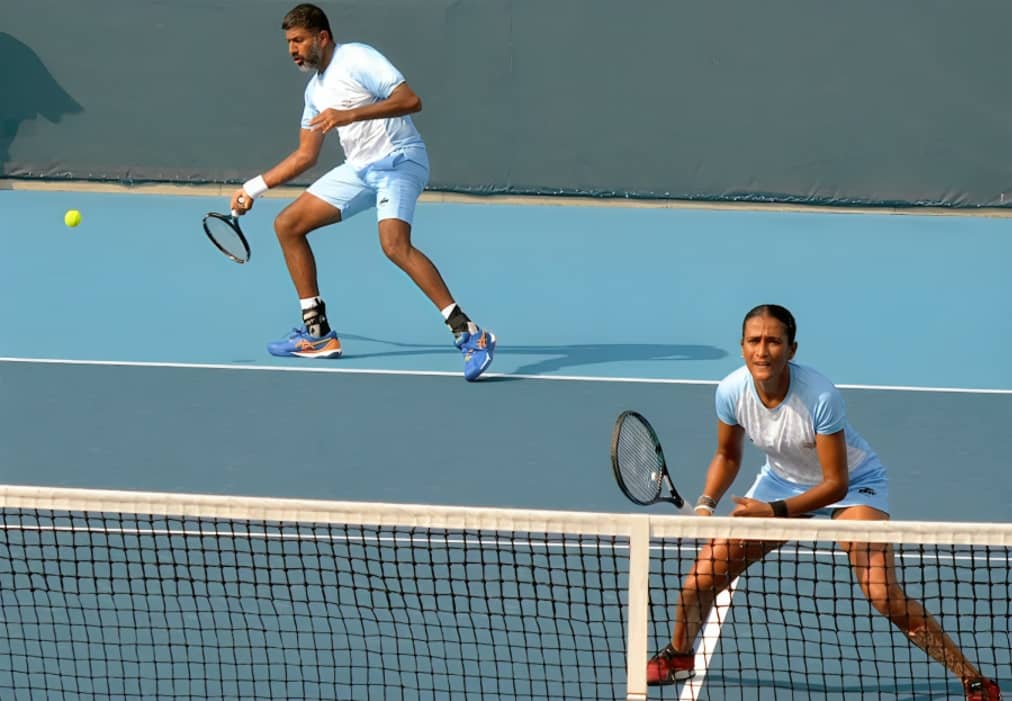
Two-time Asian Games gold medallist Rohan Bopanna has strongly criticised the changes made to the tennis squad.
Bopanna argued that players should have an opportunity to demonstrate their ability on the court rather than having their participation determined entirely through administrative calculations.
His criticism has brought greater attention to the broader debate about the purpose of the Asian Games.
One side of the argument focuses on medal prospects and selection discipline, while the other highlights the importance of exposure and development for emerging athletes.
Bopanna has questioned whether a ranking-based system can fully assess the potential of players, particularly those who are still developing their international careers.
Sports Ministry Defends Selection Policy
The Sports Ministry has maintained that the criteria were established well before the current controversy and should not be changed under pressure.
The government argues that major multi-sport events should primarily feature athletes with a realistic chance of competing effectively for medals.
Officials have also indicated that athletes who do not meet the Asian Games criteria can continue to gain international experience through other competitions, including International Tennis Federation and Challenger-level events.
The position is intended to ensure that selection decisions remain consistent across different sports and do not become dependent on individual requests.
The Ministry's selection framework was specifically created to provide measurable standards for participation in major multi-sport events.
Five Players at the Centre of the Dispute
Manas Dhamne is one of the players affected by the decision. The young men's singles player has already competed at Challenger level and has attracted attention as a promising Indian tennis prospect.
Vaishnavi Adkar and Sahaja Yamalapalli were left out of the women's singles selections. Their exclusion has attracted particular attention because both are among India's leading women's singles players.
Vaidehee Chaudhari and Prarthana Thombare were affected in the women's doubles category.
Prarthana has previous Asian Games experience, having won a bronze medal at the 2014 edition.
The absence of these players has therefore generated questions about India's overall tennis representation at the upcoming Games.
India’s Final Tennis Squad
The final Indian tennis contingent consists of seven players.
Sumit Nagal is the country's representative in men's singles. Ramkumar Ramanathan, Saketh Myneni and Yuki Bhambri are included for doubles events.
Rutuja Bhosale and Ankita Raina make up the women's contingent.
One notable feature of the selection is the absence of an Indian player in the women's singles event.
The reduced squad has consequently become a major talking point within Indian tennis circles.
AITA and SAI Present Different Versions
The dispute has now moved beyond the question of rankings and into the issue of the selection process itself.
According to the SAI version, the five players were never part of the shortlist submitted by AITA to the IOA because they did not satisfy the required criteria.
AITA has rejected that assertion and said it had actively sought the inclusion of the players.
The two positions create a significant difference in how the public understands the selection process.
If the players were never formally recommended, the responsibility for their exclusion would largely lie with the recommendation process. If AITA did recommend them, the focus would instead shift towards the decision taken after the list reached the government and the Indian Olympic Association.
The conflicting claims have therefore made transparency an important part of the debate.
Why the Asian Games Matter
The Asian Games are one of the most important multi-sport competitions for athletes in the region.
For emerging players, participation can provide valuable experience against strong continental competition.
This is one of the key arguments made by Bopanna and other critics of the selection decision. They believe that athletes who may not yet have the rankings to be considered medal favourites can still benefit from participating in a major event.
The Sports Ministry takes a different approach, arguing that the Asian Games should not primarily be treated as an exposure event.
The disagreement therefore represents two different philosophies of sports development.
One prioritises immediate medal potential and measurable performance indicators. The other places greater emphasis on long-term development and providing opportunities to promising athletes.
Broader Debate Over Sports Selection
The controversy also raises a broader question about how India should select athletes for major international competitions.
Objective criteria can provide consistency and reduce arbitrary decision-making. At the same time, critics argue that rankings alone may not capture an athlete's development, current form, potential or ability to perform in a specific competition.
The Ministry has stressed that its criteria were introduced to create a transparent framework across multiple sports.
The policy applies to Asian Games and other multi-sport events, while the Olympics are treated differently because participation there is generally determined by qualification standards established by international federations.
What Happens Next
With the Asian Games approaching, the focus is likely to remain on whether the tennis selection dispute can be resolved.
The 2026 Asian Games are scheduled to take place in Aichi-Nagoya, Japan, from September 19 to October 4.
The final squad has already been announced, but the disagreement between AITA and sports authorities has kept the tennis selection issue in the spotlight.
The Sports Ministry has so far remained firm on its criteria, while AITA has continued to dispute the claim that the five players were not part of its recommendations.
Rohan Bopanna's intervention has also ensured that the debate has received significant attention from the wider sporting community.
The controversy is now not simply about five players missing the Asian Games. It has become a discussion about the balance between rankings, medal potential, athlete development, administrative consistency and the role of national sports bodies in recommending players.
For Indian tennis, the outcome could influence future discussions about how athletes are selected for major multi-sport competitions.
Until the competing claims are fully clarified, the selection dispute is likely to remain a significant talking point ahead of the Aichi-Nagoya Asian Games.