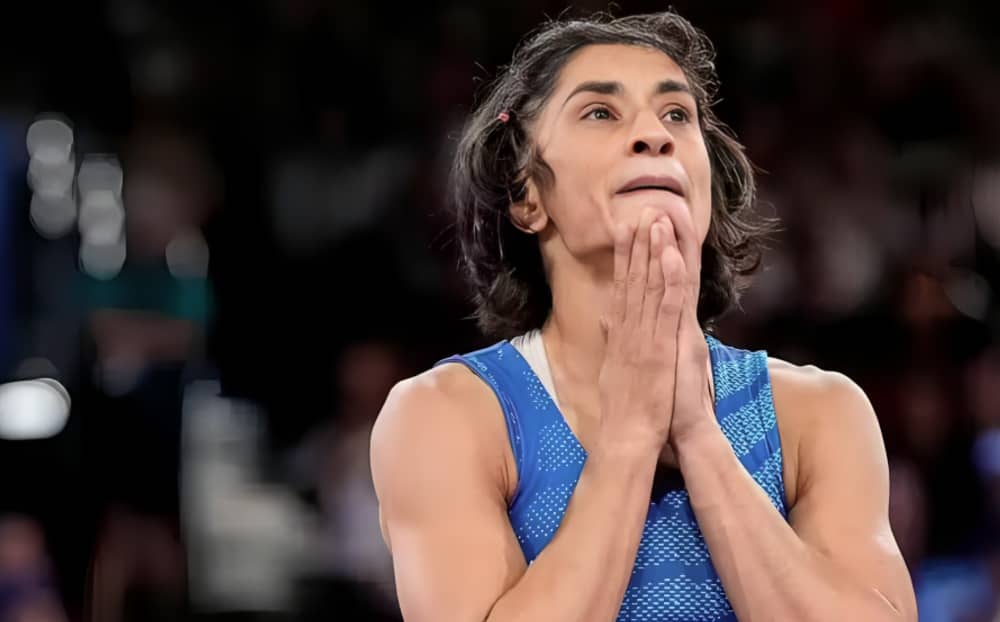

Indian wrestler Vinesh Phogat has reacted to the recent Delhi court judgment acquitting former Wrestling Federation of India President Brij Bhushan Singh in a sexual harassment case. Following the verdict, Phogat stated that the wrestlers who had raised allegations against the former federation chief would continue their fight through legal and democratic processes.
Speaking after the court's decision, Vinesh Phogat expressed disappointment with the outcome but emphasized that the legal verdict would not end the efforts of the athletes who had sought justice. She said the wrestlers remain committed to pursuing their concerns through lawful and constitutional means.
The Delhi court delivered its judgment after hearing the case and examining the evidence presented during the proceedings. According to the court, the available evidence did not establish the charges beyond the required legal standard, resulting in the acquittal of Brij Bhushan Singh. An acquittal means the accused has been found not guilty of the charges in that proceeding. It does not, by itself, determine broader public or personal claims outside the court's findings.
The case attracted nationwide attention after several women wrestlers made allegations against Brij Bhushan Singh, leading to prolonged protests by leading Indian athletes. The demonstrations brought significant public focus to issues relating to athlete safety, sports administration, and mechanisms for addressing complaints within sporting organisations.
During the protests, prominent wrestlers, including Vinesh Phogat, Sakshi Malik, and Bajrang Punia, demanded an independent investigation and reforms in the governance of Indian wrestling. Their demonstrations received support from sections of the sporting community, civil society groups, and political leaders, while others called for the matter to be resolved through the judicial process.
Following the allegations, law enforcement authorities conducted an investigation, recorded statements from witnesses, and filed the case before the court. The trial proceeded through the legal process, with both the prosecution and the defence presenting their evidence and arguments before the court delivered its verdict.
After the judgment, Vinesh Phogat reiterated that the athletes respected the judicial process but believed their campaign for accountability and institutional reforms should continue. She said the movement had always been about ensuring a safer and more transparent environment for present and future athletes.
Brij Bhushan Singh has consistently denied the allegations against him throughout the proceedings. Following the court's verdict, his supporters welcomed the acquittal, stating that the judicial process had reached its conclusion based on the evidence placed before the court.
Legal experts note that any party dissatisfied with a trial court judgment may have legal remedies available under Indian law, including the possibility of filing an appeal before a higher court, subject to applicable legal procedures and timelines.
The case has also prompted wider discussions about governance in Indian sports, athlete welfare, grievance redressal mechanisms, and the importance of fair investigations into complaints involving sports administrators. Sports bodies and policymakers have continued to discuss measures aimed at strengthening institutional safeguards and improving athlete protection.
Vinesh Phogat remains one of India's most accomplished wrestlers, having represented the country at major international competitions, including the Olympic Games, World Championships, Asian Games, and Commonwealth Games. Throughout her career, she has won multiple medals and has been a prominent voice on issues affecting athletes.
The Delhi court's judgment marks an important legal milestone in the case, but the broader debate surrounding athlete safety, administrative accountability, and reforms in Indian sports is expected to continue. Stakeholders across the sporting community are likely to closely follow any further legal developments and policy initiatives arising from the case.