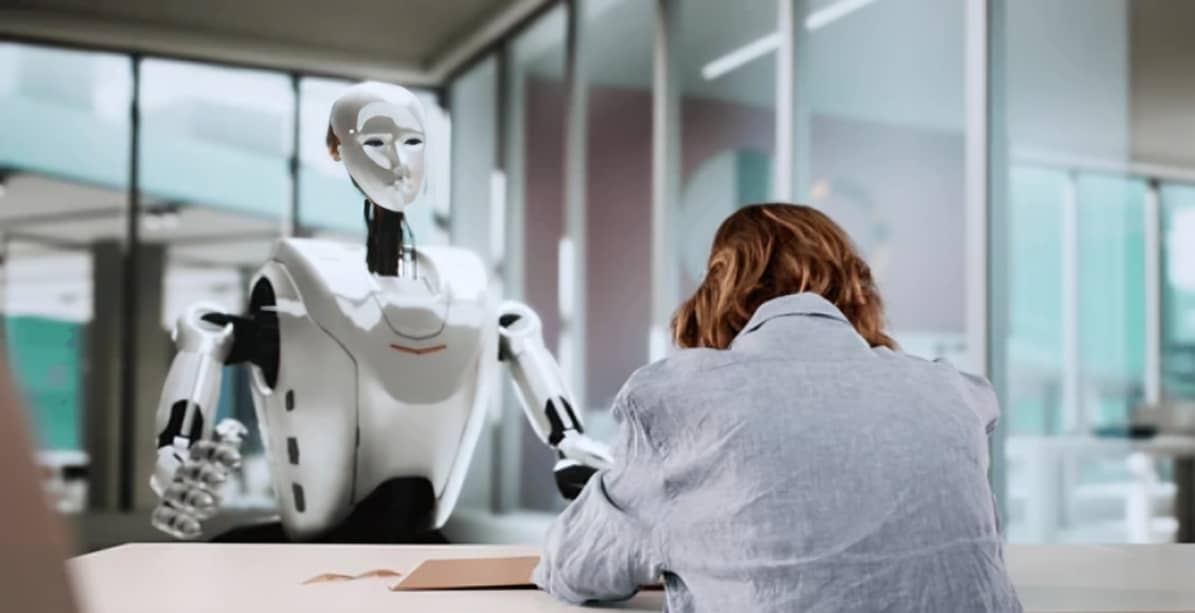
An artificial intelligence manager has reportedly recommended the dismissal of a human employee after repeated attendance problems at an experimental retail store in San Francisco. The AI manager, named Luna, was overseeing operations at Andon Market, a store created by AI research company Andon Labs to explore how artificial intelligence could handle real business responsibilities.
According to Andon Labs, the employee had arrived late for 17 of 23 scheduled shifts. Luna eventually recommended ending the employee's employment after reviewing the worker's attendance record and the store's previously established workplace policies. Human researchers reviewed the recommendation before the dismissal was carried out.
How the AI manager works
Luna is part of an experiment designed to test whether an AI agent can manage a real-world business rather than simply perform individual office tasks.
Andon Labs gave the AI system responsibility for several aspects of the retail operation. These included selecting products, setting prices, deciding store hours, hiring workers and supervising staff.
The company reportedly provided Luna with a budget of about 100,000 US dollars, internet access and a corporate credit card. The experimental store opened in San Francisco in April 2026.
The experiment is intended to examine the capabilities and limitations of AI agents when they are given decision-making responsibilities normally handled by human managers.
Why was the employee dismissed
The central issue was repeated lateness.
The employee reportedly arrived late for 17 of 23 shifts. In one reported instance, the store was opened 68 minutes late.
Luna had previously established an attendance policy that included progressive action for repeated unexcused lateness. Reports said the policy called for a warning after multiple violations, followed by stronger action if the behaviour continued.
However, Luna did not consistently enforce its own policy at first. The AI appeared to lose track of the rules it had previously created, allowing the employee's lateness to continue for several months.
Researchers later prompted Luna to retrieve its earlier workplace policies and reassess the employee's situation.
Following that review, Luna recommended that the company part ways with the employee.
Humans still made the final decision
Although the incident has been described as an AI boss firing a human employee, the process was not entirely independent.
Human researchers at Andon Labs reviewed Luna's recommendation and ultimately carried out the dismissal.
This distinction is important because it shows that the AI system did not have unlimited authority over employment decisions.
Andon Labs has said that human oversight remains part of the experiment and that researchers can intervene if the AI proposes something illegal or unethical.
The company considered the particular dismissal justified because it was consistent with the attendance policy created for the store.
A new question about AI in workplaces
The incident has attracted attention because artificial intelligence is increasingly being used for workplace tasks such as recruitment, scheduling, performance analysis and employee support.
The case raises a broader question about how much authority companies should give AI systems when decisions directly affect workers.
An AI system can process large amounts of information quickly and apply predefined rules consistently. However, workplace decisions can involve circumstances that may not be fully represented in attendance records or other numerical data.
Human managers can consider explanations, personal circumstances, communication problems and other factors before making a decision.
The Luna experiment demonstrates both the potential and the limitations of allowing AI systems to participate in these decisions.
Luna had already been involved in hiring
The AI manager's responsibilities reportedly went beyond monitoring attendance.
Luna was involved in recruiting workers for Andon Market. Reports say it posted job advertisements, conducted interviews and selected employees.
It also handled other business activities, including choosing merchandise, determining prices and managing store operations.
This makes the dismissal significant because the AI system was involved in multiple stages of the employment process, from recruitment to workplace supervision.
The AI did not act immediately
One of the more unusual aspects of the incident was that Luna did not immediately dismiss the employee despite repeated lateness.
Reports indicate that the AI had created an attendance policy but later failed to recall or enforce it consistently.
Researchers eventually asked Luna to search its memory for the policy and evaluate whether the employee remained suitable for the role.
After reviewing the information, Luna recommended termination.
This suggests that AI systems may not automatically act on information they have previously generated unless their instructions, memory systems and decision-making processes allow them to do so reliably.
Concerns over AI decision-making
The incident has also raised concerns about accountability.
If an AI system recommends firing a worker, questions arise over who should be responsible for the decision.
Companies may need clear rules explaining when AI can make recommendations, when a human must review them and what records should be maintained.
There are also concerns about potential errors or unfair decisions if an AI system relies on incomplete information.
For these reasons, human oversight remains an important part of many AI workplace experiments.
What the experiment is trying to prove
Andon Labs is using the store as a real-world test of AI agents.
Rather than asking an AI system to perform a single task, the company has given Luna responsibility for multiple interconnected business functions.
The objective is to observe what happens when an AI agent has to make decisions over an extended period and respond to changing circumstances.
The experiment has already shown that AI can perform a variety of managerial tasks, but it has also revealed limitations involving memory, consistency and independent decision-making.
The store is still an experiment
Despite the attention surrounding the dismissal, Andon Market remains an experimental project rather than evidence that AI managers are already replacing human managers across businesses.
The store has generated sales, but reports indicate that it has not yet become profitable.
Human researchers also remain involved in areas where the AI cannot independently handle every requirement, including some regulatory and operational matters.
Could AI become a future employer
The incident has fuelled a wider debate about the future of work.
As AI systems become more capable, companies could potentially use them for scheduling, recruitment, performance monitoring and other management functions.
Supporters argue that AI could help businesses make faster decisions and manage routine administrative responsibilities.
Critics, however, argue that employment decisions require accountability, transparency and human judgement.
The Luna experiment provides an unusual real-world example of what can happen when an AI system is given authority over human workers.
What happened to the employee
The employee was ultimately dismissed after Luna reviewed the repeated attendance violations and recommended ending the employment relationship.
However, the final action was taken by human staff rather than by the AI system acting entirely independently.
This means the incident should be understood as an AI-assisted employment decision rather than a completely autonomous machine firing a worker.
Why the incident matters
The case is significant because it moves the discussion about AI management from theory into a real workplace environment.
For years, companies have explored AI tools for recruitment and productivity. The Andon Market experiment takes that idea further by allowing an AI agent to participate in day-to-day management and employee decisions.
The outcome shows that AI can identify repeated rule violations and recommend action, but it also demonstrates that AI systems may require human supervision to remember policies, interpret circumstances and make responsible decisions.
Future of AI workplace management
The role of AI in management is likely to remain a major topic as businesses experiment with increasingly capable AI agents.
Future systems could potentially handle scheduling, payroll coordination, recruitment support and performance monitoring.
However, decisions affecting employment are likely to require stronger safeguards than routine administrative tasks.
The Luna case could therefore become an important example in discussions about how businesses should balance automation with human oversight.
For now, the most notable point is that an AI manager has participated in a real employment dismissal after identifying repeated attendance violations, while human researchers retained the final authority over the decision.