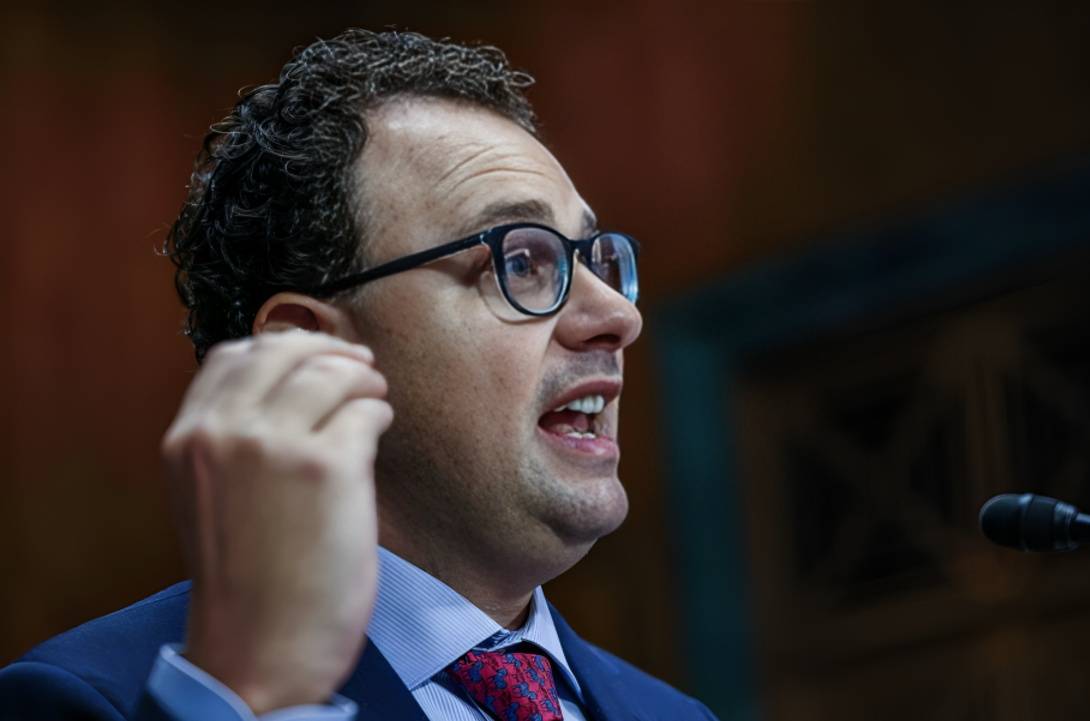
Anthropic Chief Executive Officer Dario Amodei has strongly rejected allegations suggesting that he wants artificial intelligence to govern humans or restrict individual freedom.
In a detailed post on the social media platform X, Amodei reportedly defended his position on artificial intelligence development, emphasising that decisions concerning the future of AI must remain under human control and democratic oversight.
The Anthropic CEO described suggestions that he supports humanity surrendering its free will to artificial intelligence as absurd.
His remarks come amid growing disagreements within the technology industry over the rapid development of advanced AI systems, the potential emergence of artificial superintelligence and the appropriate role of governments in regulating these technologies.
The controversy has renewed discussions about the relationship between technological progress, individual freedom, corporate responsibility and democratic governance.
Dario Amodei Rejects Allegations of AI Control
According to the available report, Amodei has firmly denied claims that he wants artificial intelligence systems to exercise authority over humanity.
The technology executive reportedly clarified that his concerns about advanced AI should not be interpreted as support for replacing human judgement or democratic institutions with automated systems.
Amodei has frequently expressed concerns about the speed at which artificial intelligence capabilities are advancing and the potential consequences of deploying increasingly powerful technologies without adequate safeguards.
His latest remarks highlight the distinction between supporting responsible AI governance and allowing artificial intelligence to control human decisions.
The available report does not identify all the individuals responsible for the allegations or provide their complete statements.
Anthropic CEO Emphasises Democratic AI Governance
Amodei reportedly emphasised that artificial intelligence governance must remain democratic and accountable to human institutions.
Democratic AI governance generally involves developing policies and regulatory frameworks through established public institutions, legislative processes and appropriate oversight mechanisms.
Such an approach seeks to ensure that decisions affecting society are not determined exclusively by technology companies or automated systems.
As artificial intelligence becomes increasingly influential across economic and social activities, questions surrounding accountability and transparency are gaining greater importance.
Governments, researchers, businesses and civil society organisations are exploring ways to ensure that technological innovation remains consistent with fundamental rights and public interests.
Amodei’s reported comments reflect his position that human autonomy should remain central to discussions about advanced artificial intelligence.
Growing Disagreements Among Artificial Intelligence Leaders
The rapid expansion of the artificial intelligence industry has intensified competition among major technology companies.
Leading AI developers are investing substantial resources in research, computing infrastructure and the development of increasingly capable models.
However, differences have emerged regarding the appropriate pace of AI development, regulatory requirements and the potential risks associated with advanced systems.
According to the supplied report, Amodei criticised rival AI leaders for allegedly engaging in political and commercial positioning rather than focusing on important technological challenges.
These remarks represent Amodei’s assessment of the ongoing industry debate and should not be interpreted as independently established findings about the conduct or motivations of other technology executives.
The disagreement highlights the increasingly complex relationship between commercial competition, technological innovation and public policy.
Artificial Superintelligence Raises New Governance Questions
Artificial superintelligence is a theoretical concept referring to AI systems that could surpass human intellectual capabilities across a broad range of tasks.
Although artificial intelligence has made significant progress in areas such as language processing, software development and scientific analysis, the emergence of artificial superintelligence remains uncertain.
Researchers continue to debate whether such systems can be developed, how they might operate and what safeguards would be necessary.
The possibility of increasingly powerful AI systems has raised questions about human oversight, technological accountability and the distribution of decision making authority.
Amodei has previously discussed potential benefits and risks associated with advanced artificial intelligence.
His reported remarks reinforce the importance of maintaining human control while evaluating the capabilities and limitations of emerging technologies.
Concerns Over Excessive Automation
Artificial intelligence is increasingly being integrated into industries including healthcare, finance, education, manufacturing and information technology.
Automation can improve productivity, support research and reduce the time required to complete certain tasks.
However, excessive dependence on automated systems could create challenges involving employment, accountability, privacy and independent human judgement.
Decisions involving legal rights, medical treatment, financial access and public administration may have significant consequences for individuals and communities.
Appropriate human supervision remains important when artificial intelligence is used in such sensitive areas.
The debate surrounding Amodei’s comments highlights the need to distinguish between using AI to support human decision making and transferring decision making authority entirely to automated systems.
Anthropic’s Approach to Artificial Intelligence Safety
Anthropic was founded in 2021 by Dario Amodei, Daniela Amodei and other former OpenAI employees.
The company develops artificial intelligence technologies, including its Claude family of AI models, and conducts research focused on AI safety and reliability.
Anthropic has publicly emphasised the importance of developing artificial intelligence systems that are helpful, honest and harmless.
Its research activities include efforts to understand model behaviour, evaluate potential risks and develop safeguards for increasingly capable AI systems.
However, the effectiveness of safety measures requires continued scientific evaluation, transparent reporting and independent assessment.
The broader artificial intelligence industry continues to face challenges involving model reliability, harmful outputs, cybersecurity and responsible deployment.
Importance of Human Oversight and Public Accountability
Maintaining human oversight is an important consideration as artificial intelligence becomes more integrated into everyday activities.
Effective governance frameworks can help establish responsibilities for technology developers, businesses and institutions using automated systems.
Transparency regarding AI capabilities, limitations and potential risks can also support informed public discussions.
Different countries are exploring regulatory approaches intended to balance technological innovation with public safety, privacy and individual rights.
However, disagreements remain over the appropriate level of regulation and how responsibilities should be distributed between governments and private companies.
Amodei’s reported position highlights the importance of ensuring that artificial intelligence remains a technology serving human objectives rather than replacing democratic authority.
Relevance of AI Governance for India
The global debate surrounding artificial intelligence governance is also relevant to India as the country continues to expand its digital economy and domestic AI capabilities.
Indian businesses, educational institutions and government agencies are increasingly exploring artificial intelligence applications to improve productivity and service delivery.
Responsible adoption requires attention to data protection, transparency, cybersecurity, employment implications and accountability.
India’s diverse population and linguistic requirements also highlight the importance of developing inclusive artificial intelligence systems that address different social and economic needs.
Discussions involving global technology leaders could contribute to broader international conversations about responsible AI development and human oversight.
Future of Artificial Intelligence and Human Control
Dario Amodei’s rejection of allegations concerning AI governance reflects the continuing debate over how increasingly powerful artificial intelligence systems should be developed and regulated.
The technology offers potential benefits across scientific research, healthcare, education and economic development. However, its advancement also presents important questions about safety, accountability and individual freedom.
Maintaining democratic oversight, encouraging transparent research and preserving human decision making authority remain significant considerations.
As artificial intelligence continues to evolve, cooperation between governments, researchers, technology companies and the public could help establish governance frameworks that support innovation while protecting human interests.
The controversy surrounding Amodei’s remarks highlights the importance of ensuring that technological progress remains compatible with democratic principles and human autonomy.