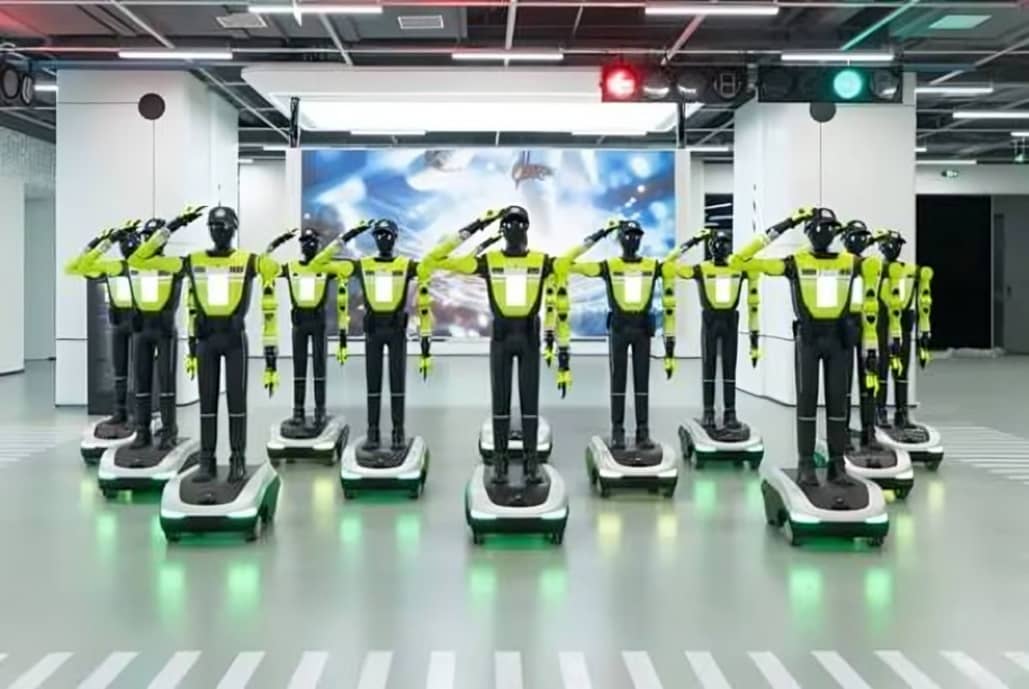
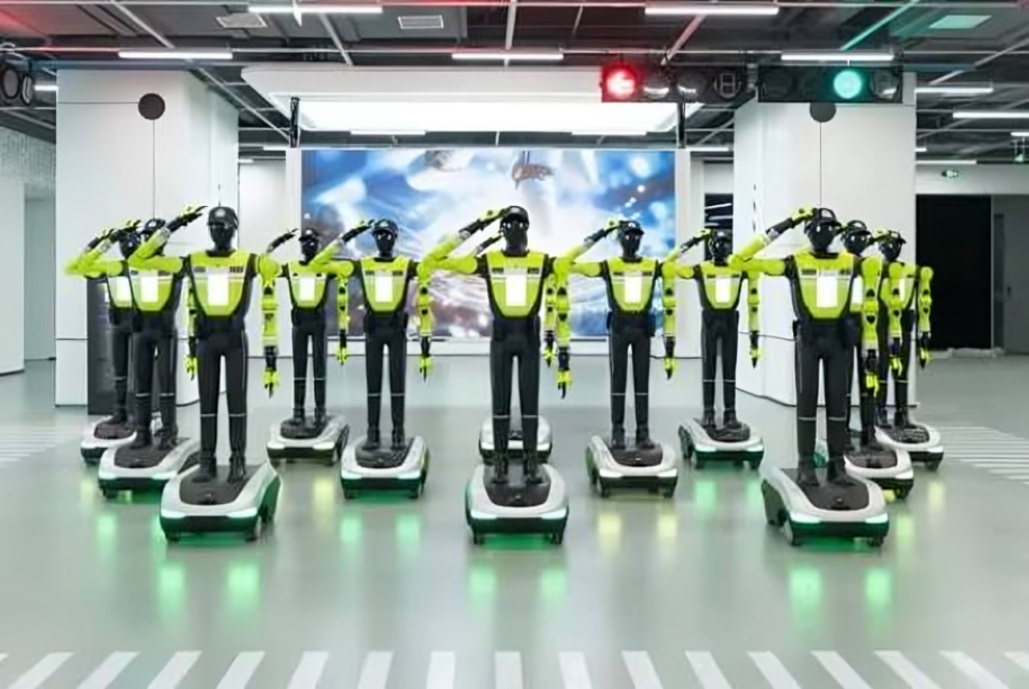
China has expanded the use of artificial intelligence in public services by deploying intelligent traffic management robots in Hangzhou, a major technology hub in Zhejiang province.
The robots are being used to support traffic police with routine tasks such as monitoring road conditions, guiding pedestrians and vehicles, and warning people about certain traffic violations. The initiative is part of a broader effort to use robotics and artificial intelligence in practical urban services.
A group of 15 intelligent traffic management robots has been deployed at important locations in Hangzhou, including areas around West Lake, business districts and major city roads. The robots work alongside human traffic officers and are designed to assist with repetitive duties rather than completely replace conventional police personnel.
One of their main functions is traffic monitoring. The robots use cameras, radar and onboard computing systems to identify certain violations. These can include electric scooter riders travelling without helmets, vehicles or two wheelers crossing marked stop lines and other violations involving non motorised vehicles and pedestrians. When a violation is detected, the robot can issue a verbal warning to the person involved.
The robots are also capable of providing information to the public. Visitors can ask for directions and information about nearby facilities, public transport and parking. This function is particularly useful in tourist areas such as West Lake, where large numbers of visitors regularly require assistance.
Another feature is their ability to assist with traffic control. The robots are connected with traffic signal systems and can perform standard traffic police gestures. Their mechanical arms can indicate instructions such as stopping, moving forward or turning. This allows the machines to provide consistent visual signals to road users at busy intersections.
The deployment in Hangzhou represents a shift from using robots mainly for demonstrations to assigning them practical responsibilities in public spaces. The machines have already participated in traffic management during major events and holiday periods before being introduced for more regular operations.
According to the robot manufacturer SUPCON Information, 15 robots have been operating in Hangzhou since May. The company said they had issued more than 170,000 warnings and that certain violations had fallen by more than 40 percent. These figures are company claims and have not been independently verified by Reuters.
The robots are designed to operate for extended periods and can move between predetermined positions without continuous remote control. A central platform allows traffic authorities to monitor the machines and manage their deployment.
However, the technology also has limitations. Cameras and sensors can be affected by conditions such as strong sunlight, rain and extreme temperatures. The manufacturer has reported a violation recognition accuracy of more than 95 percent, but real world performance can vary depending on environmental conditions.
The introduction of robot traffic officers also raises questions about how such technology could be used outside China. Robotics companies see potential applications in regions where traffic police work in difficult conditions, including areas with extreme heat or heavy rainfall.
At the same time, deploying these systems internationally would require compliance with local laws, police information systems, certification requirements and data protection regulations. Because the robots rely on cameras and other sensors, privacy and data handling would be important considerations for any country considering similar systems.
China's experiment in Hangzhou demonstrates how artificial intelligence and robotics are increasingly moving into everyday public services. Instead of focusing only on industrial production or entertainment, robots are now being tested for traffic management, public assistance and safety-related tasks.
The Hangzhou model is based on human and machine cooperation. Robots handle repetitive monitoring, guidance and warning functions, while human police officers remain responsible for situations requiring official intervention and enforcement powers.
The development could influence future discussions about smart cities and automated traffic management. As artificial intelligence becomes more capable, cities around the world may explore similar technologies to improve road safety, provide public information and reduce the workload associated with routine traffic duties.
For now, Hangzhou's robot traffic officers remain a technology experiment operating alongside human police. Their performance and reliability over a longer period will help determine whether such systems can become a larger part of urban traffic management in China and potentially other countries.