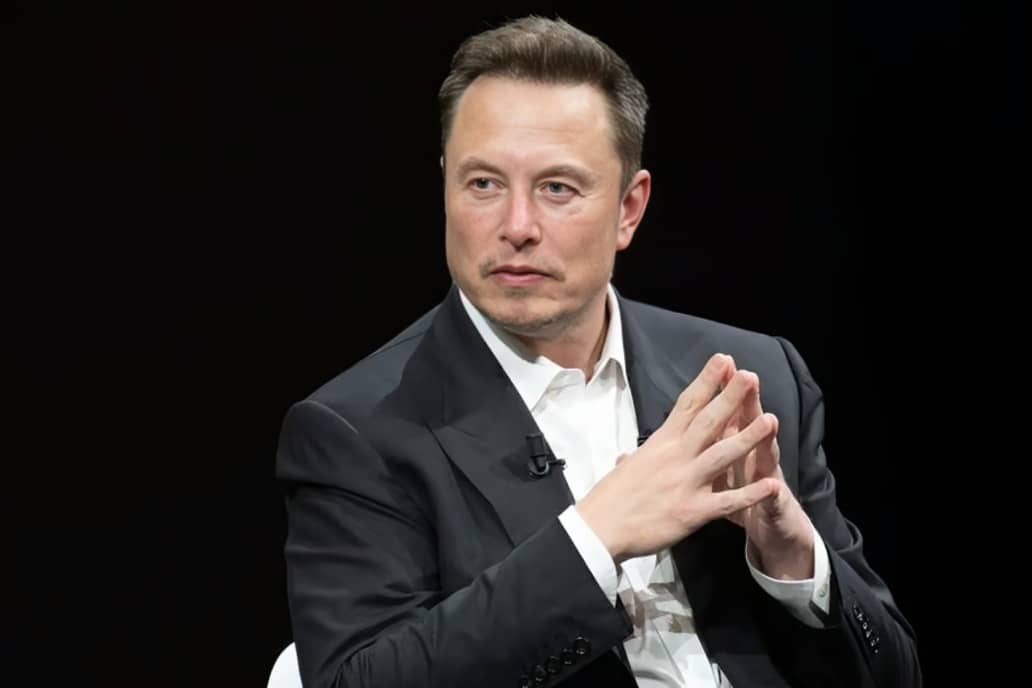
Elon Musk has highlighted the potential of artificial intelligence to transform medicine, suggesting that the treatment of diseases could increasingly resemble a software engineering problem. His comments come at a time when advances in artificial intelligence, biotechnology and mRNA technology are accelerating the development of personalised medical treatments.
The discussion has gained renewed attention following encouraging results announced by Moderna and Merck for an experimental personalised mRNA cancer treatment. The companies reported that their therapy, intismeran, showed a significant benefit in preventing melanoma from returning or spreading when used in combination with Merck's immunotherapy drug Keytruda.
The treatment is different from conventional vaccines that are primarily designed to prevent infectious diseases. Intismeran is an investigational cancer therapy designed specifically for an individual patient. Researchers analyse mutations found in a patient's tumour and use that information to create an mRNA treatment intended to train the immune system to recognise and attack cancer cells carrying those specific characteristics.
This personalised approach is one reason the development has attracted significant attention in the biotechnology industry. Rather than giving every patient an identical treatment, the technology aims to create a treatment based on the biological characteristics of each person's tumour.
The latest results came from a large late stage trial involving more than 1,000 melanoma patients whose tumours had been surgically removed but who remained at high risk of recurrence. Patients receiving the personalised mRNA treatment alongside Keytruda had better outcomes in terms of cancer recurrence and spread than those receiving Keytruda alone, according to the companies.
However, the findings should not be interpreted as proof that cancer has been cured. The treatment remains investigational, and detailed results from the latest trial have not yet been fully released or published in a peer reviewed medical journal. The companies are expected to present additional data at a forthcoming medical conference.
The development is nevertheless being viewed as an important milestone for personalised cancer treatment. Earlier research involving the same technology had already produced encouraging results. Moderna and Merck reported five year follow up data from a Phase 2b melanoma study in which the combination of intismeran and Keytruda showed sustained improvements in recurrence free and distant metastasis free survival.
The latest findings could also have implications beyond melanoma. Moderna and Merck are investigating personalised mRNA approaches in several other cancer types, including lung, bladder, kidney, pancreatic and stomach cancers. Other biotechnology companies are pursuing similar approaches, suggesting that personalised cancer vaccines could become a significant area of oncology research in the coming years.
Artificial intelligence could play an important role in this development. Cancer treatment requires researchers to process large amounts of biological and genetic information. AI systems can potentially help analyse tumour data, identify patterns and support the design of personalised treatments.
This is where Musk's description of disease treatment as a potential software problem becomes relevant. Software can process large quantities of information quickly and can be repeatedly updated as new data become available. Applying similar principles to biology could allow researchers to design treatments that are increasingly tailored to individual patients.
However, biology is considerably more complicated than conventional software. A medical treatment must pass extensive laboratory and clinical testing before it can be approved for widespread use. Safety, effectiveness, manufacturing, regulatory requirements and long term outcomes all need to be established.
Moderna itself has identified oncology as an important part of its long term strategy. The company says it is developing multiple mRNA based cancer programmes and expects several clinical readouts in the coming years.
The melanoma results therefore represent both a scientific development and a test of whether personalised mRNA technology can move toward broader clinical use.
For patients, the potential significance lies in the possibility of treatments that are designed around the unique characteristics of their cancer. If future studies confirm the benefits and regulators approve the therapy, personalised mRNA treatments could eventually become part of standard cancer care.
For now, researchers remain focused on additional clinical data and regulatory evaluation. The latest results provide encouraging evidence, but further research will be needed to determine how broadly the technology can be used and whether it can improve long term survival.
The combination of artificial intelligence, genetic analysis and mRNA technology is nevertheless changing the direction of medical research. Rather than relying exclusively on standardised treatments, scientists are increasingly exploring ways to design therapies according to the individual biology of each patient.
Musk's comments reflect the broader expectation that computing and biotechnology could become increasingly interconnected. The Moderna and Merck results provide a current example of how information based technologies are being applied to one of medicine's most difficult challenges.