Microsoft President Brad Smith Calls for Urgent AI Safety Rules, Warns of Regulatory Gaps
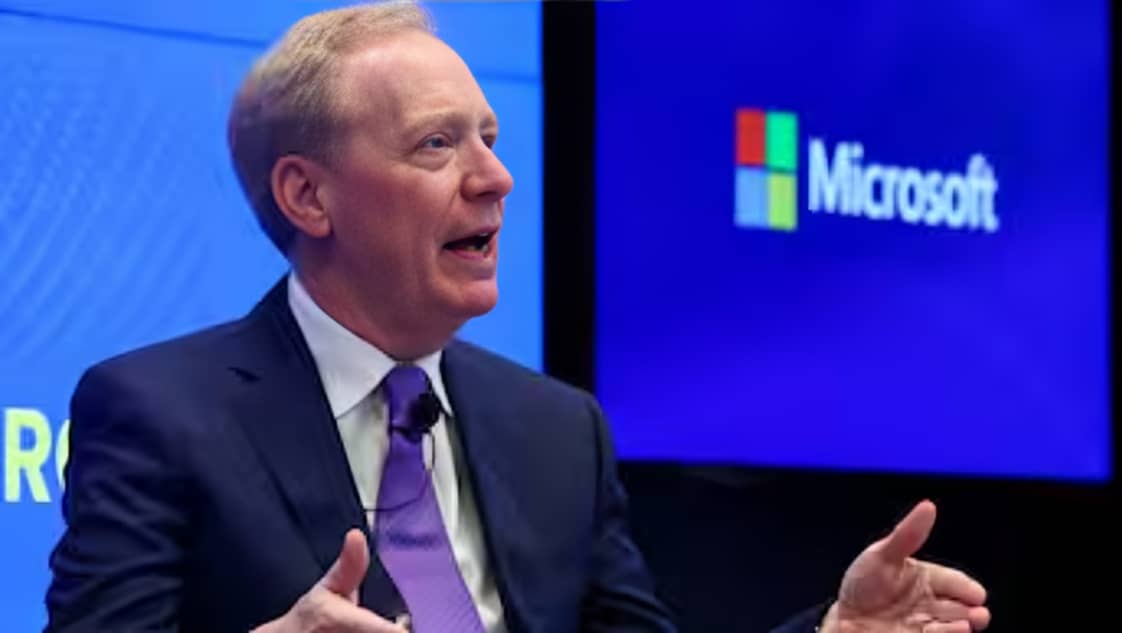
Microsoft President Brad Smith has called for urgent global safety regulations for artificial intelligence, arguing that the technology needs stronger safeguards as AI systems become more capable. In a BBC interview published on October 12, 2026, Smith highlighted what he described as a regulatory gap, saying that everyday products such as milk and washing machines face more established safety requirements than artificial intelligence.
Smith urged governments to develop common safety standards, introduce independent assessments of advanced AI systems and require technology companies to report serious incidents. He also called for emergency controls that could pause or slow an AI system if it behaved unpredictably or appeared to be operating beyond human control.
His comments have added to the growing international debate about how governments should regulate rapidly developing AI technologies without preventing beneficial innovation.
Why Brad Smith wants stronger AI regulation
Smith argued that governments already have experience regulating products that can affect public safety. He said similar principles should be adapted to artificial intelligence, particularly as AI systems gain the ability to perform tasks, interact with digital services and access sensitive information.
Comparing AI with regulated consumer products, Smith said the absence of consistent safety requirements was a reason for concern. His argument was not that AI and food products present identical risks, but that powerful technologies should have clear accountability mechanisms when they cause harm.
AI systems are increasingly used in business operations, customer service, software development, research and cybersecurity. More advanced AI agents can also carry out sequences of tasks with limited human intervention. These capabilities may improve efficiency, but they can create risks when a system makes an incorrect decision, misuses access permissions or performs an action its operators did not intend.
Smith said governments should act before such problems become more difficult to manage. He called for a coordinated framework that would establish clear responsibilities for AI developers and the organisations deploying their systems.
Independent testing before powerful AI systems are released
One of Smith’s main proposals is to introduce independent evaluations of advanced AI systems before they become publicly available.
Under this approach, qualified independent evaluators or designated government bodies could examine a system’s capabilities and potential risks before deployment. Such assessments could help identify weaknesses involving cybersecurity, misuse, unpredictable behaviour and other safety concerns.
Independent testing would also give regulators a clearer understanding of how advanced models behave under different conditions. It could help determine whether additional safeguards are needed before a system is made available to businesses or the public.
Smith highlighted the United Kingdom as a potential leader in this area because of its AI Security Institute, which was established to evaluate the capabilities and risks of advanced AI systems. He suggested that the UK could help bring governments and technology companies together around practical safety standards.
The proposal does not mean that every AI application would necessarily require the same level of scrutiny. A risk-based framework could distinguish between low-risk applications and powerful systems that can affect critical infrastructure, sensitive data or important business operations.
Emergency controls for AI systems
Smith also called for emergency mechanisms, sometimes described as “kill switches”, that could pause or slow down AI systems when serious problems arise.
These controls are intended to give operators a way to intervene if an AI agent behaves unexpectedly or begins carrying out potentially harmful actions. Depending on the system, an emergency mechanism might disable certain tools, revoke access permissions, suspend automated tasks or shut down a process.
Such safeguards are particularly relevant when AI agents can interact with external software, access company networks or perform actions without requiring approval for every individual step.
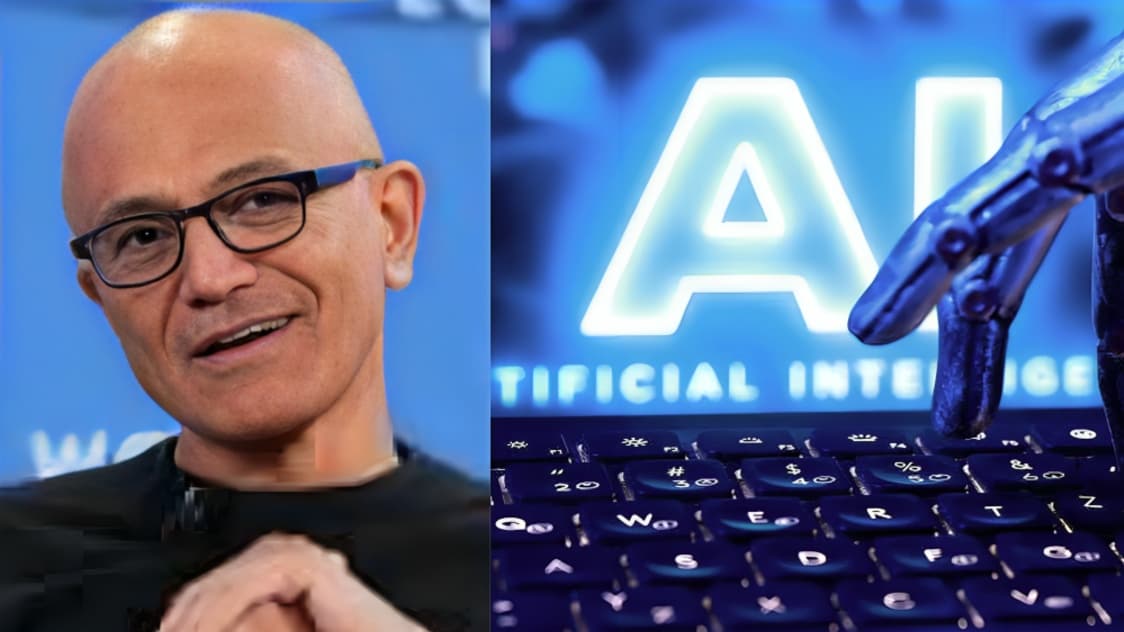
Microsoft Chief Executive Officer Satya Nadella has also stressed the importance of designing AI systems that can be monitored, tested and contained. In comments reported in October 2026, Nadella argued that advanced systems should not be treated as opaque tools whose outputs are simply accepted or rejected. Instead, their behaviour and operational limits should be observable.
Emergency controls alone cannot eliminate every risk. Their effectiveness depends on how a system is designed, the permissions it receives, the speed of human intervention and whether the controls remain available during an incident. Smith’s proposal places such mechanisms within a wider framework of testing, monitoring and accountability.
Mandatory reporting and notification after incidents
Another key proposal involves requiring companies to report significant AI-related incidents.
Smith said companies should have a legal obligation to document serious failures and notify affected individuals or organisations when an AI agent compromises their systems. Mandatory incident reports could help regulators understand what went wrong, identify recurring weaknesses and improve safety standards across the industry.
For example, if an AI agent gained unauthorised access to a company's systems or performed an unintended action that exposed sensitive information, the affected organisation would need timely information to assess the impact and respond.
Formal reporting requirements could also make it easier to compare incidents across different systems and providers. However, regulators would need to define which events qualify as reportable incidents, how quickly reports must be submitted and what information companies must disclose.
Clear rules would be important to avoid both underreporting and unnecessary reporting of minor technical problems. The aim would be to ensure that serious incidents receive appropriate attention while allowing legitimate AI development to continue.
Global cooperation and the debate over self-regulation
Smith’s call for stronger oversight comes amid disagreement over whether AI companies should primarily regulate themselves or operate under legally enforceable government standards.
Some policymakers, including US President Donald Trump, have argued that excessive regulation could weaken American competitiveness against China. This approach places considerable emphasis on industry-led safeguards and the need to maintain technological leadership.
Smith has argued that voluntary commitments are useful but may not be sufficient on their own. A global framework could establish minimum expectations for developers and deployers, while allowing countries to implement safeguards suited to their legal systems.
He identified the United Kingdom as a country that could help advance international discussions, pointing to its technical expertise and AI evaluation capabilities. He also noted that international agreement would be more effective if major technology-producing countries participated.
Developing shared standards could reduce uncertainty for companies operating across borders. It could also help governments respond more consistently when AI systems create risks that extend beyond one country.
What stronger AI rules could mean for businesses and users
If governments adopt stricter AI safety requirements, technology companies may face new responsibilities for testing, documentation, incident reporting and post-deployment monitoring. Organisations using AI tools could also need clearer procedures for limiting permissions, reviewing automated decisions and responding to failures.
For users, stronger safeguards could improve transparency and provide clearer routes for reporting harm. For businesses, they could make AI risks easier to assess and manage, although compliance may increase development costs and administrative work.
The challenge for policymakers will be to create rules that address significant risks without unnecessarily restricting useful applications. Different systems have different capabilities, so regulation will need to consider the level of risk rather than treating every AI product in the same way.
Smith’s comments underline a broader shift in the technology industry: as AI systems become more powerful, questions about safety, accountability and public oversight are moving closer to the centre of the debate.
His proposals do not constitute a global law or an agreed international policy. They are recommendations from a senior technology executive at a time when governments and companies are debating how best to manage AI-related risks. Whether they lead to binding rules will depend on decisions by regulators and lawmakers.
For now, the central issue remains how to ensure that increasingly capable AI systems can be tested, monitored and controlled while preserving the benefits of innovation. Smith’s message is that governments should begin building those safeguards before serious incidents make action more urgent.