illionaire investor and entrepreneur Peter Thiel has offered a critical assessment of Germany’s startup and business culture, arguing that the country may be held back not only by a fear of failure but also by what he calls a fear of success.
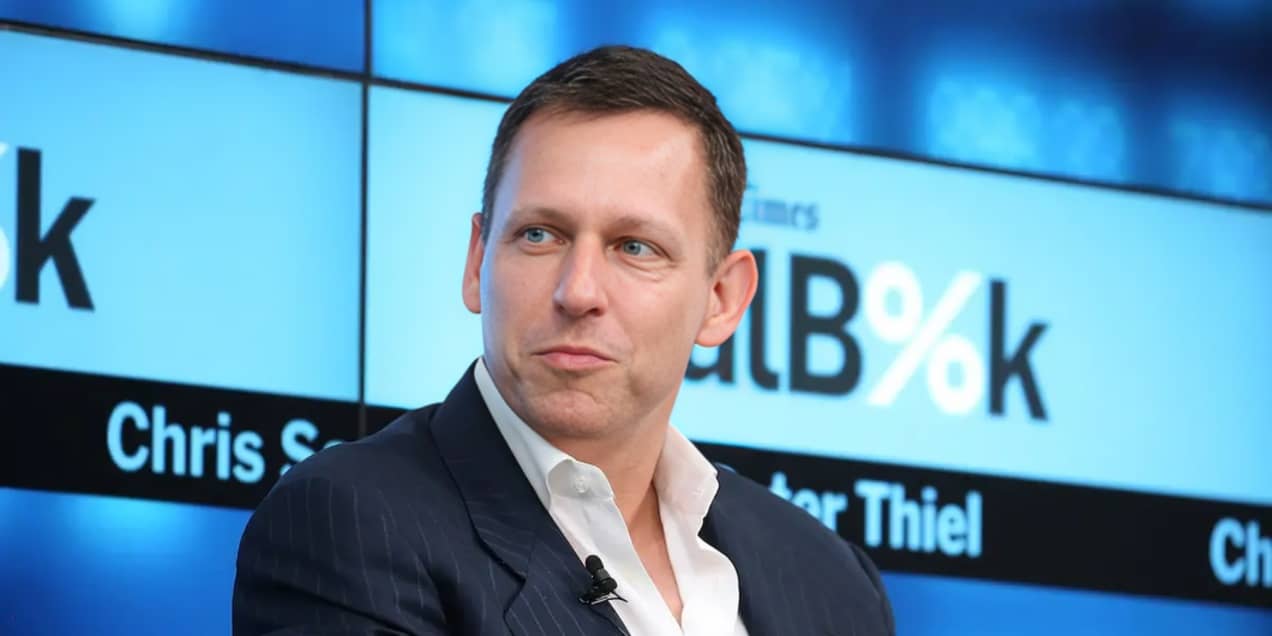
Thiel made the comments while speaking on the MDMEETS podcast with German media executive Mathias Döpfner. His remarks were reported by Fortune on September 25, 2026. According to the report, Thiel believes Germany has struggled to produce and scale a new generation of global companies, despite being one of Europe’s largest economies.
Thiel said discussions about German entrepreneurship often focus on risk aversion and a fear of failure. However, he argued that another factor deserves attention. In his view, entrepreneurs who successfully build a company may be less willing to continue expanding it to an extremely large international scale.
He used Elon Musk and Mark Zuckerberg as examples of entrepreneurs who continued expanding their companies after achieving significant success. Thiel suggested that a different approach can be seen among some German founders, where a successful startup may be sold or the founders may exit before the company develops into a global technology giant.
The comments are part of a broader discussion about Germany’s ability to create new technology companies capable of competing internationally. Fortune reported that, for the first time in the four year history of the Fortune 500 Europe, the United Kingdom had more companies on the list than Germany. The UK had 76 companies compared with 73 for Germany.
Thiel also pointed to the number of major new companies created in Germany over recent decades. He argued that the country has produced relatively few new businesses that have reached the scale of the largest American technology companies.
His argument focuses particularly on the importance of scale. Building a successful startup is only one stage of entrepreneurship. For a company to become a global business, founders must continue investing in technology, hiring, international expansion and new markets. Thiel believes that German entrepreneurs may sometimes choose an earlier exit rather than pursuing that longer growth path.
The investor contrasted this with the United States, where successful entrepreneurs often continue expanding their companies for many years. According to Thiel, companies that reach very large valuations can generate substantial employment and create opportunities for employees and investors to build wealth.
Thiel also discussed differences in wealth creation between Germany and the United States. Fortune reported that he compared younger members of the wealthiest people in both countries and argued that a larger share of younger wealthy Americans built their fortunes through newly created businesses, while the German group he examined largely inherited their wealth. Thiel acknowledged that this was an extreme comparison rather than a complete measure of the two economies.
The broader question raised by Thiel is whether Germany’s economic model is producing enough new companies in emerging sectors such as technology and artificial intelligence. Germany has historically been known for established industrial companies, particularly in automobiles, engineering and manufacturing. However, the global technology economy increasingly depends on rapidly growing software, artificial intelligence and digital companies.
Germany’s automotive industry has also faced significant changes. Major manufacturers such as Volkswagen, BMW and Mercedes-Benz are dealing with increased competition, particularly as the global automobile industry moves toward electric vehicles and Chinese manufacturers expand their international presence. Fortune highlighted these developments while discussing the challenges facing Germany’s traditional corporate strengths.
Thiel’s comments are not a comprehensive assessment of every German startup or entrepreneur. Germany has produced successful technology companies and continues to have a large industrial and research base. His argument is instead focused on the number of companies that grow into exceptionally large global businesses and the entrepreneurial culture surrounding that process.
The idea of a German fear of success is also not new in Thiel’s commentary. Earlier interviews show that he has previously argued that German founders can build companies quickly but may also sell them relatively early, while Silicon Valley entrepreneurs are more likely to think in terms of decades of expansion.
Thiel’s latest remarks therefore place the debate in the context of Germany’s ability to create the next generation of globally dominant companies. His central argument is that entrepreneurship requires more than creating a successful business. Founders also need the willingness and ability to scale that business internationally and maintain long term ambitions.
The discussion comes at a time when countries across Europe are looking for ways to strengthen their technology sectors and compete with the United States and China. The challenge involves several factors, including access to capital, regulation, research, talent, market size and the ability of startups to expand beyond their domestic markets.
Ultimately, Thiel’s comments represent his personal assessment of Germany’s entrepreneurial environment. His argument has sparked renewed discussion about whether German founders have sufficient incentives and support to build companies that can compete at global scale, rather than selling successful businesses at an earlier stage.