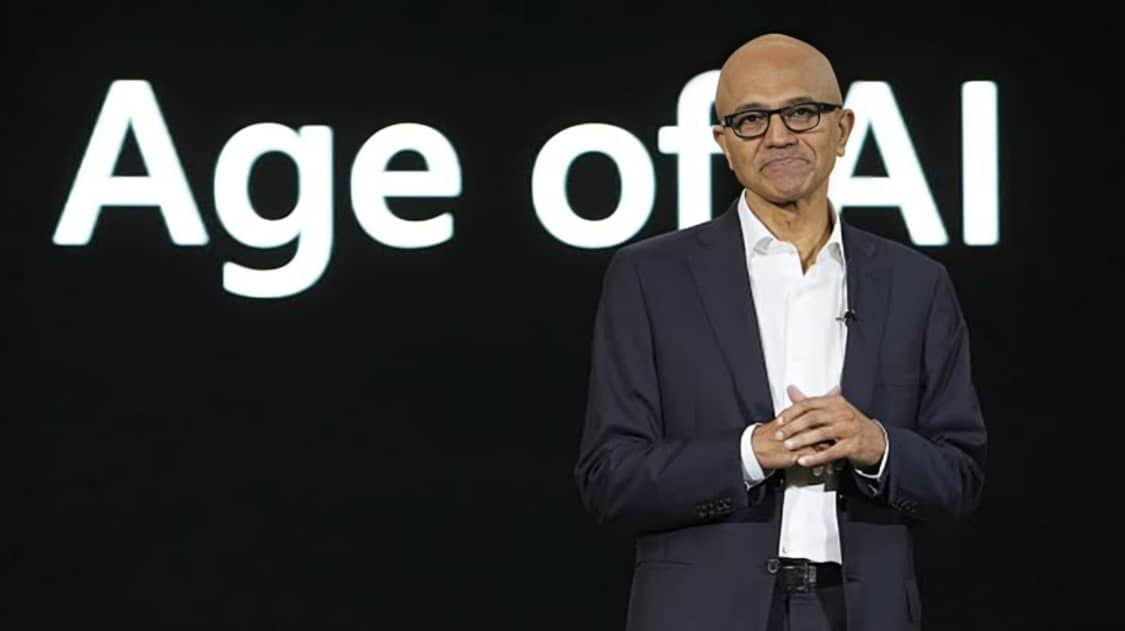
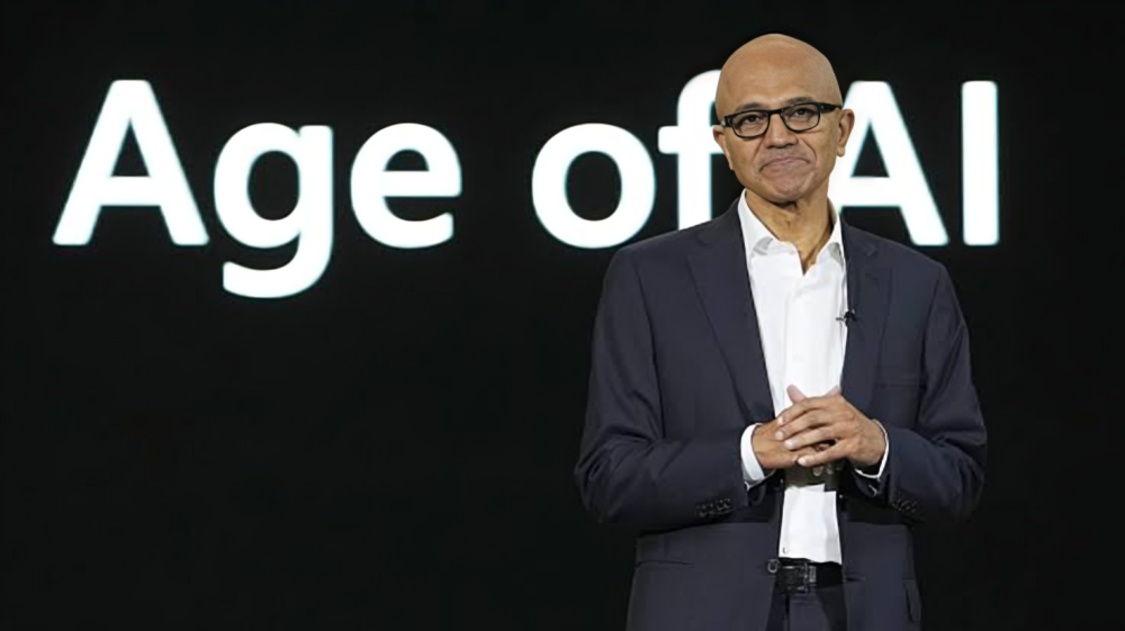
Satya Nadella’s AI Vision: How Microsoft Plans to Transform the Future of Work With AI Agents
Microsoft CEO Satya Nadella believes artificial intelligence agents could fundamentally change how people work, how businesses operate and how organisations deliver results. Rather than using AI only to answer questions, summarise documents or generate content, companies could increasingly rely on AI agents to plan and execute complex tasks across multiple applications.
Microsoft is developing this approach through its Copilot products, enterprise AI platforms and tools designed to help businesses build, manage and secure AI agents. Nadella has argued that organisations must rethink their existing workflows as AI systems take on more execution-oriented responsibilities, allowing employees to focus on decision-making, creativity and higher-value activities.
From AI Assistants to AI Agents
Traditional AI assistants generally respond to instructions by providing information, generating text or helping users complete individual tasks. AI agents are designed to go further by planning a sequence of actions, using approved tools, checking results and adjusting their approach when necessary.
For example, an employee preparing a business report might traditionally collect information from several files, analyse the data, create charts and prepare a presentation. An AI agent could help coordinate these steps by retrieving authorised information, analysing relevant figures, drafting the report and preparing presentation materials.
More advanced systems can coordinate several specialised agents, with one planning the workflow and others handling research, analysis or execution. Human employees can then review the results, correct errors and approve important actions.
Microsoft describes this broader approach as a shift from isolated AI assistance towards coordinated systems that can complete tasks and workflows. The objective is not simply to make individual activities faster, but to rethink how work moves through an organisation.
Satya Nadella’s Vision for the Future of Work
Nadella has said that businesses need to reconceptualise work as they develop agent-based systems. In this model, AI takes on more of the execution, while people retain greater responsibility for defining objectives, exercising judgment and deciding what outcomes matter.
The idea could change how teams organise their daily activities. Instead of manually coordinating every step of a process, employees could assign goals to AI agents and supervise their progress. For instance, a finance team might use agents to collect invoices, identify unusual transactions and prepare reports for review. A customer service department could use agents to retrieve relevant account information and draft responses for employees to approve.
However, the extent of automation would depend on the task, the quality of the underlying data, the permissions granted to the agent and the organisation's risk requirements.
In May 2026, Nadella emphasised that companies would need to rethink their operating models to make effective use of AI agents. Microsoft's broader strategy is to help organisations move from using AI for individual tasks towards systems that can support end-to-end business processes.
How Microsoft Plans to Put AI Agents to Work
Microsoft is integrating agent capabilities across its software and cloud ecosystem. Copilot provides an AI interface for users, while Microsoft 365 applications offer opportunities to use agents in document creation, data analysis, communication and other everyday activities.
Microsoft is also developing tools that allow businesses to create specialised agents for their own processes. These systems can be configured to work with approved data sources and applications, subject to organisational policies.
The company's approach extends beyond productivity software. AI agents can also support software development, cybersecurity, supply-chain planning and customer operations. In these areas, agents may help investigate problems, compare options, identify patterns and recommend or carry out actions within defined limits.
Microsoft's own experience with AI adoption suggests that the greatest benefits may come when businesses redesign entire workflows instead of simply adding AI to existing procedures. Its September 2026 account of its internal transformation described how the company simplified supply-chain processes and deployed specialised agents across planning, sourcing, fulfilment and logistics.
The company reported that cycle times fell by up to 75 per cent in selected workflows. This is a company-reported result from specific operations and should not be interpreted as a productivity improvement that every organisation can expect.
Why Human Oversight Remains Important
Greater autonomy also creates risks. An AI agent may misunderstand instructions, produce inaccurate information, use unsuitable data or take an action that has unintended consequences. If it has access to sensitive business systems, an error could have a wider impact than an incorrect chatbot response.
For this reason, Microsoft has highlighted the need for identity management, permissions, monitoring and governance. AI agents should receive only the access required for their assigned tasks, and organisations should be able to review their actions.
High-impact activities, such as transferring money, changing access privileges or modifying important records, may require explicit human approval. Organisations also need the ability to stop an agent if it behaves unexpectedly.
Nadella has recently warned that AI systems with access to sensitive information and the ability to act independently must be managed carefully. Microsoft's security guidance stresses that independent controls should determine what an agent can access and do, rather than relying entirely on the AI model to follow instructions.
What Could This Mean for Employees?
AI agents could reduce the time employees spend on repetitive administrative activities, information gathering and routine analysis. Workers may have more time for planning, customer relationships, complex problem-solving and decisions that require human context.
At the same time, the transition will require training and changes to existing processes. Employees will need to learn how to assign tasks to agents, evaluate their outputs and recognise situations that require human intervention. Organisations will also need clear policies governing responsibility when AI-generated work contains errors.
The effect on employment will vary across industries and roles. Some tasks may become increasingly automated, while other jobs may change to include more supervision, coordination and evaluation of AI systems. The long-term effects on staffing and productivity remain uncertain and will depend on how businesses adopt the technology.
Conclusion
Satya Nadella's vision positions AI agents as a potential foundation for the next stage of workplace technology. Microsoft is working to move AI beyond answering questions and towards systems that can coordinate and execute multi-step tasks across business applications.
Realising this vision will require more than powerful AI models. Organisations will need reliable data, redesigned workflows, clear permissions, security measures and appropriate human oversight. If these elements are implemented effectively, AI agents could help businesses improve efficiency and allow employees to focus on more valuable work. The scale of that transformation, however, will depend on practical results rather than technology promises alone.