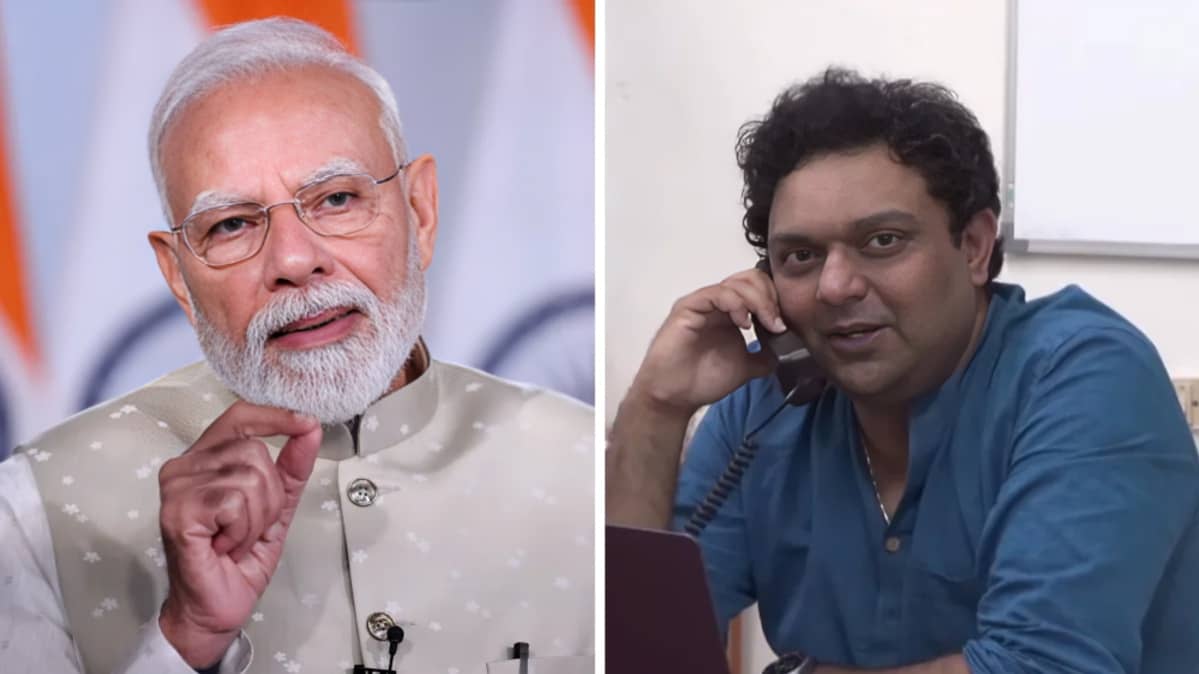
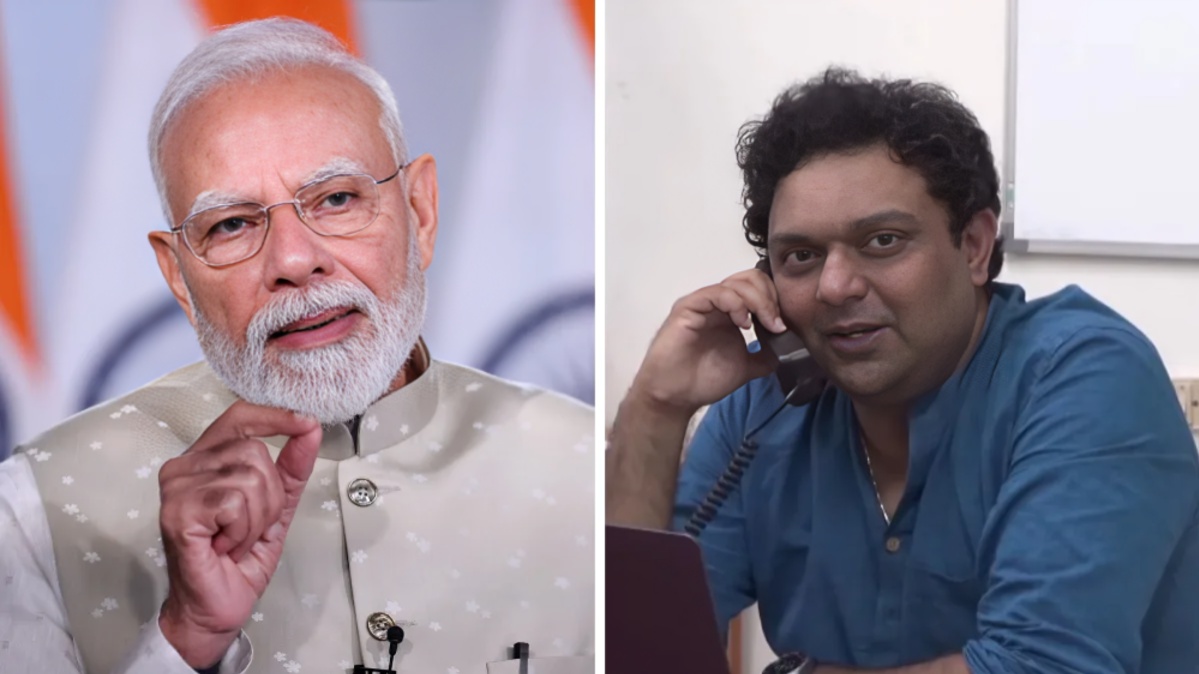
Mumbai based Krishna Seshadri has come into the spotlight after Prime Minister Narendra Modi highlighted his BharatRajya history website during the 137th episode of Mann Ki Baat on August 30, 2026.
BharatRajya is an interactive digital platform designed to make Indian history easier to explore. Users can select a particular year and find information about the rulers and dynasties that governed different parts of the Indian subcontinent during that period. The project attracted the Prime Minister's attention after Seshadri shared information about it on social media.
Seshadri's background makes the project particularly interesting. He told Prime Minister Modi that he had worked as an engineer before pursuing an MBA and moving into the marketing field. Although he did not have a professional background in history or software development, he had maintained a strong personal interest in history since childhood.
During the Mann Ki Baat conversation, Modi pointed out that Seshadri was neither from the technology industry nor a history teacher, yet had used technology to create a website focused on Indian history. The Prime Minister asked him how the idea developed.
Seshadri explained that the idea had remained with him for around 15 years. He wanted to find a way to present history as a story rather than relying only on conventional methods of learning. He believed that historical information could be presented in a more accessible and engaging format through technology.
The BharatRajya platform was created to address that idea. Rather than asking users to read through lengthy historical texts, the website provides an interactive approach based around time and geography. A visitor can choose a year and explore the political landscape of different parts of India during that period.
According to reports about the project, Seshadri used generative artificial intelligence tools to turn his concept into a functioning website, despite having no professional coding experience. This aspect of the project has attracted particular interest because it demonstrates how artificial intelligence can enable people without formal programming backgrounds to develop digital products.
The project also reflects the growing use of generative AI beyond conventional technology industries. AI tools can assist users with coding, content organisation, interface development and other technical tasks. In Seshadri's case, the technology helped convert a long standing interest in Indian history into an interactive online resource.
During the Mann Ki Baat conversation, Seshadri spoke about his interest in improving the way Indian history is presented. He said conventional teaching often places significant attention on particular empires or kingdoms, while many other important dynasties may receive less attention.
He specifically mentioned historical powers such as the Cholas, Pallavas, the Karkota dynasty of Kashmir and the Ahoms of Assam. His argument was that the history of India is much broader than the stories of a limited number of major empires.
The Ahom dynasty, for example, ruled parts of Assam for several centuries, while the Cholas and Pallavas played major roles in the history of southern India. Seshadri said projects such as BharatRajya could help introduce people to these different historical traditions.
Prime Minister Modi praised Seshadri's effort during the radio programme and also spoke with him directly by telephone. The Prime Minister said that initiatives created by ordinary citizens can provide inspiration to others when their ideas are shared more widely.
The recognition has brought BharatRajya considerable attention on social media. Following the Mann Ki Baat episode, thousands of users began discussing the website and sharing information about its creator.
The website's central concept is relatively simple. A user selects a particular year and can then explore which rulers or political powers controlled various regions at that point in history. This time based approach allows visitors to compare changes in political control across different periods.
The platform is particularly relevant for students and history enthusiasts looking for an alternative way to visualise historical developments. Instead of treating history as a series of isolated dates and events, an interactive map can help users understand how political boundaries and ruling dynasties changed over time.
At the same time, historical information presented through any digital platform requires careful verification. Interactive historical maps involve decisions about dates, territorial boundaries, overlapping political authority and the interpretation of historical evidence. Users should therefore treat such platforms as learning resources and cross check important historical claims with established academic and primary sources.
Seshadri's work also highlights the changing relationship between artificial intelligence and creativity. AI is increasingly being used by people who may not have formal technical training to develop websites, applications, visual material and other digital projects.
The BharatRajya example shows how a clearly defined idea can be combined with accessible AI tools to create a public facing digital product. Rather than replacing the underlying historical interest, the technology served as a tool through which Seshadri could present his idea in an interactive format.
The story is also an example of how personal interests can eventually develop into wider public projects. Seshadri had been interested in history since childhood, but it took many years before the idea developed into the BharatRajya website.
His marketing background may also have influenced his approach to presenting information. Instead of designing the platform exclusively for historians, the project focuses on making historical information accessible to a wider audience.
Another interesting aspect of the project is its emphasis on the political geography of historical India. Different kingdoms and empires often existed at the same time, and their boundaries changed across centuries. An interactive system can provide a visual way of understanding those changes.
The platform also offers an opportunity for users to explore historical periods that may not receive extensive attention in conventional educational material. By allowing visitors to move between years, BharatRajya encourages curiosity and independent exploration.
Prime Minister Modi's recognition has now given the project a much larger audience. His discussion with Seshadri on Mann Ki Baat introduced the website to listeners across India and highlighted the potential of citizen led digital initiatives.
The Prime Minister also encouraged people to share information about other individuals who are creating useful initiatives. The broader message of the segment was that innovative projects do not necessarily need to originate from large institutions or established technology companies.
Seshadri's story fits into this wider trend. A person who was not professionally involved in software development was able to create a functioning digital platform by combining his interest in history with modern AI tools.
The development is significant from a technology perspective because generative AI is reducing some of the traditional barriers associated with software development. People can now use AI assistance to generate code, troubleshoot problems and create prototypes, although expertise is still important for checking accuracy, security, reliability and long term maintenance.
For educational technology, projects such as BharatRajya could also point towards new ways of presenting complex information. Interactive maps, timelines and searchable historical databases can complement textbooks and classroom teaching.
However, the usefulness of such platforms depends heavily on the quality of their underlying data. Historical databases require extensive research, source evaluation and regular corrections. Seshadri's platform includes mechanisms through which information can be reviewed and improved, according to reports about the project.
The Prime Minister's remarks also drew attention to the importance of making Indian history engaging for younger audiences. Digital platforms can potentially reach people who may not be attracted to traditional historical texts.
Seshadri's approach is not simply to present a fixed historical narrative. The website encourages users to explore different periods and see how political control changed over time. This can help users develop questions and investigate historical developments independently.
His comments about the teaching of history also reflect a broader debate about the scope and balance of historical education. India has a complex history involving numerous kingdoms, dynasties, regional cultures and political systems. Presenting that history in an accessible manner remains a significant educational challenge.
The Cholas, Pallavas, Ahoms and Karkota dynasty mentioned by Seshadri illustrate the range of regional histories that can be explored alongside the better known narratives of major northern Indian empires.
The attention received by BharatRajya also demonstrates the role of social media in helping independent projects reach large audiences. Seshadri initially shared the idea through social media, where it eventually attracted the attention of the Prime Minister.
The project has now moved from being a personal initiative to a nationally discussed example of AI assisted creativity. Its story has been highlighted by technology and national media outlets following the Mann Ki Baat broadcast.
Seshadri's recognition may also encourage other people with interests in education, culture and history to explore technology as a means of sharing their work. The availability of AI based development tools means that a lack of formal coding training is no longer necessarily an absolute barrier to creating a digital prototype.
At the same time, successful digital projects require more than initial development. Maintaining a website, improving its database, checking historical information and ensuring that the platform remains reliable are ongoing responsibilities.
For BharatRajya, the increased public attention could provide an opportunity to expand its historical content and reach a larger audience. The project may also evolve as users identify errors, suggest additions or request new features.
The website's approach offers a simple answer to a common problem in history education: how to help people understand a large amount of information without making it overwhelming. By organising the information around years and regions, users can approach history at their own pace.
The Prime Minister's recognition has also placed the individual behind the project at the centre of the story. Krishna Seshadri's background as an engineer turned marketing professional, combined with a long standing interest in history, makes his journey different from that of a conventional software developer or historian.
His experience demonstrates how interests from different fields can come together in a digital project. Engineering provided one background, marketing provided another, while history supplied the subject and motivation. Generative AI then provided technical assistance that helped transform the concept into a website.
The BharatRajya story therefore has significance beyond the website itself. It illustrates the growing accessibility of AI development tools and the possibility of using technology to communicate knowledge in new formats.
The project also reinforces the idea that technology can be used for education and cultural exploration rather than only for commercial applications. A history website may not have the same commercial objectives as a conventional technology startup, but it can still demonstrate the practical value of digital tools.
For students, teachers and history enthusiasts, the platform could serve as a starting point for exploring different periods of Indian history. However, detailed academic study should continue to rely on authoritative historical sources and scholarly research.
Prime Minister Modi's decision to highlight the project during Mann Ki Baat has ensured that BharatRajya receives national visibility. It has also brought attention to the wider potential of AI assisted projects created by individuals without formal coding backgrounds.
As the website reaches more users, its future development will depend on the quality of its historical database, continued technical improvement and the ability to incorporate reliable feedback.
For now, Krishna Seshadri's BharatRajya stands out as an example of how a long held idea can be transformed into a public digital project using modern artificial intelligence tools. His recognition by the Prime Minister has turned a personal history initiative into a nationally discussed technology and education story.
The central idea remains straightforward: select a year, explore the rulers and dynasties associated with different parts of India, and use that information as a starting point for understanding the country's complex historical evolution.
Seshadri's story shows that building a useful digital platform is increasingly accessible to people from outside the traditional technology sector. With a clear idea, sustained interest and appropriate use of AI tools, individuals can now create projects capable of reaching audiences far beyond their immediate communities.