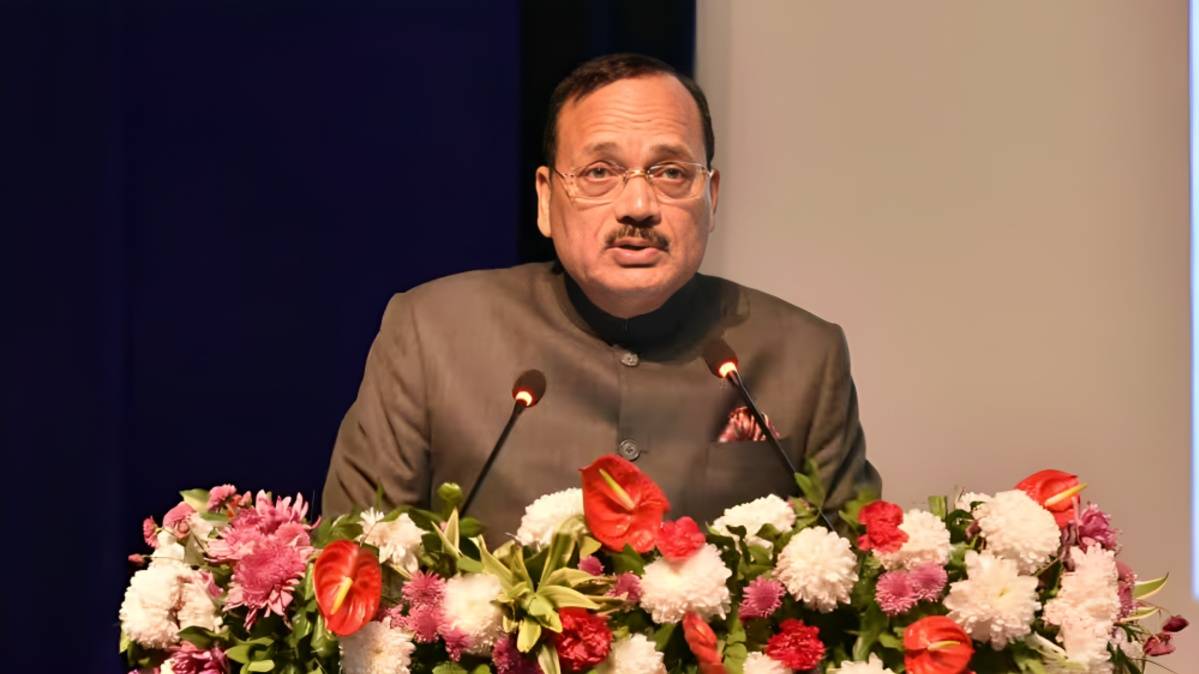

Chief Justice of India Surya Kant has called for judicial introspection to address emerging technological and social challenges confronting the Indian judicial system. Speaking on the eve of Constitution Day, he emphasised the need to develop effective responses to artificial intelligence, digital arrest scams and other contemporary issues while ensuring timely and affordable justice for citizens.
During an interview with DD News in Hindi, the Chief Justice expressed concern over cybercriminals exploiting technology to deceive unsuspecting individuals and defraud them of their savings.
He also described the Indian Constitution as a living document that must be interpreted in accordance with changing social, technological and global circumstances while respecting its basic structure.
CJI Surya Kant Calls for Judicial Introspection
Chief Justice Surya Kant highlighted the importance of continuous self assessment within the judiciary to address emerging challenges and meet the evolving expectations of society.
As technology continues to transform communication, financial transactions and public services, judicial institutions face increasingly complex legal questions.
The Chief Justice emphasised the need for the judiciary to develop effective mechanisms for addressing contemporary problems while maintaining constitutional principles and protecting individual rights.
Judicial introspection can help institutions identify existing shortcomings, improve administrative efficiency and strengthen the delivery of justice.
His remarks highlighted the importance of adapting judicial processes to changing circumstances without compromising established legal safeguards.
Growing Concerns Over Digital Arrest Scams
The Chief Justice expressed particular concern about digital arrest scams, in which fraudsters impersonate law enforcement officials or representatives of government agencies to intimidate victims.
These criminals may falsely accuse individuals of involvement in unlawful activities and pressure them into transferring money under the threat of arrest or legal proceedings.
Surya Kant described such fraudulent activities as digital dacoities, highlighting the financial harm experienced by unsuspecting citizens.
Digital arrest scams exploit fear, misinformation and a lack of awareness about legitimate law enforcement procedures.
There is no recognised legal procedure in India known as digital arrest. Citizens receiving suspicious communications claiming to be from law enforcement agencies should independently verify the information before responding or transferring money.
Addressing such crimes requires cooperation between investigating agencies, financial institutions, technology companies and judicial authorities.
Artificial Intelligence Presents New Legal Challenges
The rapid development of artificial intelligence has introduced new opportunities and challenges across several sectors, including the legal profession and judicial administration.
Artificial intelligence can potentially assist with legal research, document management, translation and administrative processes. However, its growing use also raises concerns regarding privacy, accuracy, accountability and the misuse of personal information.
Technology can also be exploited to create misleading content, impersonate individuals and facilitate sophisticated financial fraud.
Judicial institutions may increasingly encounter cases involving artificial intelligence generated evidence, automated decisions and disputes concerning responsibility for technological failures.
The development of appropriate legal safeguards will be important in ensuring that technological innovation does not undermine individual rights or public confidence in the justice system.
Ensuring Timely and Affordable Justice
Chief Justice Surya Kant stressed the importance of ensuring that justice remains accessible, timely and affordable for all sections of society.
Delays in legal proceedings and the financial costs associated with litigation can create difficulties for individuals seeking judicial remedies.
Access to justice is particularly important for economically disadvantaged citizens who may face challenges in obtaining legal representation and navigating complex procedures.
Measures such as digital case management, electronic filing, virtual hearings and legal aid services can help improve accessibility when implemented effectively.
However, technological improvements must also consider the needs of individuals who lack reliable internet access or familiarity with digital platforms.
The Chief Justice’s emphasis on timely justice highlights the continuing importance of improving judicial efficiency while maintaining fairness and procedural integrity.
Constitution Described as a Living Document
During the interview, Surya Kant described the Indian Constitution as a living document capable of addressing the evolving requirements of society.
The Constitution was adopted by the Constituent Assembly on November 26, 1949, and came into effect on January 26, 1950.
Since its adoption, constitutional interpretation has played an important role in addressing changes in social conditions, governance, technology and individual rights.
The Chief Justice emphasised that courts must interpret constitutional provisions in the context of contemporary realities while remaining within the limits of the Constitution’s basic structure.
This approach allows constitutional principles to remain relevant without undermining the fundamental framework of Indian democracy.
Importance of the Basic Structure Doctrine
The basic structure doctrine is an important principle of Indian constitutional law established by the Supreme Court in the Kesavananda Bharati judgment of 1973.
The doctrine establishes that Parliament’s constitutional amendment powers cannot be exercised in a manner that destroys the basic structure of the Constitution.
Principles recognised as elements of the basic structure include judicial independence, constitutional supremacy, democracy and the rule of law.
Surya Kant’s remarks highlighted the importance of preserving foundational constitutional principles while responding to emerging legal and technological challenges.
As society evolves, courts must balance the need for contemporary interpretation with the responsibility of protecting constitutional safeguards.
Strengthening Public Confidence in the Judiciary
An accessible and effective judicial system plays an important role in maintaining public confidence in democratic institutions.
Citizens depend on courts to protect their rights, resolve disputes and provide remedies against unlawful actions.
Emerging challenges involving cybercrime, artificial intelligence and digital financial fraud require legal institutions to remain informed about technological developments.
Public awareness, judicial training and effective coordination between relevant authorities can contribute to addressing these challenges.
The responsible adoption of technology may also help improve judicial administration, provided that appropriate safeguards are maintained.
Constitution Day Highlights the Future of Indian Justice
Chief Justice Surya Kant’s remarks ahead of Constitution Day focused on the need to strengthen judicial institutions while adapting to changing technological and social conditions.
His emphasis on judicial introspection, affordable justice and constitutional adaptability reflects the challenges facing the legal system in an increasingly digital society.
As artificial intelligence and cybercrime continue to influence legal and administrative processes, developing effective responses will remain important for protecting citizens and ensuring accountability.
The Chief Justice’s message highlighted the continuing relevance of constitutional principles in addressing contemporary challenges and ensuring that justice remains accessible to all citizens.