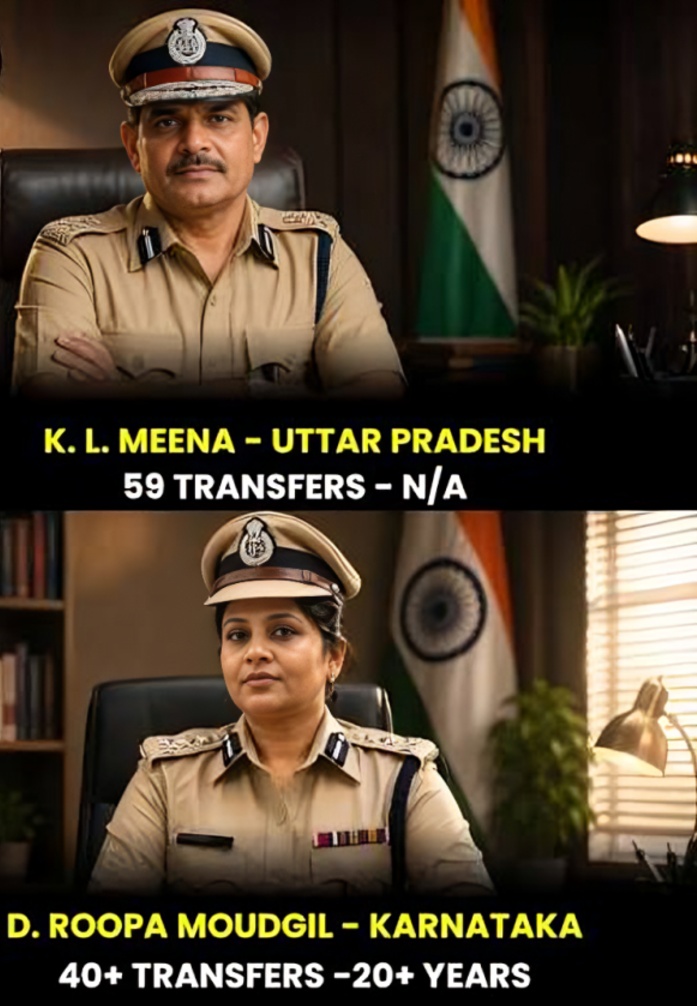
The Supreme Court has also addressed the issue of civil service reforms and emphasised the importance of fixed tenure and civil services boards in appropriate circumstances. The broader objective is to create a professional administrative system in which officers can work effectively while remaining accountable to elected governments.
The careers of officers such as Kasni and Khemka are frequently cited in public discussions because of the sheer number of transfers associated with their names.
Kasni's reported 71 transfers remain one of the highest figures cited in media reports. The number was reached over a career spanning more than three decades, with his final posting reportedly being as Officer on Special Duty with the Haryana State Land Use Board. The Times of India reported that the organisation itself had been disbanded years earlier, adding to the attention surrounding his final posting.
Khemka's 66 reported transfers also became a defining feature of his public profile. He retired from the IAS in 2025 after more than three decades in government service.
The distinction between transfers, postings and reshuffles is important when comparing such numbers. Different reports may use different methods for counting an officer's movements, which can lead to variations in the totals.
For example, earlier reporting placed Kasni's number at 68 in April 2017, while later reports recorded 71 transfers by the time he retired.
This explains why some online lists may show slightly different numbers for the same officer.
The wider issue, however, remains the same. India's administrative system requires governments to balance the need for flexibility with the need for continuity and professional independence.
Frequent transfers can provide governments with the ability to deploy experienced officers where they are most needed. But very short tenures may make it difficult for officers to complete projects or implement reforms.
For citizens, administrative stability can also matter because government services often depend on consistent decision making. Changes in senior officials can sometimes result in changes in priorities or approaches.
At the same time, transfers are a normal feature of public service and should not automatically be interpreted as evidence of wrongdoing or political interference.
The names of Pradeep Kasni, Ashok Khemka and other frequently transferred officers have nevertheless become part of India's broader conversation about bureaucracy and governance.
Their careers demonstrate the extent to which some civil servants can move between departments and responsibilities over several decades. They also highlight continuing questions about how transfer policies should be designed to balance administrative accountability, government authority and professional independence.
While Pradeep Kasni is widely reported to have the highest number among the names commonly cited, Ashok Khemka remains one of the most prominent examples of repeated transfers in India's civil service.
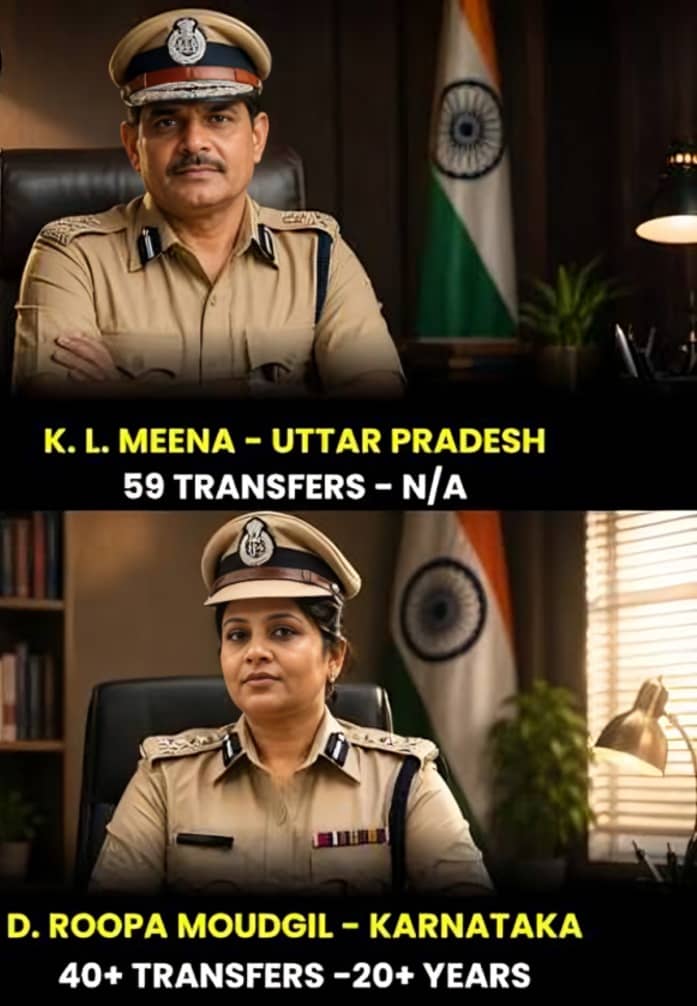
The figures associated with other officers also demonstrate that frequent transfers are not limited to a single individual. Several IAS and IPS officers have experienced dozens of changes in their postings during their careers.
Ultimately, transfer statistics alone cannot explain why an officer was moved from one position to another. Each transfer must be understood in its specific administrative and legal context.
The continuing public interest in these officers reflects a larger concern about civil service tenure, administrative continuity and the ability of government officials to work independently while remaining accountable.
As India continues to discuss civil service reforms, the experience of officers who have faced repeated transfers is likely to remain relevantcccc to the debate over how the country's bureaucracy should function.