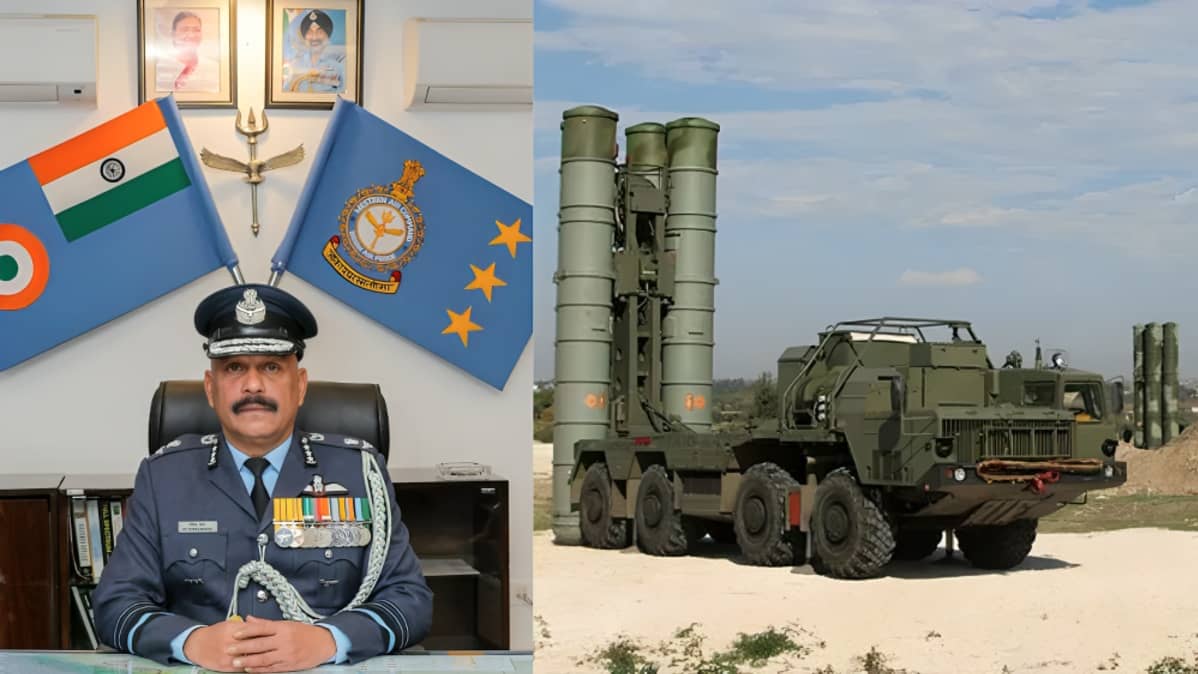
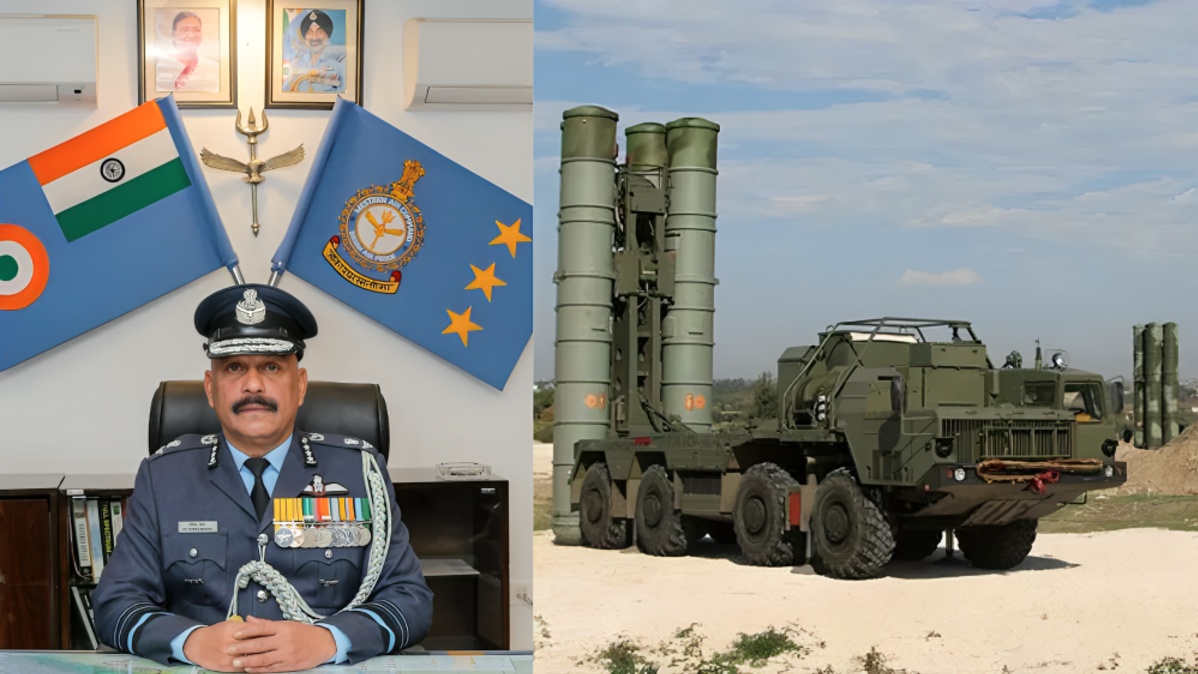
Retired Air Marshal Jeetendra Mishra has made fresh claims about Pakistan’s efforts to locate India’s S-400 air defence systems during Operation Sindoor, saying that Pakistan activated spies and sleeper cells inside India for this purpose.
Mishra, who served as the chief of the Indian Air Force’s Western Air Command during Operation Sindoor, made the comments in an interview with news agency ANI. He said the S-400 system became one of the biggest challenges for Pakistan’s aerial operations during the military confrontation in May 2025.
According to Mishra, Pakistan was particularly interested in identifying the locations of India’s S-400 systems. He claimed that Pakistani forces used multiple methods to obtain information about the systems, including intelligence networks operating inside India.
Mishra also said Pakistan received satellite assistance from other countries, although he did not identify those countries in his remarks. His statement therefore represents his account of the intelligence efforts during the conflict and should be distinguished from independently verified information.
The S-400 is a long range surface to air missile system developed by Russia. India signed an agreement with Russia in 2018 for five S-400 systems. According to recent reports, three systems had already been inducted into the Indian Air Force, while a fourth squadron was received in June 2026.
Mishra said the system played an important role in restricting Pakistan’s aerial operations. He claimed that Pakistani fighter aircraft could not approach within approximately 200 kilometres of the Indian border because of the threat posed by the S-400.
The former Air Marshal described the system as a major deterrent during the conflict. According to his account, Pakistan considered locating the S-400 batteries a priority because of their ability to detect and engage aerial targets from long distances.
Mishra further claimed that Pakistan activated human intelligence networks, including what he described as spies and sleeper cells, to determine where the S-400 systems were positioned. The allegation has attracted attention because identifying the location of mobile air defence systems can be an important objective during military operations.
He also spoke about India’s wider air defence strategy during Operation Sindoor. According to Mishra, the Indian Air Force targeted Pakistani radar installations and command and control infrastructure during the conflict.
He claimed that the destruction of ground based radar systems affected Pakistan’s ability to monitor and coordinate its air operations. As a result, according to his account, Pakistani forces increasingly relied on airborne radar platforms for situational awareness.
Mishra also described an engagement involving an airborne warning and control system. He said an S-400 operator engaged a target at a distance of 314 kilometres. He described the engagement as the longest surface to air kill in history.
Other reports have also referred to the incident as an exceptionally long range S-400 interception during Operation Sindoor. However, descriptions of the engagement and its exact circumstances should be understood in the context of statements made by Indian military officials.
Operation Sindoor was launched by India in May 2025 following the Pahalgam terror attack. India carried out strikes against terrorist infrastructure as part of the operation, after which the confrontation expanded into a broader military exchange involving air defence systems, aircraft, drones and missiles.
Mishra said the Indian armed forces were given operational freedom during the operation, while the government directed them to avoid civilian casualties. He described the objective as targeting terrorists and their handlers rather than ordinary citizens.
The former Air Marshal also highlighted the importance of India’s broader missile and air defence capabilities. The S-400 was one part of a wider network involving radar, fighter aircraft, missiles, command systems and other surveillance technologies.
India’s acquisition of the S-400 has been viewed as an important element of its long range air defence architecture. The system is designed to detect and engage different types of aerial threats and can operate as part of a layered air defence network.
Mishra’s comments have also brought renewed attention to India’s BrahMos missile system. He highlighted the growing international demand for the missile as another example of India’s expanding defence capabilities.
BrahMos is a supersonic cruise missile jointly developed by India and Russia. India has increasingly promoted the system as part of its defence exports and strategic partnerships.
The former Air Marshal’s comments come amid continued discussion about the lessons of Operation Sindoor. The military confrontation demonstrated the importance of long range surveillance, air defence, precision strike capabilities and the ability to protect critical military infrastructure.
The reported Pakistani effort to locate the S-400 systems also highlights the importance of mobility and concealment for modern air defence platforms. Mobile missile systems can change positions, making them more difficult for an adversary to identify and target.
At the same time, intelligence gathering remains a key component of modern military operations. Satellite imagery, electronic intelligence, airborne surveillance and human intelligence can all be used to build a picture of an opponent’s military capabilities.
Mishra’s allegation regarding spies and sleeper cells therefore points to the broader intelligence dimension of the conflict. However, specific details about intelligence operations are often difficult to independently verify because such information is generally classified.
The S-400 has remained a significant part of discussions about India’s air defence capabilities. Its long range detection and interception capabilities are intended to provide protection against aircraft and other aerial threats.
The system also contributes to deterrence by increasing the risks faced by hostile aircraft operating near protected areas. According to Mishra, this deterrent effect influenced Pakistan’s aerial strategy during Operation Sindoor.
The former Air Marshal’s account also suggests that Pakistan attempted to combine different forms of intelligence gathering. His comments referred to satellite support as well as alleged human intelligence networks.
Separately, Indian military officials have previously discussed the flow of real time intelligence during the conflict. However, claims concerning assistance from specific foreign countries should be treated separately unless supported by official evidence.
The broader significance of Mishra’s comments lies in the emphasis placed on modern air defence. Conflicts increasingly involve combinations of aircraft, drones, missiles, radar systems and electronic warfare. Protecting critical military assets therefore requires multiple layers of detection and interception.
India has been investing in strengthening these capabilities, including long range missile systems, fighter aircraft, indigenous radar systems and integrated air defence networks.
The country has also been seeking to increase domestic defence production and exports. Systems such as BrahMos have become important examples of India's expanding role in the international defence market.
Mishra’s remarks have consequently renewed attention on both the defensive and offensive capabilities demonstrated during Operation Sindoor.
The allegations about Pakistani spies and sleeper cells remain claims made by the retired Air Marshal and should not be treated as independently established facts without further official confirmation. Nevertheless, his account provides an insight into how a senior former military commander viewed the role of the S-400 during the conflict.
The episode also highlights the strategic importance of protecting the locations of air defence systems. If an adversary can identify the position of a missile battery, it may attempt to suppress or destroy that system before conducting wider aerial operations.
For this reason, mobility, surveillance, intelligence protection and operational secrecy are important components of modern air defence.
The S-400’s reported role in Operation Sindoor has therefore become a significant part of the continuing discussion about India’s military preparedness.
Mishra’s latest comments also underline how technological capabilities can influence military decision making. According to his account, the threat posed by the S-400 forced Pakistani aircraft to operate at greater distances and encouraged efforts to identify the system’s locations.
Operation Sindoor continues to be examined for lessons relating to air warfare, intelligence, missile defence and strategic deterrence.
As India continues to expand its indigenous defence production and strengthen its air defence network, systems such as the S-400 and BrahMos remain important components of the country’s broader military capability.
The latest claims by Air Marshal Jeetendra Mishra have therefore brought renewed attention to the role of air defence systems during Operation Sindoor and to the intelligence efforts allegedly undertaken by Pakistan to locate India’s S-400 systems.