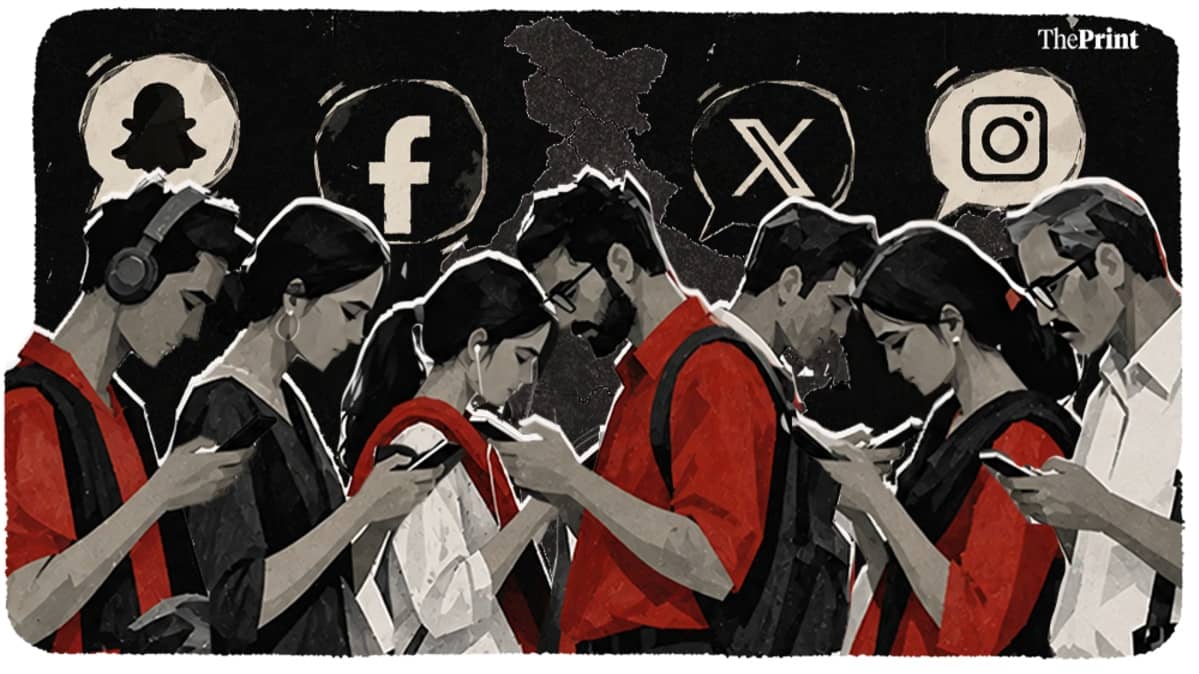
A new global survey by the Pew Research Center has highlighted a significant difference in public opinion about the impact of social media on democracy. According to the Spring 2026 Global Attitudes Survey, 66 percent of adults surveyed in India said social media has been more of a good thing for democracy in the country.
The finding places India among the countries where people continue to view social media relatively positively in relation to democratic participation. However, the survey also shows that Indians recognise several risks associated with social media, particularly the spread of misinformation and rumours.
Pew Research Center released the findings on October 1, 2026, as part of its global study examining attitudes towards social media and democracy. The research covered 37 countries and looked at how people assess the influence of digital platforms on political participation, access to information, misinformation and political divisions.
In India, 66 percent of respondents said social media has been good for democracy, while 23 percent said it has been bad for democracy. The remaining respondents either did not provide an answer or did not fall into either category. India's result was considerably more positive than the global median, where 55 percent of respondents across the 37 countries said social media had been good for democracy and 35 percent considered it bad.
The Indian response was also more positive than views recorded in several high income countries. In the United States, 34 percent said social media had been good for democracy, while 64 percent said it had been bad. In Canada, 40 percent viewed it positively and 55 percent negatively. The United Kingdom recorded 41 percent positive and 56 percent negative responses. Germany and France also recorded higher levels of concern than India.
Across Asia, however, India was not the only country with a largely positive view. Thailand and Singapore each recorded 77 percent saying social media was good for democracy. The Philippines recorded 74 percent, Malaysia 71 percent and Bangladesh 67 percent. Pakistan recorded 62 percent, while Indonesia recorded 55 percent. These results indicate that positive views remain relatively strong across several countries in the Asia Pacific region.
The survey also examined how people believe social media and internet access affect political and social life. In India, 66 percent said these technologies have made people more informed about current events. Another 55 percent said they have made it easier for people to have a meaningful voice in politics.
These findings suggest that many Indians see social media as an important source of information and a platform for political expression. Digital platforms allow citizens to access news, discuss public issues, follow political developments and communicate their views without relying exclusively on traditional media outlets.
At the same time, the survey identified significant concerns among Indian respondents. About 62 percent said social media and internet access have made people easier to manipulate with false information and rumours. Around 51 percent said these technologies have contributed to greater division in people's political opinions.
The findings therefore present a mixed picture. While a clear majority of Indians consider social media beneficial for democracy, many also recognise the risks associated with misinformation and political polarisation. The survey does not suggest that Indians view social media as entirely positive. Instead, the results indicate that people see both advantages and disadvantages arising from the growing role of digital platforms.
The global picture is more cautious than the Indian response. Pew Research Center reported that concern about social media's effect on democracy has increased in many countries compared with earlier surveys. In 16 of the 26 countries where comparable historical data was available, the percentage describing social media as bad for democracy increased.
The United States remains one of the countries with the most negative assessment. About 64 percent of US adults surveyed said social media has been bad for democracy, compared with 34 percent who said it has been good. Several European countries also recorded relatively high levels of concern, including France, Germany, the Netherlands and the United Kingdom.
The difference between countries may reflect variations in political environments, media systems, internet usage and public experiences with misinformation and online political campaigns. Pew's survey does not establish that social media directly improves or damages democracy. Instead, it measures how people in different countries perceive its impact.
The latest findings are particularly relevant as social media continues to play a major role in political communication. Political parties, governments, public figures, journalists and ordinary citizens increasingly use online platforms to share information and participate in public debates. At the same time, concerns over manipulated content, false claims, rumours and political polarisation remain important issues.
For India, the 66 percent positive response indicates that a substantial majority of respondents continue to see social media as contributing positively to democracy. The simultaneous concerns over misinformation and political division show that public opinion is not uniformly favourable.
The Pew findings therefore provide a broader picture of India's digital and political environment. Social media is viewed by many Indians as a useful tool for information and political participation, but a significant share of respondents also recognise the risks created by false information and online manipulation.
As governments, technology companies and users continue to debate how digital platforms should be regulated, the survey highlights the need to balance access to information and political expression with efforts to limit misinformation and protect the quality of public debate. The findings also demonstrate that attitudes towards social media differ considerably across countries, with India remaining substantially more positive than several major Western economies.