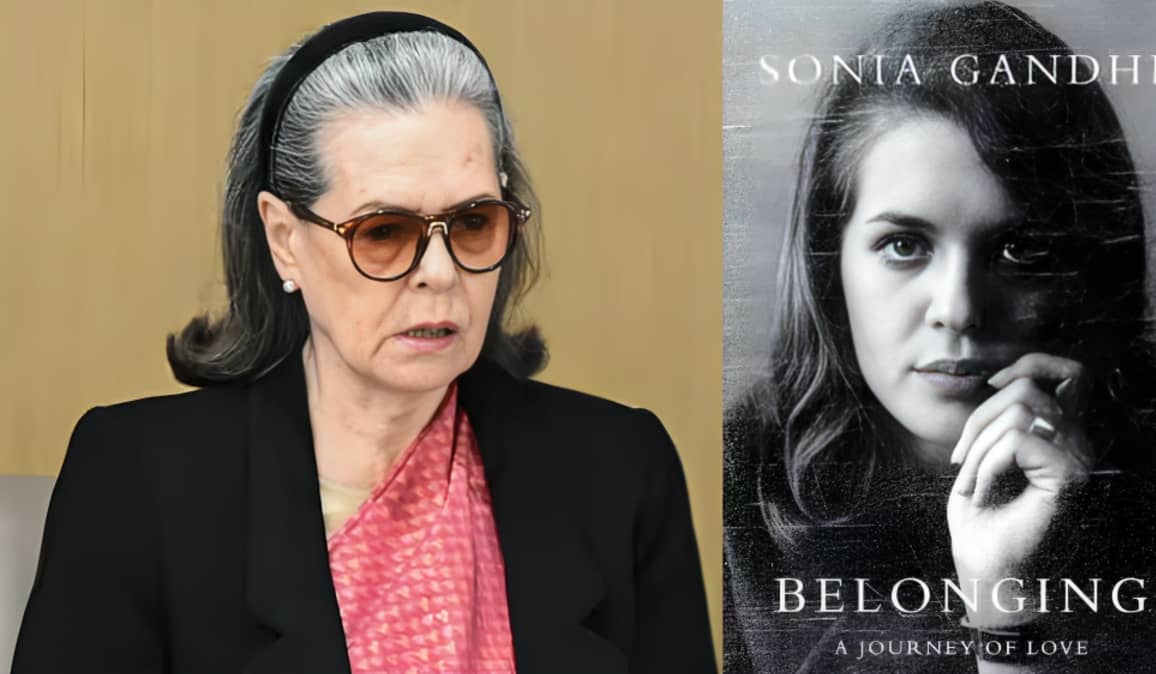
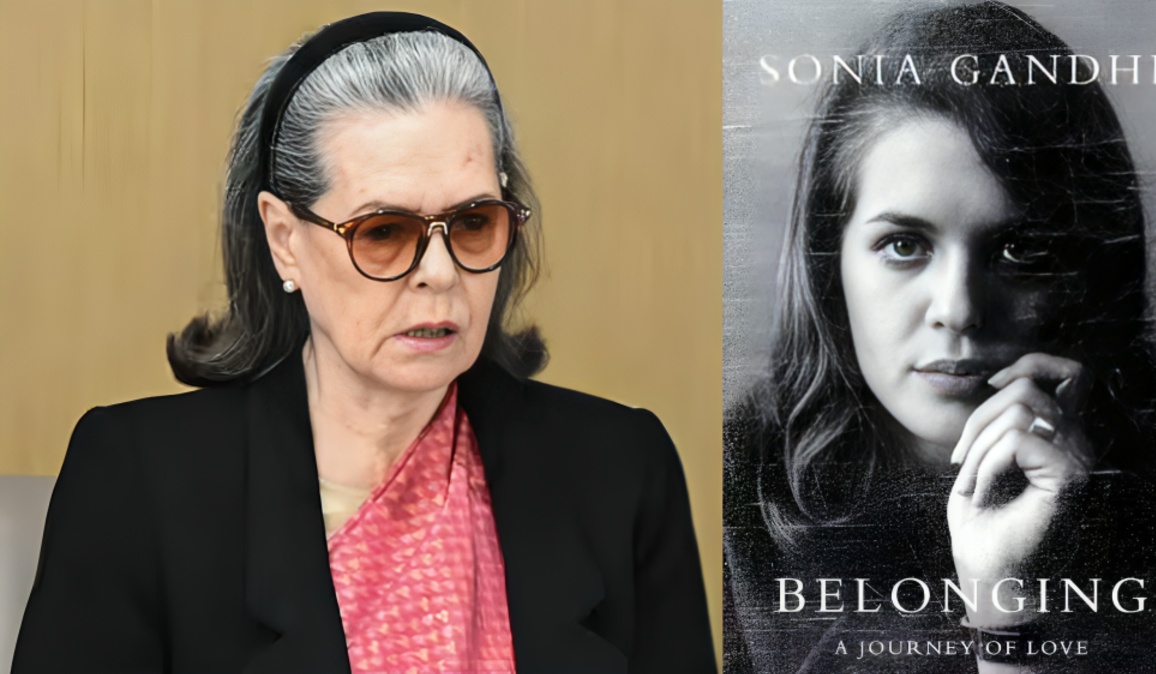
A political controversy has emerged over Congress leader Sonia Gandhi’s memoir Belonging: A Journey of Love ahead of its planned release in India.
The memoir, which is expected to cover aspects of Sonia Gandhi’s personal life, family and political journey, has come under political scrutiny even before its Indian publication. The controversy intensified after Penguin Random House India clarified that it is not the publisher of the book in India.
According to recent reports, Penguin Random House India had been associated with discussions surrounding the Indian publication of the memoir. Reports said differences emerged over proposed editorial changes to the manuscript. Sonia Gandhi was reportedly not in agreement with certain suggested changes, following which the publisher decided not to proceed with the Indian publication.
The development subsequently became a political issue, with Congress raising concerns about the circumstances surrounding the publication decision. Party leaders and supporters have questioned whether political pressure played a role in the developments involving the memoir.
The Congress has described the controversy in terms of censorship and freedom of expression. The party’s position is that a memoir written by a major political figure should be allowed to reach readers without politically motivated interference.
The BJP, however, has rejected the Congress allegations. BJP leaders have accused the opposition party of attempting to create a false narrative of fear around the publication of the memoir.
BJP leader Amit Malviya also criticised the controversy surrounding the book and questioned the reported fact-checking and editorial process. He questioned what exactly required fact-checking in a memoir and suggested that the issue involved questions about the distinction between personal recollection and factual claims.
The controversy has therefore developed into a wider political debate involving freedom of expression, editorial independence and the publication of politically sensitive material.
At the centre of the dispute is Sonia Gandhi’s memoir, titled Belonging: A Journey of Love. The book is expected to provide a personal account of her life and experiences in India, including her relationship with former Prime Minister Rajiv Gandhi and her decades of involvement in Indian public life.
The memoir is being published internationally through Alfred A Knopf, an imprint of Penguin Random House. However, Penguin Random House India has clarified that it is not the Indian publisher of the book. The clarification came after reports and social media discussions linked the Indian edition to Penguin Random House India.
Reports have indicated that other publishers have shown interest in publishing the memoir in India. The Indian publication arrangements are therefore separate from the international release plans.
The controversy has attracted considerable political attention because Sonia Gandhi remains an influential figure in the Congress party and has been associated with Indian national politics for several decades.
Congress has argued that the developments surrounding the memoir raise questions about freedom of expression and whether political considerations are influencing the publication of books dealing with senior political personalities.
The BJP has strongly disputed that interpretation. Its response has focused on rejecting what it considers an exaggerated account of the circumstances surrounding the publication.
The two parties have consequently presented sharply different interpretations of the same development. Congress has raised concerns about possible censorship and political pressure, while the BJP has accused Congress of using the controversy to construct a political narrative.
The issue also highlights the role of publishers in reviewing manuscripts before publication. Publishers routinely assess manuscripts for legal, factual and editorial concerns, particularly when books contain references to public figures, political events or potentially contentious claims.
In the case of Sonia Gandhi’s memoir, reports suggest that editorial discussions became a point of disagreement. However, the precise details of all proposed changes have not been publicly established.
Penguin Random House India has maintained that it is not the publisher of the memoir and has sought to distance itself from claims about its publication in India.
The controversy has also revived discussions about the challenges faced by publishers when dealing with politically sensitive books. Memoirs by politicians can attract significant public interest but can also generate disagreements over factual accuracy, legal risks, editorial changes and political interpretation.
The BJP’s response has added another political dimension to the dispute. Party leaders have questioned the Congress narrative and argued that the developments should not automatically be described as censorship.
Congress, meanwhile, has continued to raise questions about the circumstances surrounding the publication process. The party’s concerns have focused on whether external pressure influenced the publisher’s decision.
At present, there is no publicly established evidence proving that the Indian government ordered the publisher to withdraw from the project. The allegation of government pressure remains a political claim and should be treated as such unless supported by further evidence.
Similarly, the publisher’s decision to distance itself from the Indian publication should not automatically be interpreted as proof of censorship. The reported disagreement over editorial changes provides an alternative explanation for the breakdown in the publication arrangement.
The controversy is expected to continue as the book moves closer to its international release and discussions over its Indian publication arrangements develop.
The memoir is expected to attract considerable attention because of Sonia Gandhi’s long association with Indian politics and the Gandhi family. Any account of major political events involving the Congress leadership is likely to generate interest among readers as well as political parties.
The ongoing debate demonstrates how memoirs by political figures can become part of wider political discourse even before publication.
For now, the confirmed developments are that Penguin Random House India has said it is not the Indian publisher of Sonia Gandhi’s memoir, while reports indicate that disagreements over editorial changes preceded the decision not to proceed with the Indian publication. Congress has raised allegations of political pressure and censorship, while the BJP has rejected those allegations and accused Congress of creating a false narrative.
Further developments regarding the Indian publisher and the publication of Belonging: A Journey of Love are expected to clarify the future of the memoir in the Indian market.