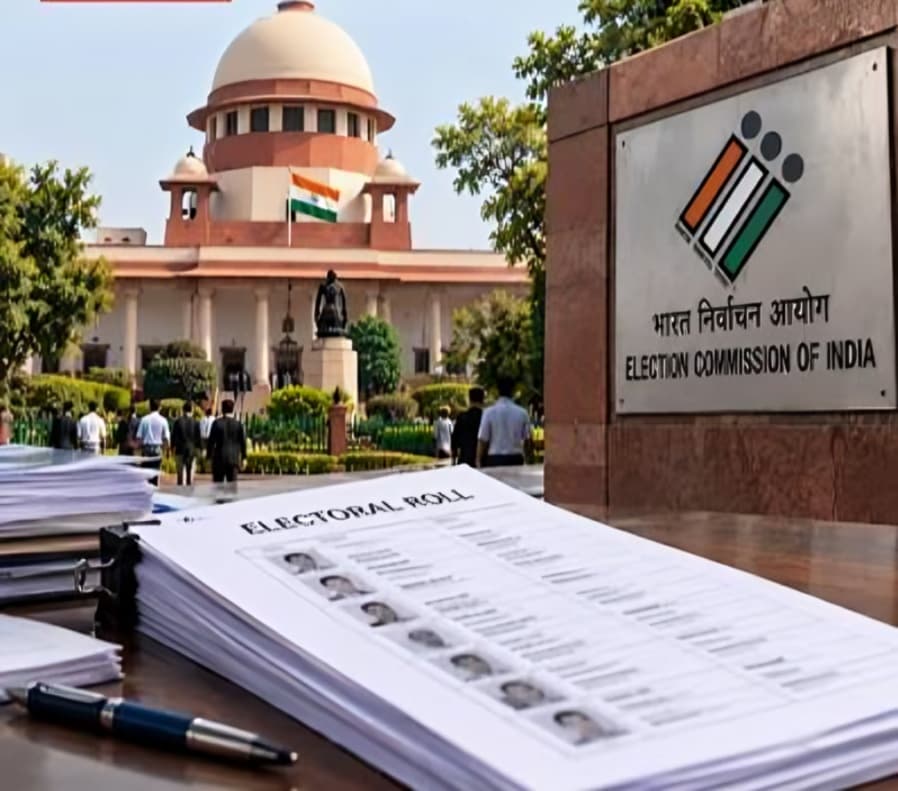
Supreme Court Seeks ECI Response on Maharashtra Voter Roll Revision Plea, Hearing Set for November 5
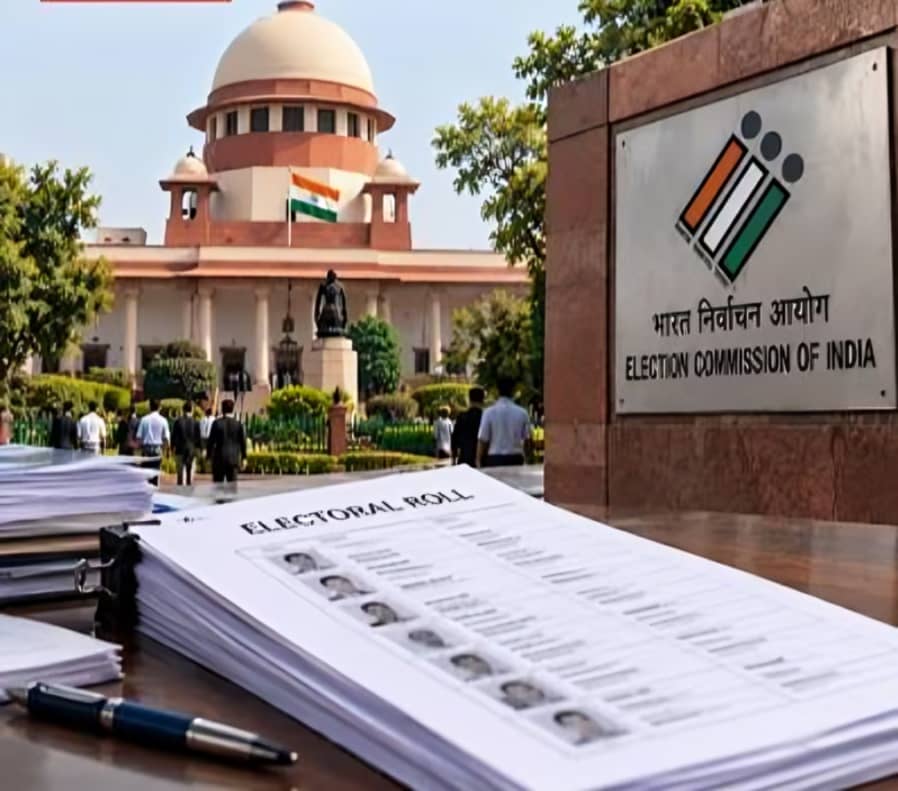
The Supreme Court of India has issued notices to the Election Commission of India and other authorities on a petition challenging the Special Intensive Revision of electoral rolls in Maharashtra. The petition alleges large-scale voter deletions and raises concerns that people temporarily relocated because of redevelopment projects may have been left out of the draft electoral rolls.
A bench comprising Chief Justice of India Surya Kant and Justices Joymalya Bagchi and V Mohana took up the matter on October 26, 2026. The court scheduled the next hearing for November 5 and sought a response from the authorities. However, it did not immediately suspend the revision exercise or extend the deadline for filing claims and objections.
The petition was filed by Arun Anandagiri, a chartered accountant and journalist. Senior advocate Arvind P Datar appeared on his behalf and argued that the process could affect a substantial number of existing voters across the state.
Petition Raises Concerns Over Voter Deletions
The petitioner has challenged the manner in which voter names were excluded during Maharashtra’s Special Intensive Revision, commonly known as SIR. The exercise is intended to review and update electoral rolls, including identifying entries that may be duplicate, ineligible or linked to people who can no longer be traced at their registered addresses.
During the hearing, the petitioner’s counsel alleged that around three crore voters had been struck off or affected following the publication of draft electoral rolls. He also referred to approximately 1.22 crore voters who, according to his submissions, had been flagged under the category of logical discrepancies.
These figures were presented by the petitioner’s side and should not be interpreted as final judicial findings. Official figures reported by the Maharashtra election authorities indicated that 20,688,487 electors, representing approximately 21.14 per cent of the state’s registered voters, were excluded from the draft rolls because they could not be traced at their recorded addresses.
The court will consider the competing submissions as the case proceeds. The central question raised by the petition is whether the revision process and the procedures for restoring excluded names adequately protect the rights of eligible voters.
Redevelopment Projects in Mumbai and Pune
One of the key concerns raised before the court relates to residents who have moved temporarily because of redevelopment projects in Mumbai and Pune.
According to the petitioner’s counsel, thousands of residents have had to leave their original homes while older buildings and housing societies are demolished and reconstructed. Some residents have been accommodated elsewhere while waiting for new flats to be allotted.
The counsel referred to approximately 3,500 redevelopment projects in Mumbai and 1,500 in Pune. He argued that residents who had temporarily moved from their registered addresses were at risk of being marked as unavailable or “person not found” during the verification exercise.
The petition contends that a change of address caused by redevelopment should not, by itself, lead to the loss of an eligible voter’s place on the electoral roll. It asks the authorities to ensure that people who were previously registered are not excluded without a fair opportunity to establish their eligibility and update their details.
The concerns are particularly relevant in large urban areas, where redevelopment, rental housing and temporary relocation can make address verification more complicated. The court has not yet ruled on the merits of these allegations.
Dispute Over Form 6 for Previously Registered Voters
Another major issue raised during the hearing concerns the form that voters must use if their names are missing from the draft rolls.
The petitioner’s counsel argued that Form 6 is intended for people applying for registration as new voters. He questioned whether people who had already been registered and voted in previous elections should be required to use the same form after their names were excluded during the SIR process.
According to the petition, the declaration associated with Form 6 could create difficulties for previously registered voters who are asked to apply as if they were registering for the first time. The counsel requested that the Election Commission consider a separate procedure or form for voters whose names had been removed during the revision.
During the hearing, Chief Justice Surya Kant said that people who filed Form 6 to seek registration would not be prosecuted over the concern raised. However, the bench did not issue a final ruling on the broader questions concerning the form or the revision process.
The court’s observations should be distinguished from a final judgment on the petition. The legal and procedural issues remain subject to further consideration.
Supreme Court Declines Immediate Interim Relief
The petitioner requested that the court pause the finalisation of the electoral rolls until the challenge could be examined. The plea also sought an extension of the deadline for filing claims and objections.
The bench declined to grant immediate relief without first hearing the Election Commission and the other authorities. It scheduled the matter for November 5, when the parties will have an opportunity to present their positions.
The court’s decision to issue notices means the petition will be considered further. It does not mean the allegations have been accepted as proven or that the entire SIR exercise has been declared unlawful.
The claims and objections deadline was due to close on October 26 under the schedule in force at the time of the hearing. The court did not extend that deadline through an immediate order in this matter.
Election Commission’s Role and Next Steps
The Election Commission of India is responsible for maintaining electoral rolls and conducting the procedures required to register eligible voters. During an SIR exercise, officials verify voter details and review entries to improve the accuracy of the rolls.
The process has drawn political and legal scrutiny in several states, with critics raising concerns about the possibility of eligible voters being excluded. Election authorities have described the revision process as a means of updating the rolls and identifying entries that require verification.
The Maharashtra petition now places the specific concerns raised by the petitioner before the Supreme Court. The Election Commission and other authorities are expected to respond to the issues identified in the case.
The court will then consider the submissions and determine whether any further directions are required. Until such an order is issued, the notices should not be interpreted as a suspension of the revision exercise.
Hearing Scheduled for November 5
The Supreme Court is scheduled to hear the Maharashtra SIR petition again on November 5, 2026. The proceedings are expected to address the allegations concerning voter deletions, temporary relocation during redevelopment and the process available to people whose names are missing from the draft rolls.
The case highlights the importance of balancing the accuracy of electoral rolls with safeguards for eligible voters. Its outcome may clarify how authorities should handle cases involving voters who cannot be located at their recorded addresses or who need to restore their names after a revision.
As of October 26, the court had issued notices and scheduled a further hearing but had not ordered the Maharashtra SIR exercise to stop. The allegations remain under judicial consideration, and the next steps will depend on the responses filed by the authorities and any subsequent directions from the court.