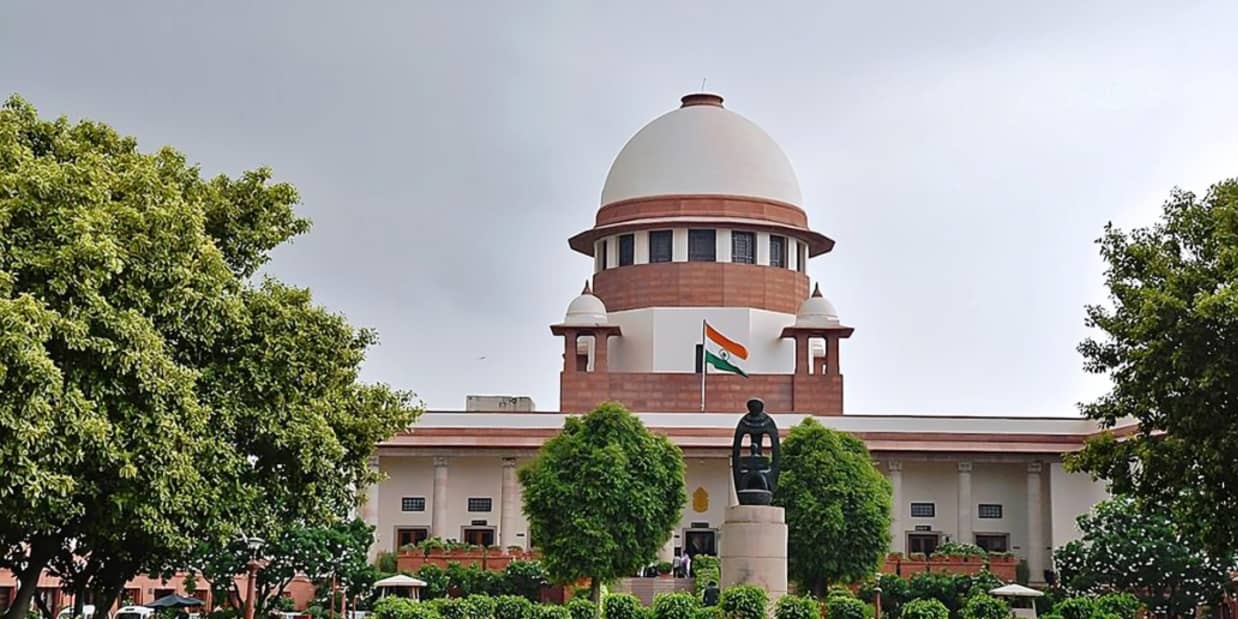
The Supreme Court has sought responses from the Central government, states, Union Territories and major social media platforms Meta and X on a Public Interest Litigation concerning the publication of accused persons' identities by police organisations on social media.
The petition seeks directions to prevent police departments from uploading photographs, videos and other material that reveal the identity or face of a person accused of an offence. It also seeks safeguards against the publication of content that allegedly portrays accused persons in a humiliating or dehumanising manner.
A bench comprising Chief Justice of India Surya Kant, Justice Joymalya Bagchi and Justice K V Mohana took note of the submissions made on behalf of the petitioner and issued notices to the concerned authorities and social media companies.
The petition was filed by Hemendra Patel through advocate on record Shrutanjaya Bhardwaj. Senior advocate Gopal Sankaranarayanan appeared for the petitioner before the Supreme Court.
The plea has raised concerns over the manner in which police organisations use official social media accounts to publish information relating to criminal investigations and accused persons. According to the petition, some police posts may disclose the faces or identities of individuals before the criminal justice process has reached a conclusion.
The petitioner has sought directions to states to establish clear guidelines regulating the use of social media platforms by police organisations. The proposed guidelines would specifically address the publication of content that reveals the identity of accused persons or depicts them in a manner that could be considered inhuman, derogatory or dehumanising.
The petition refers to examples of images and videos in which accused persons are allegedly shown while handcuffed, tied with ropes, beaten with sticks, made to kneel, dragged or taken down stairs. The petitioner has argued that such material should not be used as part of police publicity or social media communication.
The issue is significant because a person accused of an offence remains entitled to due process and a fair legal proceeding. An accusation or arrest does not by itself establish guilt. The determination of guilt is ultimately made through the judicial process.
The petition therefore seeks to create a distinction between legitimate police communication and the publication of material that could unnecessarily expose or humiliate accused individuals.
The plea has also sought directions to state governments to frame appropriate policies for their police departments. Such policies could regulate how photographs, videos and other investigation related material are handled before being published on official social media accounts.
The petition has named the Union Ministry of Electronics and Information Technology as one of the respondents. Meta Platforms Inc and X Corp have also been made respondents in the proceedings.
The petition has further sought directions to Meta and X to establish appropriate policies and user guidelines for their platforms. The objective is to prevent the publication and continued circulation of content that reveals the identities of accused persons or depicts them being subjected to allegedly inhuman or degrading treatment.
The plea also seeks a formal and transparent mechanism through which users can report such material and request its removal. According to the petition, platforms should have a structured process for responding promptly when content falling within the proposed restrictions is reported.
The case raises wider questions about privacy, dignity and the use of social media by law enforcement agencies. Police departments across India increasingly use platforms such as Facebook, Instagram and X to communicate information about investigations, arrests, missing persons, public safety measures and other activities.
While social media can help law enforcement agencies communicate directly with the public, the petition argues that such communication should be subject to safeguards when it concerns people who have only been accused of offences.
The issue of online publication is particularly important because information posted on social media can spread rapidly and remain accessible even after an investigation or court proceeding has progressed. Images and videos can also be copied and redistributed by other accounts, making it difficult to control their subsequent circulation.
The petitioner has therefore sought preventive guidelines rather than relying only on remedies after material has already been widely circulated.
The Supreme Court's decision to issue notices does not mean that the court has accepted the allegations or granted the relief sought in the petition. It means that the respondents have been asked to respond to the issues raised before the court.
The Centre, state governments, Union Territories and the social media platforms will have an opportunity to present their positions before the Supreme Court. Their responses could help the court examine the legal and practical questions involved in regulating police social media activity.
The proceedings may also require consideration of the balance between transparency in policing and the rights of accused persons. Police departments may need to communicate information about serious crimes to the public, while ensuring that such communication does not prejudge the guilt of individuals or unnecessarily compromise their dignity.
The petition's request for guidelines could, if accepted, have implications for police departments across the country. Clear standards could potentially establish when photographs or other identifying information may be published and what safeguards should apply when a person has not yet been convicted.
The matter also involves the responsibilities of social media companies. Platforms such as Meta and X host large volumes of user generated content, and the petition seeks specific policies concerning material involving accused persons.
The plea's request for a transparent reporting and removal mechanism could lead to further discussion about how platforms should respond when users report allegedly dehumanising content involving accused persons.
The Supreme Court has previously dealt with questions concerning the removal of unlawful online content and the responsibilities of intermediaries. The present petition focuses specifically on police social media practices and the publication of information concerning accused persons.
The case could therefore become significant for the relationship between law enforcement, digital platforms and individual rights. Any guidelines eventually issued by the court could influence how police departments across India use official social media accounts.
For now, no final decision has been made on the petition's demands. The Supreme Court has only sought responses from the concerned authorities and platforms.
The proceedings will determine whether broader guidelines are necessary to regulate police publications involving accused persons and whether social media platforms should adopt specific procedures for dealing with such content.
The central issue before the court is therefore not whether police can communicate information about criminal cases, but how such communication should be carried out while respecting privacy, dignity and the presumption of innocence.
The Supreme Court's notice marks the beginning of judicial consideration of these concerns. Further proceedings are expected after the respondents submit their responses to the petition.