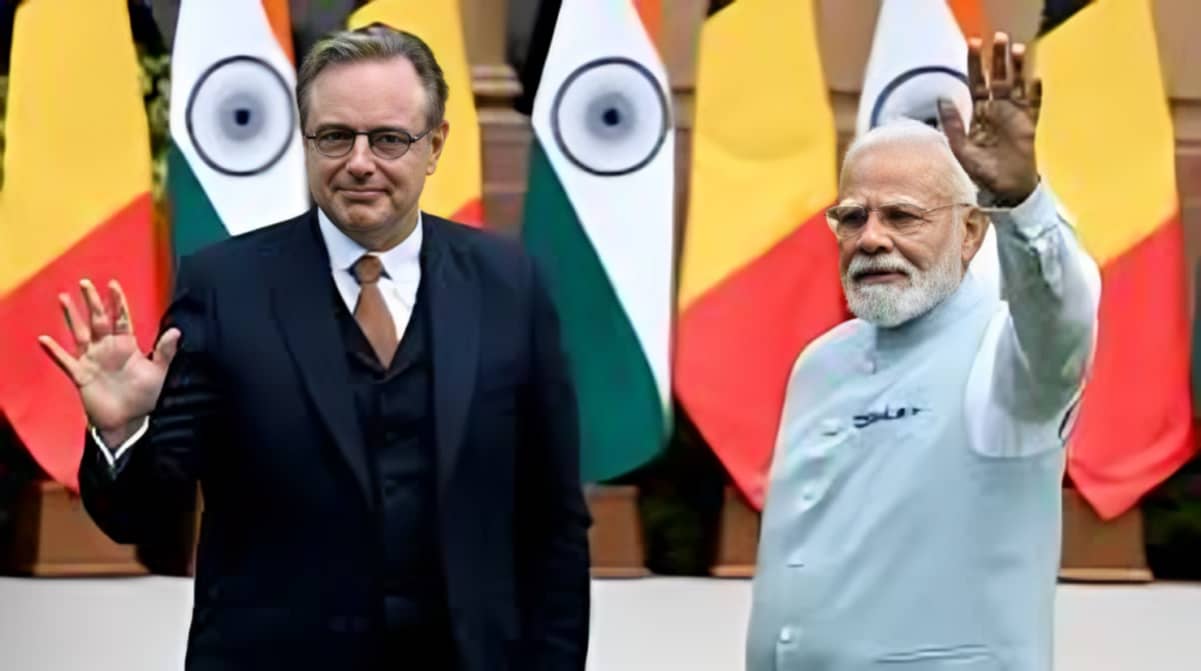
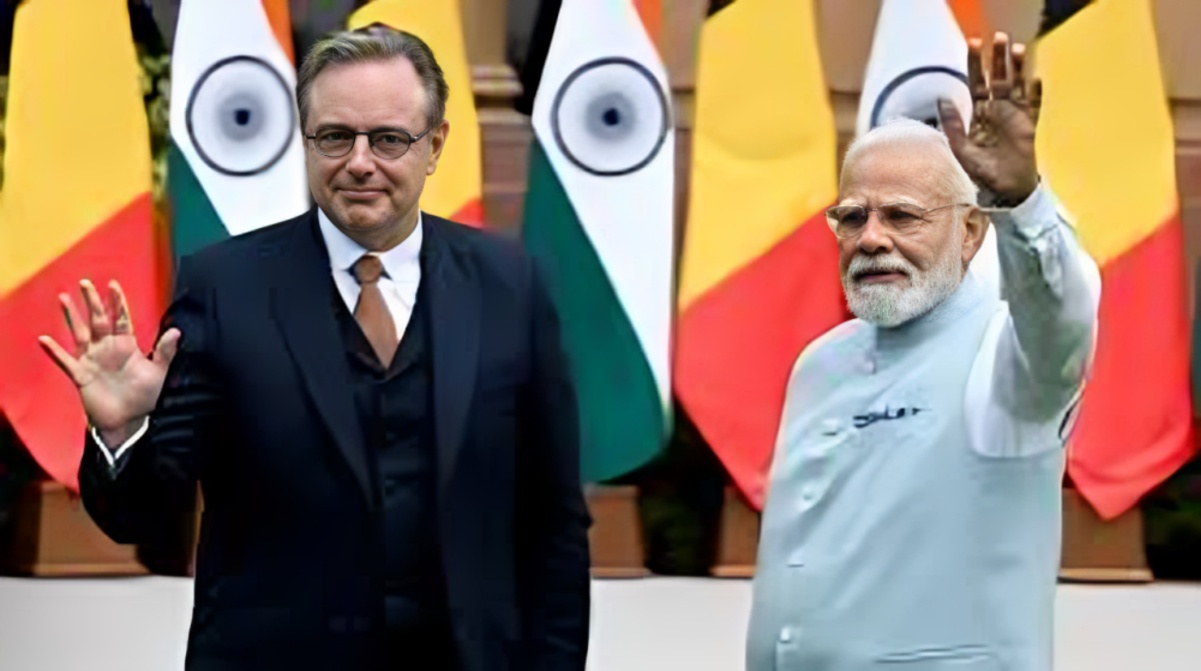
India and Belgium have agreed to expand their strategic partnership across defence, trade, investment, clean energy, technology and other emerging sectors following talks between Prime Minister Narendra Modi and Belgian Prime Minister Bart De Wever in New Delhi.
De Wever visited India from September 2 to 4, 2026, at the invitation of Prime Minister Modi. The visit marked his first trip to India since becoming Belgium's prime minister in February 2025. It was also the first visit to India by a Belgian prime minister in nearly two decades.
During their bilateral discussions, the two leaders reviewed the full range of relations between India and Belgium. The talks focused on strengthening economic cooperation while expanding the relationship into strategic areas such as defence, security, semiconductors, critical minerals, renewable energy and advanced technology.
One of the major outcomes was the decision by both countries to work towards doubling bilateral trade over the next five years. India and Belgium identified several sectors with potential for greater economic cooperation, including pharmaceuticals, life sciences, healthcare, aerospace, logistics, digital technologies, clean technology and advanced manufacturing.
The two countries also launched an India Belgium Investment Fast Track Mechanism. The initiative is intended to make it easier for companies from both countries to invest, address business related difficulties and improve the investment environment.
India and Belgium also agreed to strengthen cooperation between Belgium's Federal Holding and Investment Company and India's National Investment and Infrastructure Fund. The two sides said this engagement could support the development of an Indo Belgian economic and investment corridor.
Defence cooperation emerged as an important component of the strengthened relationship. India and Belgium welcomed the signing of a Letter of Intent on Defence Cooperation. The framework is expected to encourage regular exchanges, staff discussions, education and training, research cooperation and closer links between defence industries.
The two countries also expressed support for cooperation in defence manufacturing, technology, innovation, co-development and co-production. Such cooperation could provide opportunities for companies and institutions in both countries to work together on advanced defence capabilities and technologies.
Security cooperation was another key area discussed by the two prime ministers. Belgium reiterated its solidarity with India in the fight against terrorism, including cross border terrorism. The two sides also agreed to explore the establishment of a Belgium India Joint Working Group on Counter Terrorism.
The proposed mechanism could strengthen cooperation against terrorist financing, terrorist networks and safe havens. India and Belgium also welcomed an agreement between India's Central Bureau of Investigation and Belgium's Federal Police aimed at improving cooperation against transnational organised crime and cybercrime.
The agreement provides a framework for cooperation in areas such as information sharing, capacity building, tracing fugitives and exchanging best practices.
Clean energy was another major focus of the talks. India and Belgium renewed their memorandum of understanding on renewable energy cooperation. The expanded cooperation will cover areas including green hydrogen, solar energy, energy storage, offshore wind, bioenergy, small hydropower and pumped storage projects.
Both countries also highlighted the importance of developing reliable green hydrogen value chains. Greater cooperation in clean energy could support India's transition towards cleaner energy sources while creating opportunities for Belgian companies and institutions with expertise in renewable technologies.
Critical minerals were also included in the expanded partnership. India and Belgium agreed to strengthen cooperation in critical mineral processing and recycling in an effort to build more reliable and resilient supply chains.
Technology and semiconductor cooperation are also expected to receive greater attention. The two sides encouraged closer engagement between Belgian semiconductor research institutions and Indian companies and research organisations. Cooperation in artificial intelligence, emerging technologies, startups and digital skills was also welcomed.
The leaders also discussed maritime connectivity, ports and logistics. Belgium's expertise in port development and dredging could contribute to cooperation with Indian port authorities and infrastructure projects. The two countries also identified offshore renewable energy infrastructure as an area with potential for collaboration.
Education, research and people to people relations were also part of the discussions. India invited leading Belgian universities to explore opportunities for establishing campuses in India under the country's National Education Policy. Both sides also expressed interest in strengthening higher education, research, astronomy, astrophysics and space technology cooperation.
The two countries agreed to work towards improving mobility for professionals, students and researchers. They also discussed visa processing and direct air connectivity. Cooperation in healthcare was welcomed, including measures to facilitate the mobility of qualified Indian nurses to Belgium.
The discussions also covered global developments. Prime Minister Modi said India's economic growth could create new opportunities for the global economy. He highlighted India's recent quarterly growth rate of 7.8 percent and presented the country's economic expansion as an opportunity for international businesses and investors.
In their joint statement, Modi and De Wever noted that conflicts around the world were creating significant disruption. They highlighted the impact of geopolitical tensions on food supplies, energy markets, supply chains and economic activity.
Both countries emphasised the importance of dialogue and diplomacy in addressing international conflicts. They also stressed the need to protect maritime routes and maintain safe and uninterrupted international shipping.
The India Belgium relationship has traditionally been associated with trade, particularly the diamond industry connecting Antwerp with major Indian centres such as Mumbai and Surat. The latest agreements indicate an effort to broaden the relationship into strategic and technology driven sectors.
The two leaders also recalled the historical connection between India and Belgium, including the sacrifice of more than 9,000 Indian soldiers in Flanders Fields during the First World War. India and Belgium established diplomatic relations in 1947, and 2027 will mark the 80th anniversary of those relations.
The two countries also welcomed the launch of their inaugural Strategic Dialogue in Brussels in July 2026. The dialogue provides a regular platform for discussions on trade, investment, defence, security, technology, green transition, connectivity and people to people relations.
The latest agreements therefore represent an expansion of India Belgium relations beyond traditional commercial ties. Defence cooperation, clean energy, critical minerals, semiconductors and advanced technologies are increasingly becoming important parts of the bilateral partnership.
With the two countries targeting a doubling of bilateral trade within five years, the implementation of the new investment mechanism and sector specific agreements will be important in determining the pace of future economic engagement.