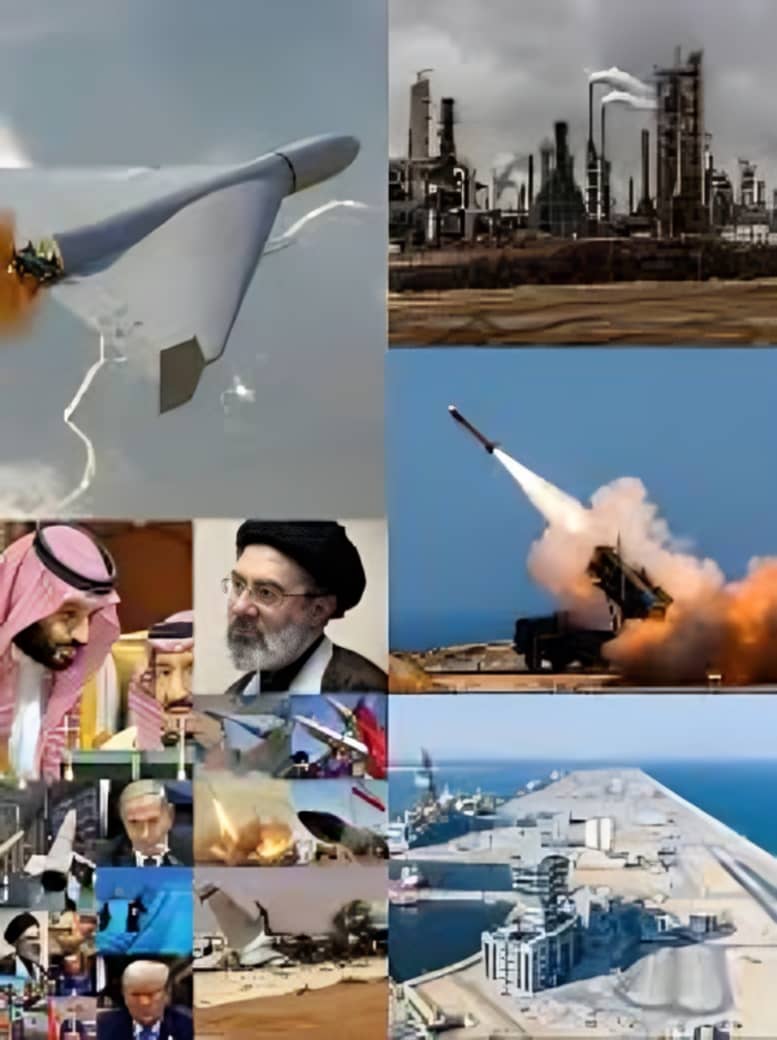
Iran has launched missile and drone attacks toward US linked military facilities in Kuwait as tensions between Tehran and Washington have intensified. The latest escalation comes after renewed US military strikes against Iranian targets and has raised concerns about the conflict spreading further across the Gulf region.
Iranian forces said they targeted American military assets in Kuwait as part of their response to US military operations. The Islamic Revolutionary Guard Corps claimed that missiles and drones were used against facilities at Ali Al Salem Air Base, where US military personnel and equipment are stationed. The claims were reported by international media, although details concerning the extent of damage and casualties have varied between official statements and independent reports.
Kuwait has been directly affected by the wider US Iran confrontation because of the presence of American military personnel and facilities on its territory. The country has repeatedly faced the challenge of protecting its territory while avoiding becoming further involved in the broader conflict.
The latest attacks followed a renewed series of US military operations against Iran. The United States has said its military actions are aimed at Iranian military capabilities and at countering threats to American forces and commercial shipping in the region. Iran, meanwhile, has described its attacks as retaliatory actions against the United States and its allies.
The developments have also highlighted the vulnerability of Gulf countries that host US military installations. Kuwait, Bahrain, Qatar and other regional states have significant strategic relationships with Washington, while also maintaining their own diplomatic and security interests.
The Iranian attacks were not limited to Kuwait. Reports indicated that Iran also launched missiles and drones toward other locations in the Gulf and against US linked facilities in the region. Several Gulf countries activated air defence systems as authorities attempted to intercept incoming projectiles.
The latest escalation came shortly after Iran's Supreme Leader Mojtaba Khamenei called for unity among Muslim nations. In a message issued during Islamic Unity Week, Khamenei urged Muslim countries, particularly Gulf states, to cooperate against what he described as common external threats from the United States and Israel.
Khamenei argued that greater unity among Muslim countries could strengthen regional security and reduce the influence of foreign powers. His remarks were directed particularly toward Gulf states, which have close security relationships with the United States.
The timing of the statement and the subsequent Iranian attacks has attracted international attention. However, the two developments should not automatically be interpreted as directly connected. The attacks were presented by Iran as retaliation for US military operations, while Khamenei's earlier message focused on broader political and regional unity.
Kuwait's position in the conflict is particularly sensitive because it hosts important US military infrastructure. Ali Al Salem Air Base is one of the locations used by American forces for regional military operations. Any attack on facilities connected to US forces therefore carries the potential to widen tensions between Iran and Washington.
Iranian officials have repeatedly warned that US military facilities in the region could become targets if American attacks on Iran continue. Washington, meanwhile, has warned Iran against attacking US forces or allies in the Gulf.
The renewed fighting has also affected regional security calculations. Governments across the Gulf are monitoring airspace and maritime routes more closely, while military forces have increased defensive measures. The possibility of additional missile and drone attacks remains a major concern for countries located near the conflict zone.
The Strait of Hormuz is another major factor in the crisis. The waterway is one of the world's most important routes for oil and gas shipments and lies close to the areas affected by the military confrontation. Any prolonged disruption could have consequences for global energy supplies, shipping costs and international markets.
The conflict has already created uncertainty for commercial shipping in the region. International authorities and shipping companies are closely monitoring developments because military activity near major maritime routes can increase risks for vessels and crews.
The escalation also comes after months of military confrontation between Iran and the United States and Israel. The latest exchange of attacks has raised concerns that earlier efforts to reduce hostilities may not hold.
International governments have called for restraint and diplomatic engagement to prevent the conflict from spreading. Regional countries have strong economic and security interests in avoiding a wider war, particularly because their territories and infrastructure could be affected by continued military operations.
Kuwait has historically maintained close relations with the United States while also seeking stable relations with neighbouring countries. The Iranian attacks place additional pressure on Kuwait because the country must protect its sovereignty while dealing with the consequences of the US military presence.
The US military has deployed significant resources across the Middle East, including air defence systems and other military assets. Iran's missile and drone capabilities allow Tehran to threaten some of these installations over long distances.
Iranian forces have claimed successful strikes against US assets, but such claims should be assessed separately from independently confirmed damage or casualties. Military statements from both sides are often issued during active combat and may provide different accounts of the same events.
The situation remains fluid, and further developments could depend on whether Washington and Tehran continue military operations or return to diplomatic negotiations. Any additional attacks against Gulf countries could increase pressure on regional governments to respond.
For civilians living in Kuwait and other Gulf states, the renewed attacks have created concerns about personal safety, air travel and disruption to normal activities. Authorities have continued to monitor the situation and use air defence measures when necessary.
The latest attacks demonstrate how the US Iran conflict has increasingly affected countries beyond Iran and the United States. Gulf nations that host American military facilities are particularly exposed to retaliatory strikes, even when they are not direct participants in the conflict.
The call for Muslim unity issued by Khamenei has also added a political dimension to the latest developments. His message emphasised cooperation among Muslim countries and opposition to US and Israeli influence. However, Gulf states have different foreign policy positions and security partnerships, meaning a unified regional response remains difficult.
The immediate priority for Kuwait and other Gulf countries is to protect their territory and populations while avoiding further escalation. For the United States, protecting its military personnel and facilities remains a central concern. Iran, meanwhile, has continued to frame its attacks as retaliation for US military action.
The latest missile and drone attacks therefore represent another significant escalation in the ongoing US Iran confrontation. The situation is being closely monitored because any further expansion of military activity could affect regional security, international shipping and global energy markets.
At present, the conflict remains highly volatile. Diplomatic efforts, military developments and the responses of Gulf countries will determine whether the latest escalation remains limited or develops into a broader regional confrontation.