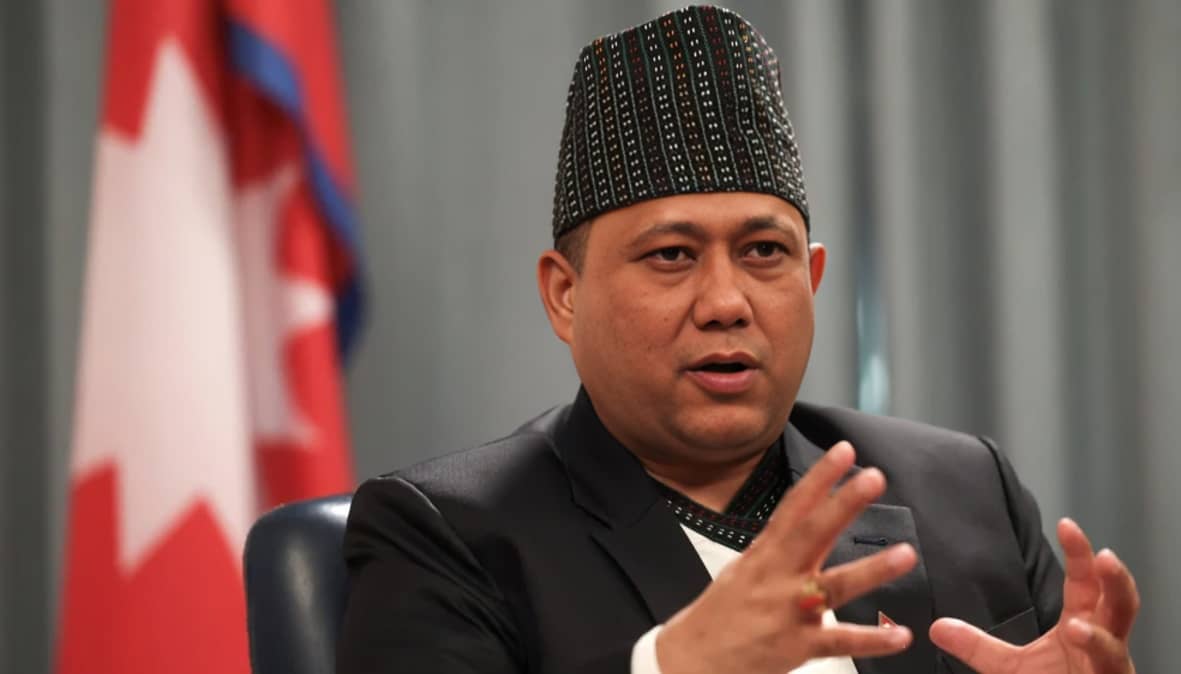
Nepal Foreign Minister Shisir Khanal has clarified that the Nepal government has not formally sought financial compensation from India or any other country following the devastating flash floods that recently struck parts of the Himalayan nation.
The clarification came after reports circulated that Nepal was seeking climate related compensation from major greenhouse gas emitting countries, including India, China and the United States. Khanal said that neither he nor officials in Nepal's Ministry of Foreign Affairs or the government had made a formal request for compensation from these countries.
Speaking to ANI, Khanal said Nepal's position had been presented in the broader context of climate change and its growing impact on Himalayan communities. According to the minister, Nepal's appeal was for the international community to recognise the increasing risks faced by countries that are highly vulnerable to climate change despite having relatively low greenhouse gas emissions.
The clarification follows remarks attributed to Khanal earlier in the week in which he discussed the responsibility of major industrial emitters for climate related losses suffered by vulnerable countries. Those comments were widely reported as a call for compensation following the catastrophic floods.
Khanal has now sought to distinguish between a formal compensation demand and Nepal's broader appeal for international recognition and support in dealing with climate related disasters. He said Nepal had not asked India, China, the United States or any other country to pay compensation for the recent disaster.
The minister also highlighted the shared environmental challenges faced by Nepal, India and China. The three countries are closely connected through the Himalayan ecosystem, where rising temperatures, glacier changes and extreme weather events can have consequences extending beyond national borders.
Khanal called for greater cooperation among the three countries to improve preparedness for climate related disasters. He said the focus should be on strengthening regional coordination and ensuring that communities vulnerable to extreme weather receive appropriate support.
The clarification also comes as Nepal continues rescue, recovery and rehabilitation operations following the catastrophic flash floods. The disaster caused extensive destruction in affected areas, with homes, roads and other infrastructure damaged or swept away. Search and rescue operations have continued as authorities work to locate missing people and assist affected communities.
The disaster has also drawn attention to the increasing risks associated with climate change in the Himalayan region. Scientists and climate experts have repeatedly warned that rising temperatures can contribute to glacier melt and increase the risks associated with glacial and mountain related hazards.
Nepal has argued that its contribution to global greenhouse gas emissions is relatively small compared with major industrial economies, while its geography leaves it particularly exposed to the consequences of a changing climate. The country has therefore continued to call for stronger international action on climate adaptation, disaster preparedness and climate related financial support.
India has played a significant role in the immediate humanitarian response to the disaster. New Delhi sent relief supplies, rescue equipment, medical materials and specialised personnel to assist Nepal following the floods. Additional assistance was also provided as rescue and recovery operations continued.
Khanal acknowledged India's support and said communication between the two governments had continued as Nepal assessed its requirements. He indicated that India remained ready to provide further assistance if requested by the Nepal government.
The minister's latest comments suggest that Nepal's immediate focus remains on relief, recovery and regional cooperation rather than pursuing a bilateral compensation claim against India.
The distinction is important because climate compensation is a wider international issue involving discussions over responsibility for climate related losses and damage. Vulnerable countries have increasingly called for greater financial support from wealthier nations and major emitters to help them respond to the effects of climate change.
For Nepal, the issue is particularly significant because of the country's dependence on the Himalayan environment. Changes in glaciers, snow cover, rainfall patterns and temperatures can affect water resources, agriculture, infrastructure and communities across the region.
Khanal's clarification therefore places Nepal's position within a broader call for international cooperation on climate change. Rather than presenting the recent floods solely as a bilateral issue involving India, Nepal is urging countries across the world to recognise the long term risks facing Himalayan communities.
The devastating floods have also highlighted the importance of early warning systems, disaster preparedness and cooperation among neighbouring countries. Nepal, India and China share parts of the wider Himalayan ecological system, making coordination important for responding to future climate related emergencies.
As Nepal continues its recovery, the government is expected to focus on humanitarian assistance, rebuilding damaged infrastructure and supporting affected families. At the same time, the disaster has renewed discussions about how Himalayan countries can prepare for increasingly severe climate related events.
Khanal's statement makes clear that Nepal has not submitted a formal demand for compensation to India. His message is instead focused on international recognition of the climate risks faced by vulnerable countries and the need for stronger cooperation to protect communities from future disasters.