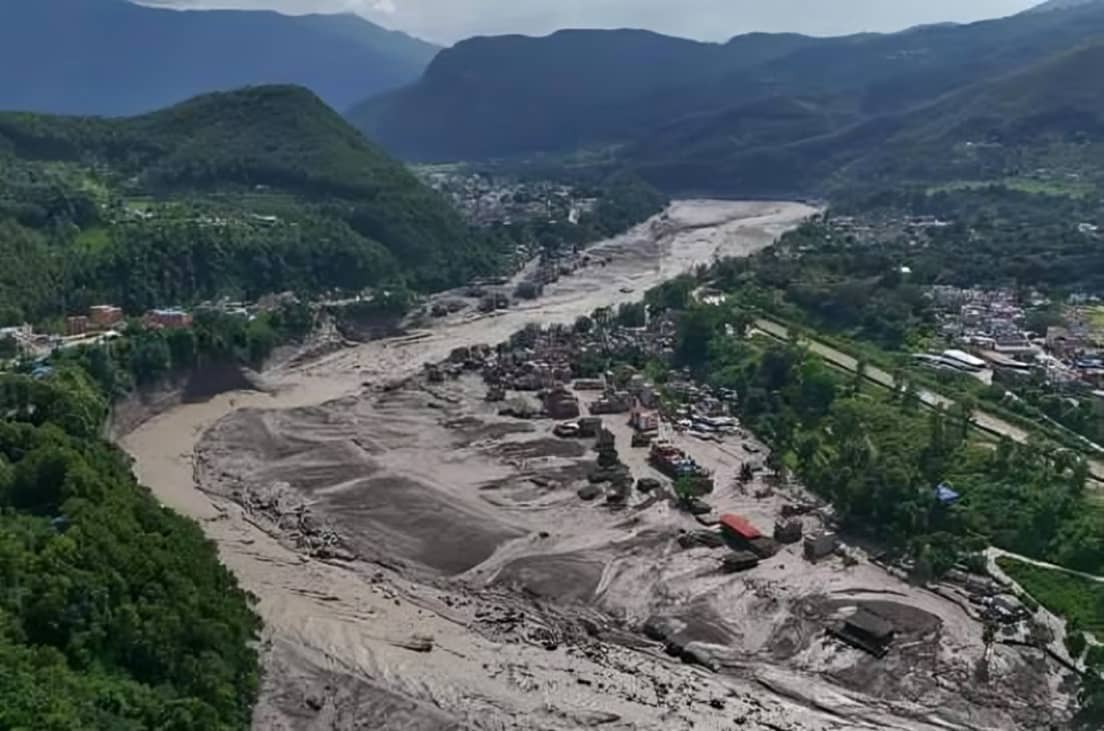
The devastating flash floods that struck Nepal on August 26 left a trail of destruction across parts of the Himalayan country, destroying roads, bridges, buildings and other critical infrastructure. The disaster was triggered by a glacial collapse that sent a powerful surge of water, rock, ice, mud and debris through river valleys. Among those caught in the disaster were workers from Assam who had travelled to Nepal for employment.
For the Assam workers, the disaster quickly turned an ordinary day into a fight for survival. As the floodwaters rose rapidly, reaching higher ground became essential. Eight workers from Assam were eventually rescued after becoming stranded on elevated terrain. They were later airlifted to Kathmandu before beginning their journey back to India. The survivors reached Assam on August 31 under police escort after travelling from Siliguri.
The experience highlighted how quickly conditions changed during the disaster. Flash floods can develop with little warning, particularly in steep Himalayan terrain where rivers and valleys can carry enormous quantities of water and debris within a short period. In the affected areas of Nepal, the force of the flood damaged transportation routes and disrupted communication, making it difficult for rescue teams to reach isolated communities.
For the Assam workers, the decision to move towards safer and higher ground became an important part of their survival. With roads and bridges damaged, people in several locations were left cut off from surrounding communities. Rescue operations subsequently relied heavily on helicopters because many conventional routes had become unusable.
Reports from the disaster zone indicated that helicopters were being used to evacuate survivors and transport relief material to areas that could not be reached easily by road. The Nepal Army and other emergency personnel faced difficult weather and challenging mountain terrain while carrying out rescue operations.
The scale of the disaster was significant. Early reports recorded hundreds of deaths and missing people, with the number continuing to rise as rescue teams reached previously inaccessible areas. Reuters reported that the flooding followed a glacial collapse and affected communities along major river systems near the Nepal China border. The disaster also damaged important infrastructure and pilgrimage routes.
The humanitarian impact extended beyond Nepalese citizens. Several foreign nationals, including Indians, were among those affected or reported missing in the aftermath. Rescue teams worked to locate stranded people while governments and families sought information about their nationals and relatives.
The return of the eight Assam workers provided some relief to their families. According to reports, the workers had first been stranded on high ground before being evacuated by air to Kathmandu. From there, arrangements were made for their return to Assam. They arrived in the state early on August 31 and subsequently began travelling towards their respective home districts.
Their experience also reflects the wider difficulties faced by survivors in remote mountain regions. When bridges and roads are washed away, even short distances can become extremely difficult to cover. Communication networks can also be disrupted, leaving families unable to establish contact with people in affected areas. Such conditions can delay rescue operations and make it harder for authorities to establish the exact number of people affected.
The Nepal disaster has also renewed attention on the vulnerability of Himalayan communities to sudden flood events. Glacial and geological hazards can create extremely destructive conditions in mountain valleys. Climate scientists and disaster experts have increasingly highlighted the importance of monitoring glaciers, improving early warning systems and strengthening emergency preparedness in vulnerable Himalayan regions.
For the Assam survivors, however, the immediate priority was simply getting home safely. Their return marked the end of several days of uncertainty after they became stranded by the floods. Their accounts offer a human perspective on a disaster that caused widespread destruction across Nepal.
The rescue of the Assam workers also demonstrates the importance of rapid evacuation, access to higher ground and coordination between local authorities and emergency agencies during major natural disasters. As rescue and relief operations continue, authorities are still working to locate missing people, provide assistance to survivors and restore damaged transportation and communication networks.
The Nepal flash floods remain one of the major disasters to affect the Himalayan region in 2026. The experiences of survivors from Assam underline the speed and unpredictability of such events and the importance of preparedness in areas vulnerable to flash floods, landslides and glacial hazards.
For families in Assam, the safe return of the rescued workers brought much-needed relief. At the same time, the continuing search for people still unaccounted for shows that the humanitarian consequences of the Nepal floods extend far beyond the immediate destruction caused by the floodwaters.