New Delhi, November 23, 2026
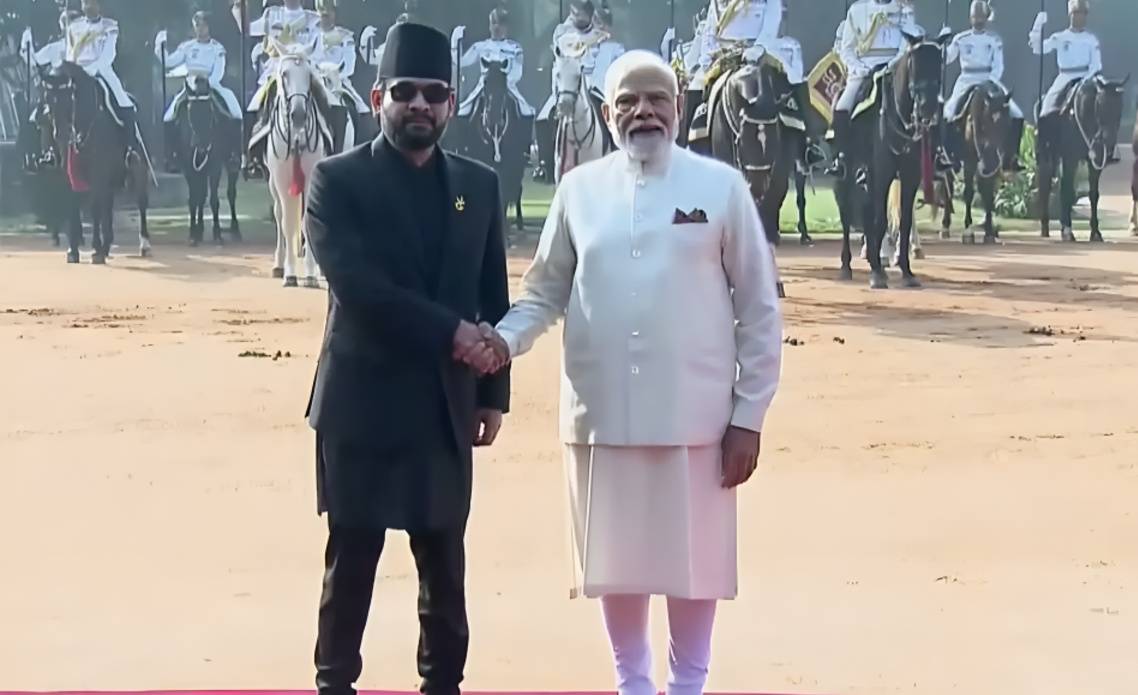
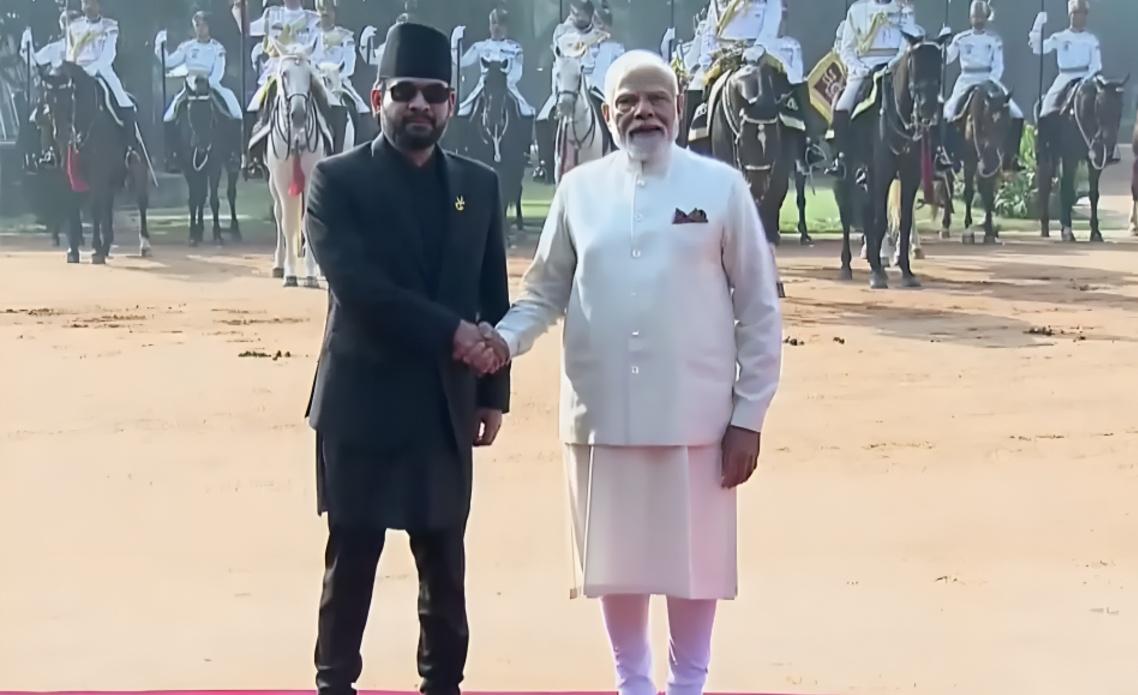
Prime Minister Narendra Modi and Nepalese Prime Minister Balendra Shah met at Hyderabad House in New Delhi on Monday for bilateral discussions aimed at strengthening diplomatic, economic and strategic cooperation between India and Nepal.
The meeting formed part of the Nepalese Prime Minister's two-day official visit to India from November 22 to 23, undertaken at the invitation of Prime Minister Modi, according to the Ministry of External Affairs.
The discussions were expected to cover a broad range of bilateral issues, including trade, investment, transportation, infrastructure development, energy cooperation and connectivity.
The two leaders were also scheduled to exchange views on regional and international developments of mutual interest.
India and Nepal Review Bilateral Relations
The bilateral meeting provided an opportunity for the two neighbouring countries to review their existing partnership and identify potential areas for further cooperation.
India and Nepal maintain close diplomatic relations supported by geographical proximity, cultural connections and longstanding people-to-people exchanges.
According to the Ministry of External Affairs, cooperation between the two countries has expanded across several sectors, including trade, commerce, development partnerships, energy, water resources and physical and digital connectivity.
The ministry also highlighted emerging opportunities in start-ups, technology, innovation and sports.
The discussions in New Delhi were intended to build on these areas while exploring additional opportunities for economic and infrastructure cooperation.
Trade and Economic Cooperation Take Centre Stage
Trade and economic cooperation were among the major issues expected to feature in the discussions.
India is an important trading partner for Nepal, with economic exchanges playing a significant role in bilateral relations.
Both countries have an interest in improving commercial connections, facilitating cross-border trade and supporting business activities.
Better transportation facilities and infrastructure can help reduce logistical difficulties and improve the movement of goods between the two countries.
The meeting was expected to provide an opportunity to review existing trade arrangements and discuss possible measures to strengthen economic engagement.
Investment cooperation was another important area on the agenda.
Infrastructure projects, energy development and commercial partnerships offer potential opportunities for businesses and investors in both countries.
However, the information available before the discussions did not establish whether any new trade or investment agreements would be signed during the visit.
Connectivity and Transportation Infrastructure
Improving connectivity between India and Nepal was another important subject expected to be discussed.
The two countries share a long land border, making transportation infrastructure essential for trade, tourism and the movement of people.
Road networks, railway connections, border infrastructure and other transportation facilities are important components of bilateral cooperation.
Improved connectivity can make cross-border travel more convenient and support commercial activities in border regions.
Infrastructure development can also help connect Nepalese businesses with wider markets through transportation networks linked to India.
The discussions were expected to examine opportunities for strengthening physical connectivity and improving existing infrastructure.
Digital connectivity was also identified by the Ministry of External Affairs as an area of growing cooperation.
Advances in digital infrastructure and technology can support communication, commercial transactions and access to services across the two countries.
Energy Cooperation Remains a Priority
Energy cooperation was expected to receive considerable attention during the bilateral talks.
Nepal has substantial hydropower potential because of its mountainous geography and river systems.
India and Nepal have an established relationship in electricity trade and energy infrastructure development.
Hydropower cooperation can contribute to Nepal's economic development while supporting regional electricity supply.
Cross-border transmission infrastructure is particularly important for enabling electricity exchanges between the two countries.
The discussions were expected to address opportunities for strengthening energy partnerships and supporting future infrastructure development.
Water resources were also among the areas of bilateral cooperation highlighted by the Ministry of External Affairs.
The management and development of shared water resources are important issues for both countries, particularly in relation to hydropower, irrigation and broader development requirements.
The supplied information does not confirm any specific new energy agreement or electricity supply commitment resulting from the meeting.
Historical and Cultural Connections
The Ministry of External Affairs emphasised that India and Nepal share longstanding historical, cultural and civilisational connections.
These relationships are reflected in religious traditions, cultural exchanges, family connections and interactions between communities across the border.
The two countries have maintained close people-to-people ties for generations.
Religious tourism is also an important aspect of their relationship, with visitors travelling between India and Nepal to visit significant spiritual and cultural destinations.
Educational exchanges and professional opportunities further contribute to bilateral engagement.
The ministry highlighted these connections while describing the broader relationship between the two countries.
Such ties provide an important foundation for diplomatic cooperation and support continued engagement across different sectors.
Emerging Cooperation in Technology and Innovation
Beyond traditional areas of cooperation, India and Nepal are increasingly exploring opportunities in technology and innovation.
The Ministry of External Affairs identified start-ups, technological development, innovation and sports as newer areas of bilateral engagement.
Cooperation in these sectors could create opportunities for entrepreneurs, educational institutions, technology professionals and young people.
Digital services and innovation can also contribute to economic development by improving access to markets and encouraging new business activities.
Start-up collaboration may provide opportunities for exchanging knowledge and developing commercial partnerships.
Technology-related cooperation could also support improvements in public services, communication and infrastructure management.
However, the exact projects or initiatives discussed during the meeting would need to be confirmed through official announcements.
Regional and International Developments
The bilateral talks were also expected to include discussions on regional and international developments affecting both countries.
India and Nepal share interests in regional stability, economic cooperation and sustainable development.
As neighbouring countries, developments involving transportation, energy markets, trade and environmental challenges can have implications for both governments.
Regular diplomatic consultations allow national leaders to exchange perspectives on such issues.
The meeting at Hyderabad House provided an opportunity for Prime Minister Modi and Prime Minister Shah to review these matters directly.
The Ministry of External Affairs had indicated that both leaders would exchange views on regional and international issues of mutual interest.
No specific joint position on an international issue was confirmed in the information supplied.
Importance of the Nepalese Prime Minister's Visit
The November 22 to 23 visit was presented as an opportunity to strengthen the partnership between India and Nepal.
The official programme included bilateral discussions at Hyderabad House on November 23.
The meeting was intended to review existing cooperation while identifying possible areas for further engagement.
Diplomatic visits of this nature can help maintain communication between neighbouring governments and provide direction for future bilateral initiatives.
For India and Nepal, continued engagement is particularly important because of their geographical connections and economic interdependence.
Cooperation in trade, transportation, energy and infrastructure can influence development opportunities in both countries.
Focus on Future India-Nepal Cooperation
The discussions between Prime Minister Narendra Modi and Nepalese Prime Minister Balendra Shah highlighted the importance of maintaining close relations between the neighbouring countries.
Trade, investment, energy and connectivity were among the major areas identified for discussion.
The Ministry of External Affairs also emphasised the progress made in development cooperation, water resources, digital connectivity and emerging sectors such as technology and innovation.
While the meeting was intended to explore opportunities for strengthening bilateral relations, the supplied information does not include a final joint statement or details of agreements concluded during the discussions.
Any specific commitments, memoranda of understanding or new infrastructure projects would require confirmation through official announcements.
The bilateral engagement nevertheless reflects the continuing importance of cooperation between India and Nepal across economic, diplomatic and development-related sectors.
Both countries have longstanding connections that provide a foundation for expanding their partnership in the coming years.