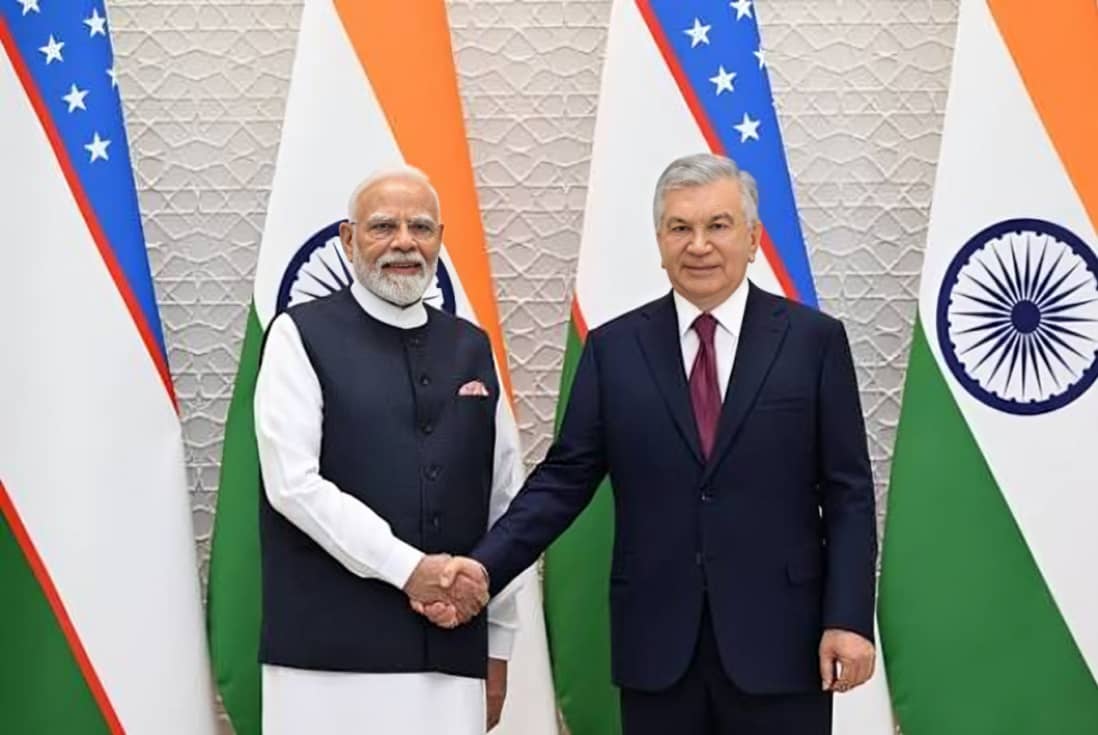
Prime Minister Narendra Modi and Azerbaijan President Ilham Aliyev held their first meeting on September 1 on the sidelines of the Shanghai Cooperation Organisation Summit in Bishkek, Kyrgyzstan. The meeting marked an important diplomatic engagement between the two countries as India and Azerbaijan look to improve their political relationship.
Aliyev was in Bishkek to participate in the SCO Plus Format meeting. Modi and Aliyev met on the sidelines of the gathering and exchanged views on issues of mutual interest. The interaction was described in reports as an important icebreaker in the political relationship between the two countries.
The meeting is significant because India and Azerbaijan have experienced a period of strained political relations. Bilateral ties have been affected by differences over regional and geopolitical issues. The latest interaction between the two leaders could therefore provide an opportunity for both sides to review their relationship and explore areas where cooperation can be strengthened.
For India, engagement with Azerbaijan has importance because of the country's location in the South Caucasus and its links to wider regional connectivity, energy and trade networks. Azerbaijan also has relationships with several major powers and regional countries, making diplomatic engagement with Baku relevant to India's broader foreign policy interests.
The meeting took place against the backdrop of developments in relations between Armenia and Azerbaijan. The two countries have been working towards establishing a lasting peace following years of conflict over Nagorno Karabakh. Armenian Prime Minister Nikol Pashinyan and Azerbaijani President Ilham Aliyev also met on the margins of the SCO Summit in Bishkek on August 31.
During their meeting, Pashinyan and Aliyev highlighted the significance of the Washington Peace Summit held in August 2025 and the joint declaration associated with the Armenia Azerbaijan peace process. The developments have created a new diplomatic environment in the South Caucasus.
The changing regional environment is relevant for India because New Delhi has maintained relations with both Armenia and Azerbaijan. India has also expanded its diplomatic and economic engagement with countries across Central Asia and the South Caucasus.
The Modi Aliyev meeting can therefore be viewed as part of India's wider effort to maintain dialogue with different countries and strengthen diplomatic relationships. The fact that the two leaders met directly for the first time gives the engagement additional significance.
During their interaction, the two leaders exchanged views on matters of mutual interest. No major bilateral agreement was announced as part of the meeting. However, direct communication between the leaders could create opportunities for officials from both countries to pursue further discussions on political, economic and regional issues.
India and Azerbaijan have maintained diplomatic relations for decades. India recognised Azerbaijan after the country became independent following the dissolution of the Soviet Union, and diplomatic relations were established in 1992. Over the years, the two countries have developed links in areas including trade, education, energy and connectivity.
The political relationship, however, has faced challenges because of differences over regional issues. Azerbaijan's positions on matters involving Pakistan and India's regional security concerns have also contributed to tensions in bilateral relations. Against this background, the first meeting between Modi and Aliyev represents an opportunity for both governments to reopen high level political communication.
The SCO Summit provided a suitable platform for the meeting because it brought together leaders and senior representatives from several countries across Asia and neighbouring regions. India's participation in the SCO allows New Delhi to engage with a wide range of countries on regional security, connectivity, economic cooperation and international developments.
During his visit to Bishkek, Modi held several bilateral meetings with leaders attending the summit. His engagement with Aliyev was one of the meetings that attracted particular attention because it was the first direct interaction between the Indian Prime Minister and the Azerbaijani President.
Modi also met Tajikistan President Emomali Rahmon during the summit. India's relationship with Tajikistan is an important part of its engagement with Central Asia. The two countries have cooperated in areas including security, development, education and regional connectivity.
The series of meetings reflects India's approach of maintaining dialogue with different countries while pursuing its strategic interests. New Delhi has consistently sought to expand its diplomatic engagement across Central Asia and neighbouring regions.
The Armenia Azerbaijan peace process adds another layer to the significance of the Modi Aliyev meeting. Armenia and Azerbaijan have been involved in a long running dispute, but recent diplomatic initiatives have created expectations of greater stability in the South Caucasus.
India has welcomed diplomatic efforts aimed at promoting peace and stability in different regions. During his separate meeting with Armenian Prime Minister Nikol Pashinyan, Modi was briefed on the status of the Armenia Azerbaijan peace agreement. Both leaders also agreed to strengthen bilateral relations and cooperation in areas of mutual interest.
The simultaneous diplomatic engagement with leaders from Armenia and Azerbaijan demonstrates India's interest in maintaining constructive relations with both sides. This approach can help India protect its broader strategic and economic interests while supporting dialogue in the region.
For Azerbaijan, improved relations with India could provide opportunities for greater cooperation with one of the world's major economies. India is also interested in strengthening its connections with countries that have strategic importance in Eurasia.
The first Modi Aliyev meeting does not by itself indicate that all differences between the two countries have been resolved. Rather, it provides a platform for further diplomatic engagement. Future discussions between officials from both countries could determine whether the latest political contact leads to concrete progress in bilateral relations.
The meeting also demonstrates the importance of high level diplomacy in managing differences between countries. Direct engagement between leaders can create opportunities to discuss sensitive issues and identify areas of common interest.
The SCO Summit has therefore provided India with an important diplomatic platform. Along with meetings with Aliyev and Rahmon, Modi also held discussions with several other leaders during his visit to Bishkek. These engagements form part of India's broader diplomatic efforts in Central Asia and the wider Eurasian region.
For now, the Modi Aliyev meeting can be seen as an initial step towards rebuilding political communication between India and Azerbaijan. The two leaders exchanged views and opened a channel for further engagement. Whether this first interaction develops into stronger bilateral cooperation will depend on subsequent diplomatic discussions and policy decisions by both governments.
The meeting is nevertheless significant because it represents the first direct interaction between Modi and Aliyev and comes at a time of changing political dynamics in the South Caucasus. With the Armenia Azerbaijan peace process moving forward and India expanding its engagement across the region, the latest diplomatic contact could contribute to a gradual reset in India Azerbaijan relations.