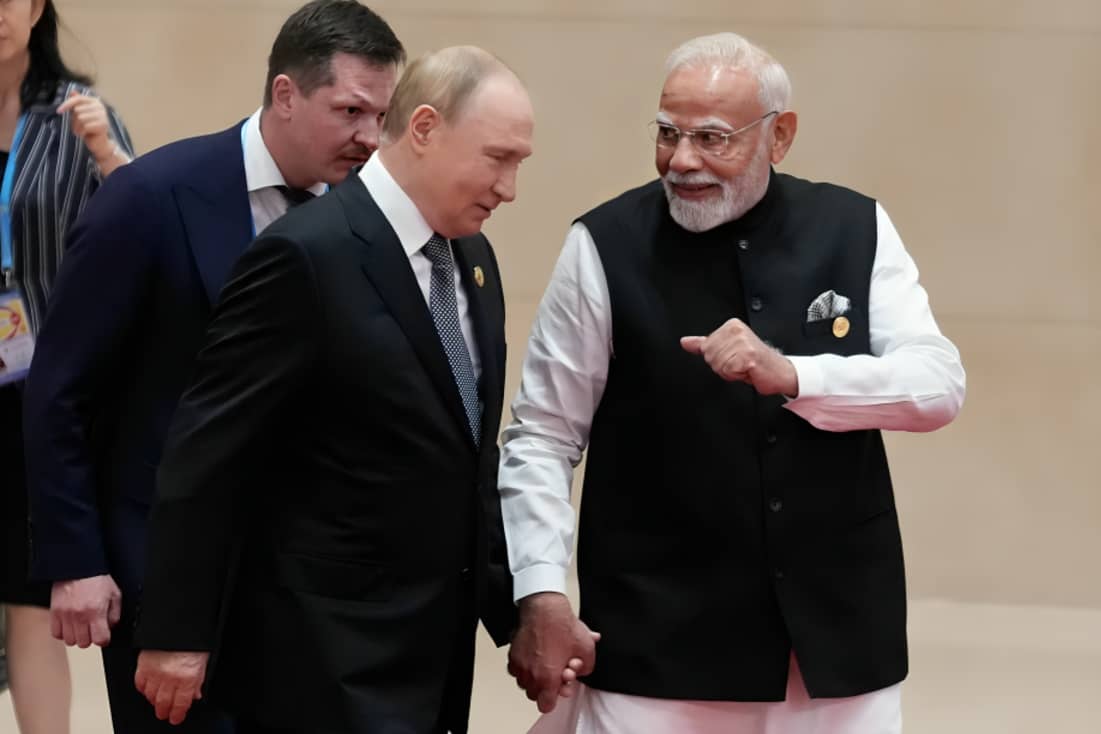
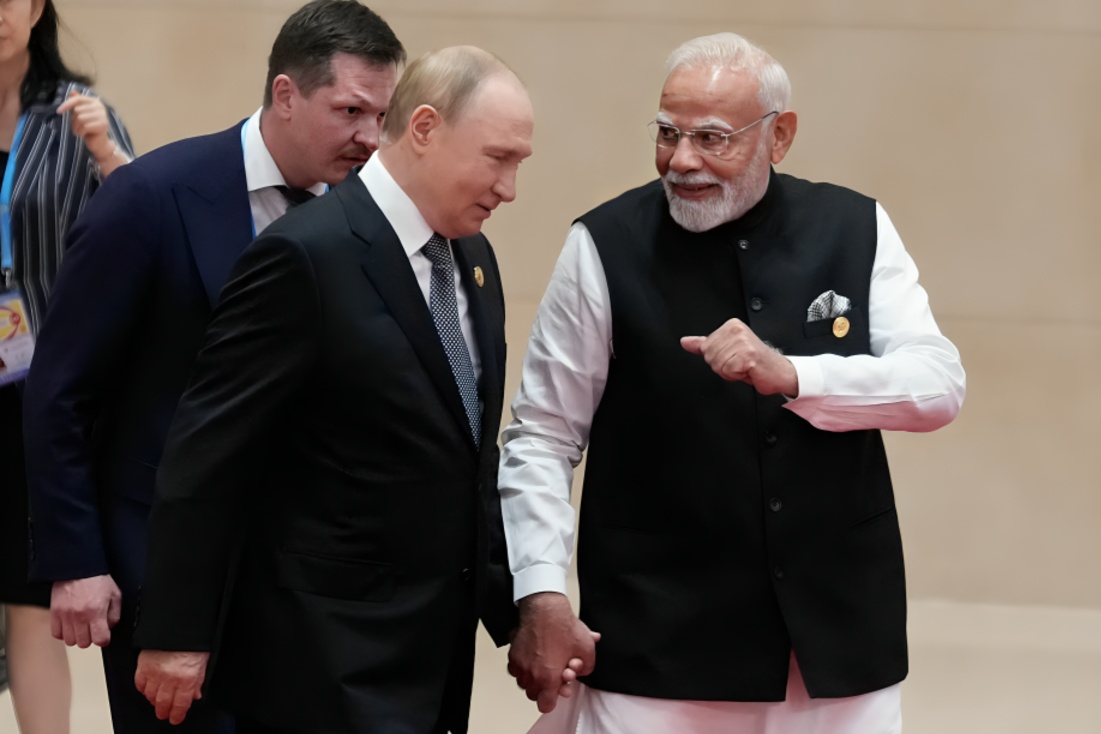
Prime Minister Narendra Modi’s interactions with Chinese President Xi Jinping and Russian President Vladimir Putin at the 26th Shanghai Cooperation Organisation Summit in Bishkek have attracted considerable attention. The Indian Prime Minister was seen exchanging greetings and warm handshakes with both leaders as heads of government and state gathered for the official group photograph.
The summit is being held in Bishkek, the capital of Kyrgyzstan, and brings together leaders from the Shanghai Cooperation Organisation member states. The event is taking place against the backdrop of significant geopolitical developments, including the ongoing Russia Ukraine conflict, regional security concerns and changing economic relationships.
During the group photograph arrangements at the Yrys Ordo Congress Hall, Modi was seen greeting Xi Jinping. The two leaders briefly exchanged words before joining other leaders for the photograph. The interaction was closely watched because India China relations have been undergoing a period of cautious engagement following tensions between the two countries.
Modi was also seen greeting Vladimir Putin. The Indian Prime Minister and Russian President have maintained regular diplomatic engagement over the years, with India and Russia continuing their strategic partnership in areas including defence, energy, trade and international cooperation.
The interactions at the SCO summit were brief, but they attracted attention because India, China and Russia are among the most influential members of the organisation. Their leaders appearing together at the summit highlighted the importance of the SCO as a platform for dialogue among major Asian powers.
The interaction with Putin followed a separate bilateral meeting between the two leaders on the sidelines of the summit. During that meeting, Modi spoke about the continuing conflict in Ukraine and emphasised the need to move towards peace. He said that the world should move from an era of continuing conflicts towards an end to war.
Modi told Putin that the human cost of the conflict remained a major concern. India has repeatedly maintained that disputes should be resolved through dialogue and diplomacy. New Delhi has also continued to maintain relations with both Russia and Western countries while calling for peaceful resolution of the Ukraine conflict.
Putin, during the meeting, acknowledged Modi’s position and briefed him on developments related to the conflict. The discussions also covered India Russia relations and areas of bilateral cooperation.
The Modi Putin meeting is significant because Russia remains an important strategic partner for India. The two countries have longstanding cooperation in defence and energy, while bilateral trade has expanded in recent years.
The Indian Prime Minister’s interaction with Xi Jinping also carries importance for India China relations. The two countries have sought to stabilise their relationship through diplomatic and military discussions after tensions along their disputed border.
Their brief interaction at the SCO summit comes as both countries remain important members of the organisation. India has consistently emphasised that peace and stability along the border are essential for the development of bilateral relations.
The SCO itself provides a platform where India, China, Russia, Pakistan and Central Asian countries can discuss regional security, economic cooperation, connectivity, counterterrorism and other issues. The organisation has expanded over the years and now includes several major regional powers.
The 2026 summit in Bishkek is also significant because the organisation is marking 25 years of its existence. Leaders are expected to discuss a range of regional and international issues during the summit.
For India, participation in the SCO provides an opportunity to engage simultaneously with Russia, China and other Central Asian countries. The grouping is particularly important for discussions involving regional security and economic connectivity.
The presence of Modi, Xi and Putin at the same summit has also attracted international attention because of their countries’ respective roles in global politics. China and Russia have strengthened their strategic cooperation, while India has maintained its own independent foreign policy approach.
The warm greetings exchanged between Modi and Xi should not, by themselves, be interpreted as evidence of a major policy shift in India China relations. Similarly, Modi’s interaction with Putin reflects continuing diplomatic engagement between India and Russia.
The significance of such meetings lies in the opportunity for leaders to maintain communication despite differences on various international and bilateral issues.
The group photograph at the SCO summit also included leaders from several other member states. The gathering provided a symbolic representation of the organisation and its role in bringing different countries together.
The summit comes at a time when global geopolitical relationships are undergoing significant changes. The Ukraine conflict, tensions involving major powers and competition over trade and energy continue to influence international diplomacy.
India has attempted to maintain strategic autonomy while engaging with different global partners. Its participation in organisations such as the SCO, BRICS, G20 and other multilateral platforms reflects this approach.
The Modi Xi interaction is likely to be watched closely because India China relations remain an important factor in Asian geopolitics. Any future progress in bilateral ties is expected to depend on continued dialogue and the resolution of outstanding concerns.
Meanwhile, the Modi Putin engagement highlights the continuing importance of the India Russia partnership. Energy cooperation, defence ties and trade remain key components of the relationship.
The Prime Minister’s message on Ukraine also underlines India’s consistent public position that conflicts should be resolved through dialogue and diplomacy. New Delhi has repeatedly called for peace while maintaining diplomatic relations with all sides.
The SCO summit therefore provides India with an important platform to engage with multiple countries simultaneously. Modi’s meetings and interactions on the sidelines are part of India’s broader diplomatic engagement during the summit.
For now, the images of Modi exchanging greetings with Xi Jinping and Putin have become one of the prominent moments of the Bishkek summit. While the interactions were brief, they reflected the continuing diplomatic channels between India and the two major powers.
The summit will continue to focus on regional cooperation and international challenges. Further bilateral discussions and statements from participating leaders are expected to provide more details about the issues discussed.
The latest developments underline the importance of the SCO as a forum for dialogue among major Asian countries. For India, the summit offers an opportunity to advance its diplomatic interests while maintaining engagement with both China and Russia.
The interactions between Modi, Xi and Putin therefore carry diplomatic significance, but their brief greetings should be viewed within the larger context of ongoing bilateral relations and the discussions taking place at the SCO summit.