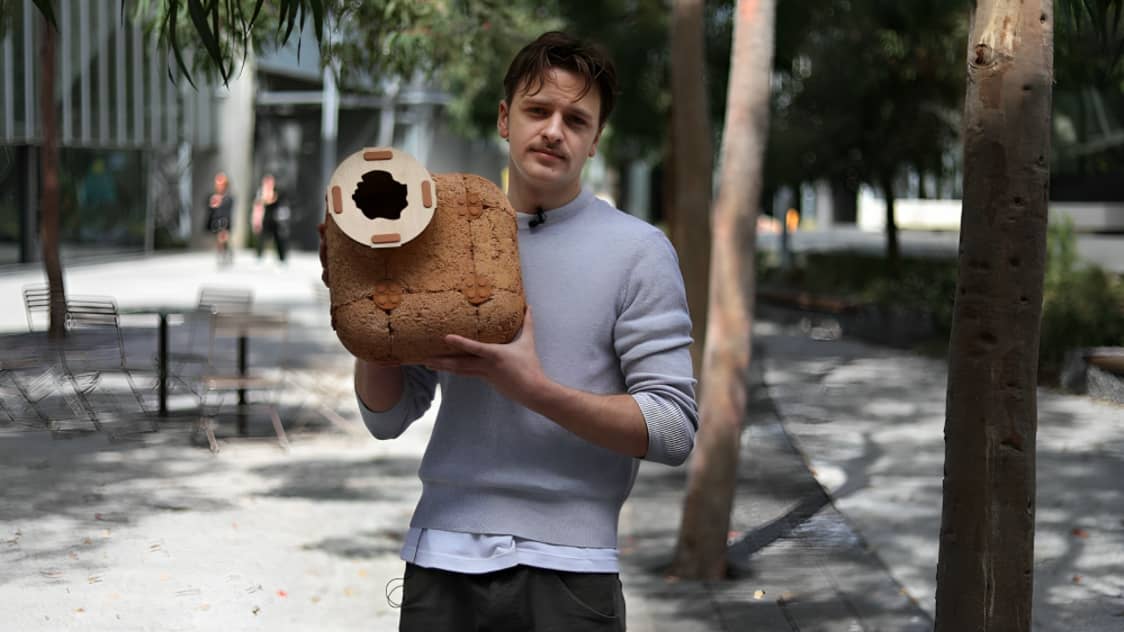
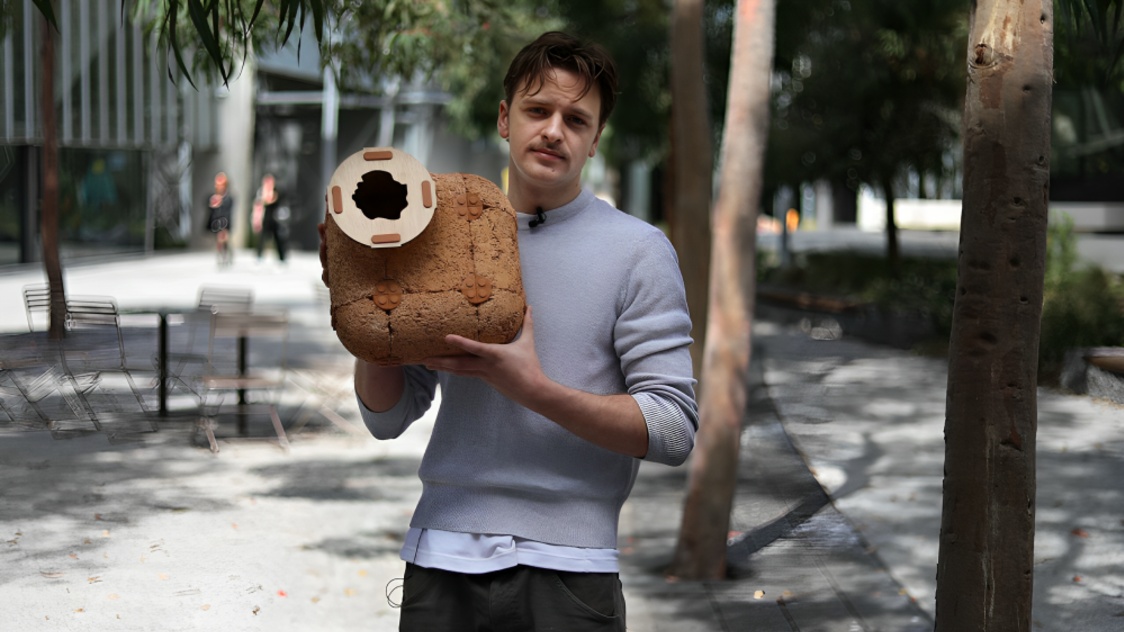
Australian designer Xavier Earls has developed an innovative wildlife habitat system called Bush Cradle, which uses modular hempcrete tiles to create artificial shelters inspired by natural features such as tree hollows, fallen logs and rocky crevices. The project aims to help native animals affected by habitat loss by providing conservationists with adaptable shelter structures.
Natural shelters play an important role in the survival of many Australian wildlife species. However, land clearing, the removal of old trees and changes to natural landscapes have reduced the availability of hollows, logs and rock formations used by animals for resting, nesting and protection from predators.
Bush Cradle is designed to address part of this problem by allowing its components to be assembled into different shapes according to the needs of particular species. The system is intended for conservation applications involving animals such as eastern quolls, ringtail possums and reptiles.
How the Bush Cradle System Works
The Bush Cradle system consists of four types of interlocking tiles. These components can be connected and rearranged to form different habitat structures, from elevated tree shelters to enclosed ground dens.
The tiles use a slot-and-pin connection system, allowing them to be assembled or taken apart without conventional construction tools. This modular approach gives conservationists flexibility to change a shelter's shape, entrance and internal layout for different animals and locations.
The design was developed to offer an alternative to standard nest boxes, which are generally built for a limited range of uses. Bush Cradle aims to provide a more adaptable system that can reproduce a wider variety of natural shelter forms.
The designer's approach recognises that different animals require different types of refuge. Some species shelter in hollow trees, while others use fallen logs, underground dens or narrow spaces between rocks. A single shelter design may not meet all these needs.
By allowing different configurations, Bush Cradle gives conservationists an opportunity to develop structures that more closely reflect the habitat requirements of individual species. The final design and installation would still need to be matched to local conditions and the animals being targeted.
Why Hempcrete Was Chosen
An important feature of Bush Cradle is its use of hempcrete, a material made from hemp plant fibres and a mineral-based binder. The material is used in construction because of its insulating properties and its ability to be formed into different shapes.
Earls selected hempcrete because its fibrous structure can help provide insulation similar to some properties of natural wood. Temperature regulation is important for wildlife shelters, as animals need protection from heat, cold and changing weather conditions.
According to the project's description, the tiles are designed to be lightweight, breathable and resistant to moisture, mould and fire. These characteristics could make the material useful for outdoor habitat structures, although long-term performance will depend on the environment, construction and maintenance.
The components are produced using a casting process supported by three-dimensional printed frames and moulds. The hempcrete is placed into the moulds and allowed to cure into the required shapes. This manufacturing method is intended to make the components reproducible while maintaining the geometry needed to assemble the shelters.
The system's modular construction may also help with repairs and adjustments. Rather than replacing an entire structure, users could potentially remove individual pieces and reconfigure the shelter as conservation requirements change.
Addressing the Shortage of Natural Habitats
The loss of natural shelter is a major challenge for wildlife conservation. Old trees often develop hollows only after many decades or even centuries. These hollows provide important places for animals to hide, rest, nest and raise young.
Fallen logs and rocky crevices also offer shelter from predators and extreme weather. When these features are removed from a landscape, animals may struggle to find suitable alternatives.
Australian government conservation guidance highlights the importance of retaining mature trees and other natural habitat features because many native species depend on them. Artificial shelters can help in some situations, but their effectiveness depends on their design, location, insulation and suitability for the target species.
Bush Cradle is intended to give conservationists greater flexibility when natural habitat features are scarce. Its different configurations could be used to test shelter designs for animals that live in trees as well as those that seek refuge closer to the ground.
The system is not a replacement for protecting existing forests, mature trees and natural landscapes. Instead, it is a potential supplementary tool that could support habitat restoration where natural shelter has already been lost.
Potential Benefits for Eastern Quolls and Ringtail Possums
Eastern quolls are small carnivorous marsupials that use dens, rock crevices and hollow tree trunks for shelter. They are native to Australia and now survive naturally in Tasmania, while conservation programmes have also worked to re-establish populations on the mainland.
Ringtail possums are tree-dwelling marsupials that depend on suitable shelter and nesting locations. The availability of appropriate hollows and protected spaces can influence where they rest and establish nests.
Bush Cradle can be arranged to create different shelter types for these and other animals. For example, a ground-based structure can be designed with several entrances and internal chambers, while a tree-mounted arrangement can resemble a hollow.
The project also considers reptile habitats. Different structures and materials may help create sheltered areas where reptiles can escape predators or regulate their body temperature.
These examples demonstrate the flexibility of the design, but each arrangement must be assessed against the behaviour and needs of the species it is intended to support. A structure that attracts one animal may not be suitable for another.
Early Testing Shows Encouraging Signs
The project's development included an initial prototype trial. According to the designer's project information, ringtail possums were observed using one of the installed structures overnight.
This early observation suggests that the shelter may be attractive to at least some native wildlife. However, one observation does not establish how well the system will perform across different locations, species or seasons.
Further monitoring would be needed to assess how frequently animals use the shelters, whether they return, and whether the structures provide reliable protection under different weather conditions. Researchers and conservationists would also need to examine durability, maintenance requirements and possible effects on animal behaviour.
Monitoring can help establish whether artificial shelters are delivering meaningful conservation benefits rather than simply attracting animals for short periods. The results could inform future changes to the tile shapes, entrance sizes, internal layouts and installation methods.
A Sustainable Design Approach to Conservation
Bush Cradle illustrates how industrial design and material innovation can contribute to wildlife conservation. By combining modular construction with hempcrete, the project seeks to make it easier to create shelters tailored to the needs of different animals.
Its potential value lies in its adaptability. Conservation teams could use the same basic components to explore different shelter forms rather than relying on one standard design. The concept could be particularly useful in habitat restoration projects where natural hollows, logs or crevices are limited.
Nevertheless, artificial shelters work best as part of a broader conservation strategy that protects existing habitats, restores native vegetation and addresses the causes of wildlife decline. Careful species selection, expert advice, appropriate placement and long-term monitoring remain essential.
The Bush Cradle project offers an example of how sustainable materials and adaptable design may help address specific environmental challenges. Its future contribution will depend on further testing and evidence showing that the shelters support wildlife over time.