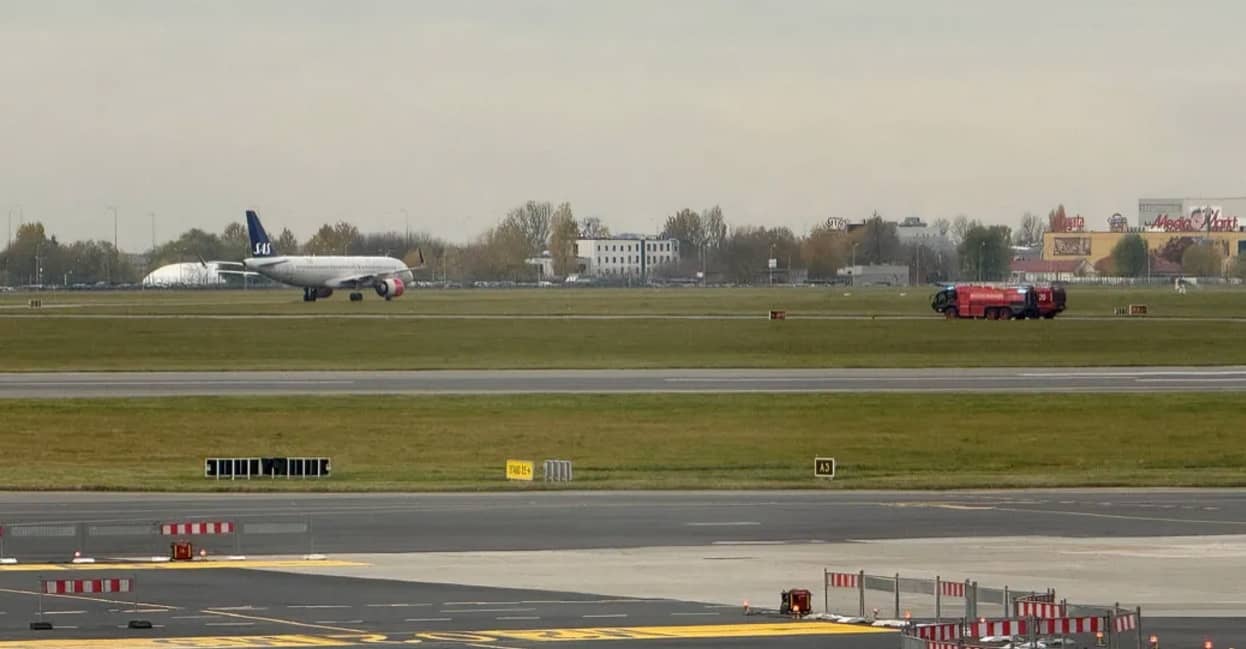

At least 12 passenger aircraft were diverted or made precautionary landings across Europe on Thursday following bomb threats, triggering security checks at airports in several countries. The incidents caused disruption to air travel and prompted aviation authorities, airport officials and airlines to take precautionary measures. The alerts marked the second time in a week that multiple flights across Europe had faced similar security concerns.
According to the available reports, aircraft operating on different European routes were affected by the threats. Some flights were diverted to alternative airports, while others made precautionary landings so that security teams could inspect the aircraft. The incidents involved airlines operating international passenger services, including Aer Lingus, Finnair and LOT.
Although the alerts led to precautionary action, the reported inspections did not identify explosives or suspicious items on the aircraft mentioned in the available information. The situation highlighted the importance of aviation security procedures when airlines and authorities receive information about possible threats.
Aer Lingus Flight Diverted to France
An Aer Lingus flight operating from Dublin to Rome was among the aircraft affected by the security alerts. Flight EI402 was travelling from Ireland to Italy when it was diverted as a precautionary measure.
Instead of continuing to its planned destination, the aircraft landed safely at Evreux Airport in France. The airport is located approximately 100 kilometres west of Paris.
Aer Lingus confirmed the diversion in a statement and said that the decision was taken as a security precaution. The aircraft's safe landing allowed the relevant authorities to carry out the necessary procedures.
Flight diversions are an established precautionary response when an aircraft faces a potential security concern. Such decisions are generally taken to allow the aircraft to land at a suitable airport where security personnel can assess the situation.
The diversion changed the flight's planned journey from Dublin to Rome and required the aircraft to land in another country. Further operational arrangements would be necessary before affected passengers could continue their journeys.
Finnair Flight Escorted by Italian Fighter Jets
A Finnair flight travelling from Helsinki to Rome was also affected by the bomb threat alerts. The aircraft was escorted by Italian Air Force fighter jets before landing safely at Rome Fiumicino Airport.
The involvement of fighter jets underlined the seriousness with which authorities treated the security alert. Military aircraft may be deployed to monitor or escort a civilian aircraft when authorities consider additional measures necessary.
After the Finnair aircraft landed at Rome Fiumicino Airport, Italian police carried out security checks. Airport authorities reported that the inspection did not identify any explosives on board.
The safe landing and subsequent inspection were important steps in resolving the immediate security concern involving the flight. However, the additional procedures would have required coordination between airport authorities, law enforcement personnel and airline representatives.
The incident also demonstrated how a security alert involving an international passenger flight can require action from authorities in more than one country.
LOT Flight Lands Safely in Brussels
Another reported incident involved a flight operated by Polish airline LOT. The aircraft landed at Brussels Zaventem Airport in Belgium following a security alert.
The airline later confirmed that checks had been carried out on the aircraft. According to the airline, no dangerous or suspicious items were found on board.
The landing in Brussels was another example of the precautionary measures taken by airlines and airport authorities after receiving information about a possible threat.
Security inspections are an important part of the response to such alerts. They help authorities assess whether there is any actual danger before allowing normal operations to resume.
The reported findings from the LOT flight provided reassurance that the inspection had not identified suspicious objects. However, the incident remained part of the wider series of security alerts affecting flights across Europe on Thursday.
At Least 12 Aircraft Affected Across Europe
The reported incidents were not limited to a single airline or airport. At least 12 passenger aircraft were diverted or made precautionary landings across Europe on Thursday.
The alerts resulted in security checks at airports in multiple countries. The fact that similar incidents had occurred for the second time in a week raised concerns about the disruption caused by repeated threats to commercial aviation.
When a bomb threat is reported, airlines and aviation authorities must assess the available information and determine the appropriate response. Depending on the circumstances, this may involve changing a flight's route, arranging a precautionary landing or carrying out additional inspections after landing.
These measures can affect passengers, airport operations and airline schedules. A diverted aircraft may need to wait for security clearance before it can continue its journey. Passengers may also face delays while airlines make alternative arrangements.
However, precautionary action is necessary because aviation authorities must treat potential threats seriously until appropriate checks have been completed.
How Bomb Threat Alerts Affect Air Travel
Bomb threats can create significant disruption even when security inspections do not find explosives. Every alert requires an assessment by the relevant authorities, and airlines may have to make operational decisions to protect passengers and crew.
A diversion can change the planned destination of a flight and require additional coordination between the airline and the airport receiving the aircraft. The receiving airport may need to arrange suitable parking facilities, security personnel and inspection procedures.
Passengers can experience delays, missed connections and changes to their travel plans. Airlines may also need to organise alternative flights or provide updated travel information.
The extent of disruption depends on the nature of the alert, the location of the aircraft and the decisions made by security authorities. Not every threat leads to the same response, as each incident is assessed according to the available information.
In the incidents reported on Thursday, several aircraft made precautionary landings or were diverted. The reported inspections of the Aer Lingus, Finnair and LOT flights did not identify explosives or suspicious items.
Second Series of Security Alerts in a Week
The latest incidents are particularly notable because similar security concerns had reportedly affected flights across Europe earlier in the same week. The recurrence of multiple alerts within a short period placed additional attention on airport security procedures.
Airlines and airport authorities must respond to each threat individually. Even when previous alerts have not resulted in the discovery of explosives, every new report requires appropriate checks and assessment.
The repeated incidents also demonstrate the importance of coordination between airlines, airport operators, police forces and national aviation authorities. International flights frequently cross national borders, meaning that security responses can involve agencies in several countries.
In the reported cases, France, Italy and Belgium were among the countries involved in handling affected flights. The incidents required airlines and local authorities to coordinate precautionary procedures after the aircraft changed their planned routes or landed at alternative airports.
Passenger Safety Remains the Priority
The diversions and precautionary landings were carried out as part of the response to possible security threats. The safe landings of the reported flights and the absence of suspicious items in the inspections described in the available reports were important developments.
For passengers, such incidents can be stressful because they may not immediately know why their flight has changed its route or destination. Airlines generally provide updates through their official communication channels when security procedures affect travel arrangements.
Passengers travelling on affected routes should follow instructions from airline staff and airport authorities. They should also check updated flight information before proceeding with connecting travel arrangements.
The incidents underline the importance of established aviation security procedures. While diversions and inspections can cause delays, they are precautionary steps designed to address potential risks.
Conclusion
At least 12 passenger aircraft across Europe were diverted or made precautionary landings on Thursday following bomb threats. The incidents triggered security checks at airports in several countries and marked the second such series of alerts in a week.
An Aer Lingus flight from Dublin to Rome landed safely at Evreux Airport in France. A Finnair flight from Helsinki reached Rome under escort by Italian Air Force fighter jets, while a LOT-operated aircraft landed at Brussels Zaventem Airport. Security checks on the reported aircraft did not identify explosives or suspicious items.
The incidents highlight the importance of aviation security measures and international coordination in responding to potential threats. Further official information would be needed to establish the full circumstances behind all the reported alerts.