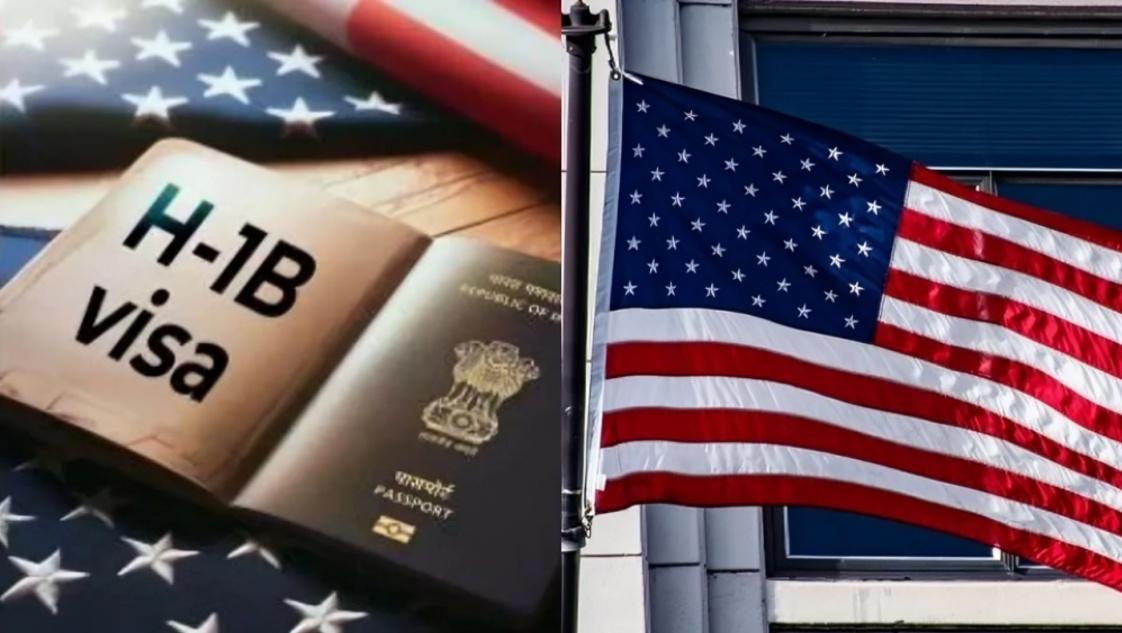
Indian professionals employed in the United States could face closer scrutiny when applying for H-1B visa extensions under a proposed immigration rule announced by the US Department of Homeland Security (DHS). The proposal seeks to change how the US Citizenship and Immigration Services (USCIS) evaluates applications from foreign workers who have previously received approval to work in the country.
The proposed change has attracted attention among Indian technology professionals, employers and immigration experts because Indian nationals account for a substantial share of H-1B visa approvals. If the proposal becomes a final rule, applicants seeking extensions could face a fresh assessment of their eligibility, even when their employment arrangements and other important details remain unchanged.
However, the proposal has not yet become law. The existing rules continue to apply while the US government considers public feedback and decides whether to finalise the change.
What Is the US Government Proposing?
The DHS proposal is titled Removing Deference to Prior USCIS Determinations of Eligibility. It was published in the Federal Register on October 14, 2026, under docket number USCIS-2026-0529.
At present, a regulation under 8 CFR 214.1(c)(5) generally requires USCIS officers to give deference to an earlier approval when considering an extension petition involving the same parties and the same underlying facts.
This means that if an employer previously received approval for a foreign worker's employment petition, immigration officers generally consider that earlier decision when reviewing a subsequent extension request. They can depart from the earlier approval in specified circumstances, including when there is a material error, a significant change in circumstances or new information that negatively affects eligibility.
The new proposal seeks to remove this requirement. If adopted, immigration officers would no longer be required to begin their assessment by relying on the previous approval. Instead, they could independently examine the evidence and determine whether the worker continues to meet the eligibility requirements.
Importantly, the proposal would not prevent officers from considering previous approvals. It would remove the requirement to give those decisions automatic deference during the review process.
Why Could Indian H-1B Professionals Be Affected?
Indian professionals are likely to be among the groups most affected by the proposed change because they represent a large proportion of workers receiving H-1B approvals.
According to figures cited in reports based on USCIS data, Indian-born workers accounted for approximately 79 per cent of H-1B approvals for continuing employment in the relevant reported category. Continuing employment includes petitions involving workers who are already employed in the United States and are seeking to continue their authorised employment.
This makes the proposed change particularly important for Indian employees working in sectors such as information technology, engineering, healthcare and other specialised occupations.
Many H-1B professionals depend on timely extension approvals to maintain their employment and legal status in the United States. Under the proposed system, employers may need to provide updated documentation to establish that the worker and the position continue to satisfy immigration requirements, even if the previous petition was approved under similar circumstances.
However, the proposal does not specifically target Indian nationals. It would apply to eligible nonimmigrant worker petitions regardless of the beneficiary's nationality. Indian professionals could experience a greater overall impact because of their significant presence in the H-1B workforce.
Which Visa Categories Could Come Under the Proposal?
The proposed change is not limited to H-1B visas. It would apply to petitions filed using Form I-129, which employers use to request certain nonimmigrant worker benefits.
The affected categories include H-1B visas for specialised occupations, L-1 visas for employees transferring within multinational companies, O-1 visas for individuals with extraordinary ability, and other eligible classifications.
The proposal could therefore affect employers and foreign professionals across several industries. Companies that regularly hire international employees may need to prepare more detailed supporting documents when filing extension petitions.
The change would not create new eligibility requirements for these visa categories. Instead, it would alter how USCIS reviews previously approved cases when employers request extensions.
More Evidence Requests and Possible Processing Delays
One of the major concerns surrounding the proposal is the possibility of an increase in Requests for Evidence, commonly known as RFEs.
An RFE is issued when USCIS requires additional documents or explanations before making a decision on an immigration petition. Employers may be asked to provide further details about the employee's job responsibilities, qualifications, salary, work location, business operations and employment arrangements.
According to the DHS proposal, removing the deference requirement could increase the RFE rate by approximately three percentage points. The department estimates that this could result in around 6,044 additional evidence requests annually.
The proposal also indicates that petitions receiving RFEs took an average of approximately 64 additional days to process over the four fiscal years examined. This could create uncertainty for employers and foreign workers who depend on timely decisions.
For Indian professionals, longer processing periods could affect job continuity, travel plans and other personal arrangements. Employers may also face additional administrative work and legal expenses while preparing responses to immigration authorities.
These figures are government estimates associated with the proposed change. They should not be interpreted as a guarantee that every H-1B extension will face an RFE or a specific processing delay.
What Is the US Government's Reason for the Change?
The DHS has said that the proposed change is intended to strengthen the integrity of the US immigration system and ensure that every petition is properly examined.
According to the department, relying too heavily on earlier approvals could make it difficult for immigration officers to identify errors, misleading information or changes in employment circumstances. The government argues that employers and applicants must continue to demonstrate eligibility whenever they request an immigration benefit.
The department has also expressed concerns that an earlier approval could be used as a basis for subsequent petitions even when the original application contained inaccurate or incomplete information.
By removing the deference requirement, DHS believes USCIS officers would have greater flexibility to review relevant evidence and assess each petition independently.
At the same time, the department has acknowledged that employers and foreign workers may have made career and personal plans based on the expectation that previous approvals would generally receive continued consideration during extension proceedings.
When Will the Proposed Rule Take Effect?
As of November 12, 2026, the proposal has not been finalised. The DHS is accepting public comments on the proposed changes until November 13, 2026.
Employers, immigration professionals, foreign workers and other interested parties can submit their feedback through the US government's Regulations.gov portal using docket number USCIS-2026-0529.
After the public comment period, the department will review the submissions and determine whether to issue a final rule. The proposal could be modified following that review.
Until a final rule is published and becomes effective, the existing regulation requiring general deference to qualifying previous approvals remains in force. Therefore, H-1B workers should not assume that their current extension applications are already subject to the proposed policy.
What Should Indian Workers and Employers Know?
Indian professionals currently working in the United States should understand that the proposed change concerns the review process rather than an automatic cancellation of existing H-1B approvals.
Employers may want to maintain clear and updated records of job responsibilities, salary details, employment agreements, work locations and the employee's qualifications. These documents could become increasingly important if the proposal is finalised.
Workers should also monitor official USCIS announcements and consult qualified immigration professionals before making decisions about extensions, employment changes or international travel.
The proposal represents a potential change in how the United States handles work visa extensions. Although it does not immediately change the legal position of H-1B holders, its eventual implementation could make the renewal process more demanding for employers and foreign professionals, particularly Indian workers who form a large part of the programme.