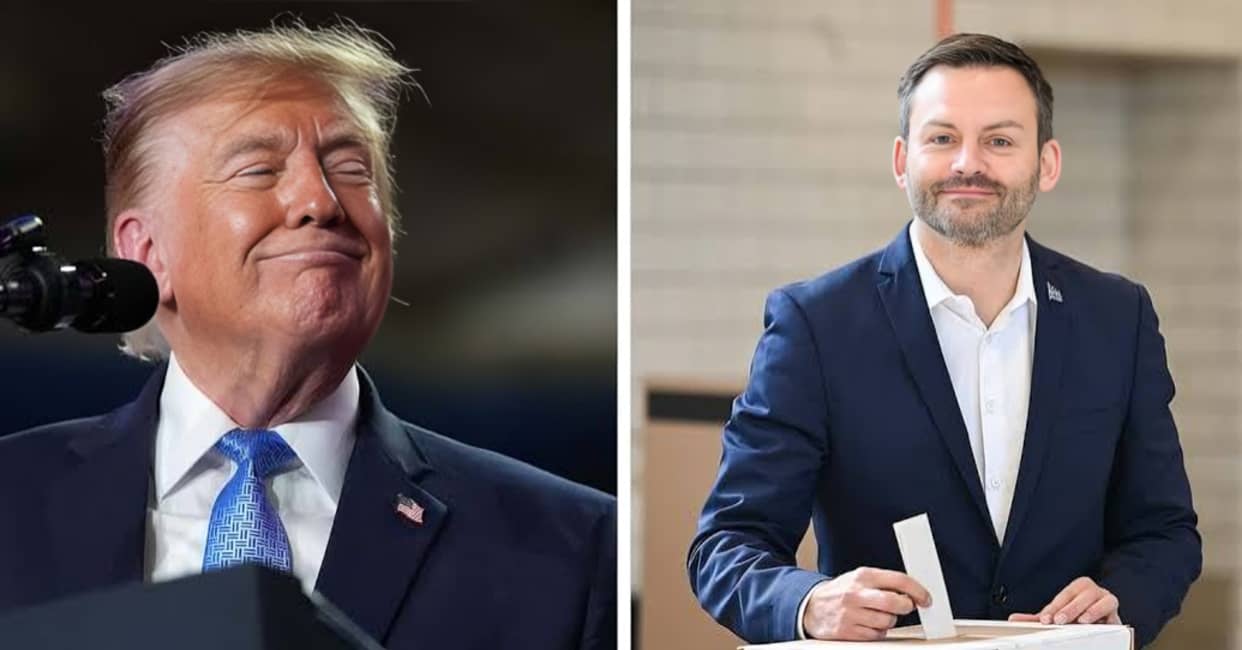
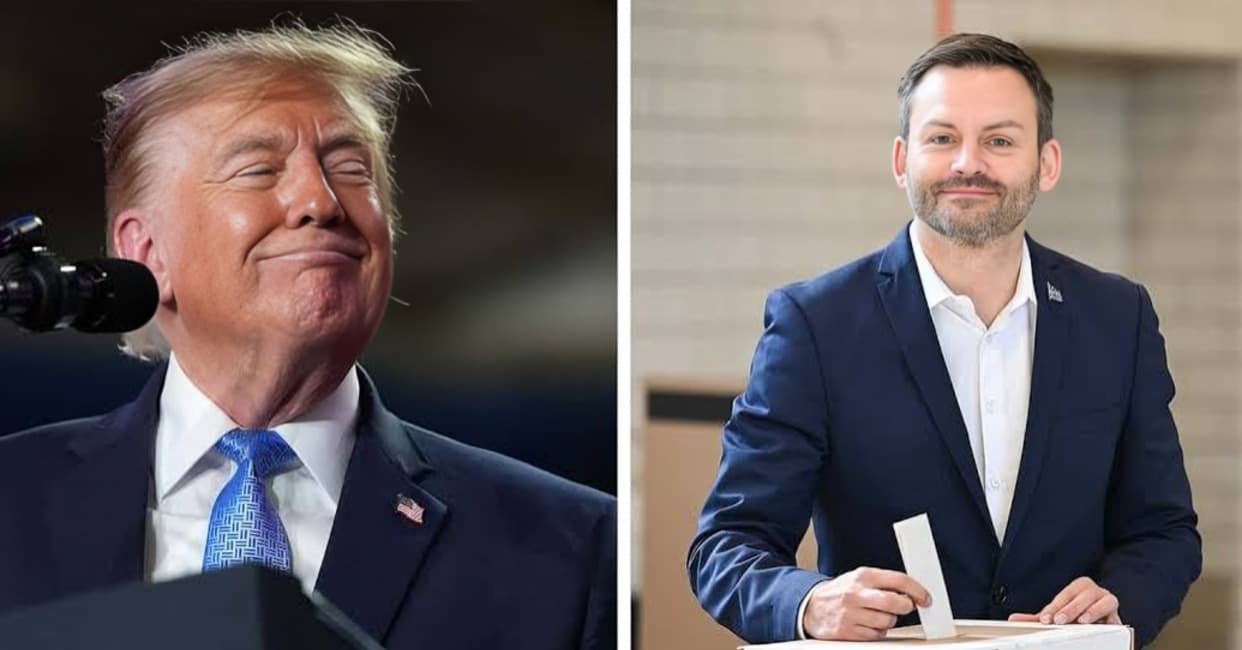
US President Donald Trump has congratulated Quebec separatist leader Paul St-Pierre Plamondon and British Columbia's incoming premier, Lorne Doerkson, at a time when relations between Washington and Ottawa remain strained by trade disputes and accusations of political interference. The messages have attracted attention because they followed allegations by the US Embassy in Canada that Canadian political leaders were attempting to influence American politics ahead of the November 3, 2026, midterm elections.
Trump's public remarks have added another dimension to the dispute between the two neighbouring countries. While his administration has criticised Canadian officials over their comments and actions concerning US tariffs, the president has welcomed political developments involving leaders who represent different political priorities within Canada.
Axios+1
Trump congratulates Quebec separatist leader
On October 27, Trump congratulated Paul St-Pierre Plamondon, leader of Quebec's Parti Québécois, after the party's victory in the provincial election earlier in October. The party won enough seats to form a minority government and has renewed the debate over Quebec's long-running independence movement.
St-Pierre Plamondon supports Quebec sovereignty and has promised to pursue a referendum on independence. However, he has said that a referendum would not take place until after Trump leaves office in 2029. His party did not secure an outright majority, meaning it will need to work with other members of the provincial legislature to advance its agenda.
Trump's message referred to a news report about the separatist party's election victory. The timing drew attention because the Quebec campaign had been shaped partly by concerns about Trump's trade policies and his repeated remarks about Canada becoming the 51st US state.
Quebec's independence question is a domestic Canadian political issue. Any move towards separation would involve significant constitutional and political challenges, and an election victory alone does not make independence automatic.
National Newswatch+1
British Columbia's incoming premier also receives congratulations
Trump also congratulated Lorne Doerkson after the Conservatives made major gains in British Columbia's provincial election. The party's victory marked a significant shift in the province's political landscape and positioned Doerkson to become its next premier.
Trump praised the Conservatives' gains in a social media post. However, Doerkson has rejected comparisons between his political approach and Trump's, saying his priority is to serve British Columbia and address the province's economic concerns.
The distinction is important because Doerkson's Conservative Party is not a separatist movement. His inclusion in the wider political story reflects Trump's support for a conservative provincial leader, while St-Pierre Plamondon represents a party seeking Quebec independence.
The two endorsements therefore involve different political circumstances. One concerns a separatist movement seeking greater sovereignty for Quebec, while the other concerns a conservative party taking power in a Canadian province. Both developments have become part of the broader debate over Canada's political direction and its relationship with the United States.
Connect FM radio station+1
US Embassy accuses Canadian leaders of influencing American politics
The diplomatic dispute intensified after the US Embassy in Canada released a fact sheet accusing Canadian politicians of attempting to influence American politics before the midterm elections. The embassy cited statements about retaliatory tariffs, public advertising campaigns and meetings between Canadian officials and American politicians.
Among those mentioned were Canadian Industry Minister Mélanie Joly and Ontario Premier Doug Ford. The embassy argued that their public comments about targeting US products and applying political pressure through tariffs raised concerns about potential interference.
The dispute is connected to the wider trade conflict between the two countries. The Trump administration imposed tariffs on Canadian goods, prompting Ottawa and provincial leaders to consider countermeasures designed to protect Canadian businesses, workers and industries.
Ontario previously ran an advertising campaign featuring former US President Ronald Reagan criticising tariffs. Trump responded by ending trade talks with Canada in October 2025 after the advertisement aired during the World Series.
The US Embassy's allegations have not established that the Canadian government interfered with the administration of American elections. Critics have argued that discussing trade policy and meeting US officials is not the same as manipulating voting or election procedures.
CityNews Toronto+1
Canadian Prime Minister rejects the allegations
Canadian Prime Minister Mark Carney rejected the US accusations, saying they had no merit. He defended Canada's actions as efforts to protect its economy and respond to American trade measures.
Carney has maintained that Canadian officials are entitled to advocate for their country's economic interests. He has also said that Canada is prepared to resume trade negotiations if Washington approaches the discussions in good faith.
The Canadian government has faced pressure to respond to US tariffs while avoiding a further deterioration in relations. Countermeasures can affect industries and consumers on both sides of the border, making trade negotiations important for businesses that rely on cross-border supply chains.
Carney has also stressed that Canada will not abandon its sovereignty. Trump's previous comments about making Canada the 51st US state have heightened concerns in Canada and become a recurring source of political tension.
The disagreement illustrates how trade policy has become closely linked to domestic political debate in both countries. Measures introduced to protect national industries can have consequences for workers and businesses, while public comments about elections can further complicate diplomatic relations.
AP News+1
Trade negotiations remain uncertain
Despite the public criticism, there have been indications that trade discussions between Washington and Ottawa could resume. White House economic adviser Kevin Hassett has said that negotiations had picked up pace, while Carney has indicated that Canada remains open to reaching an acceptable agreement.
The prospect of renewed talks comes as businesses on both sides of the border face uncertainty over tariffs and market access. Canadian exporters depend heavily on the US market, while American companies also rely on Canadian materials, energy supplies and cross-border trade.
The November 3 US midterm elections have added a political dimension to the negotiations. Tariffs and economic policy are likely to remain important issues for American voters, particularly in regions where industries depend on trade with Canada.
However, the timing of a possible agreement remains uncertain. Both governments must weigh domestic political pressures against the economic consequences of a prolonged trade dispute.
A dispute involving politics, trade and national sovereignty
Trump's congratulations to the two Canadian political leaders have become part of a wider discussion about the consistency of Washington's position on political influence across borders. The US administration has accused Canadian officials of attempting to affect American politics, while the president has publicly welcomed developments involving leaders whose agendas may challenge Canada's federal political priorities.
Still, the two cases are not identical. St-Pierre Plamondon advocates Quebec independence, whereas Doerkson leads a conservative party that won a provincial election without promoting separation from Canada. Their shared feature in this episode is Trump's public congratulations, not a common political goal.
The larger dispute reflects deteriorating trust between two longstanding allies. Trade negotiations, tariff measures, political statements and questions of sovereignty have all contributed to the tension.
For now, Canada has rejected the allegation of election interference, and discussions over trade remain unresolved. Whether the recent exchanges affect negotiations or relations between the two governments will depend on their next decisions. The developments underline the close connection between domestic politics, economic policy and diplomacy as the United States approaches its midterm elections.