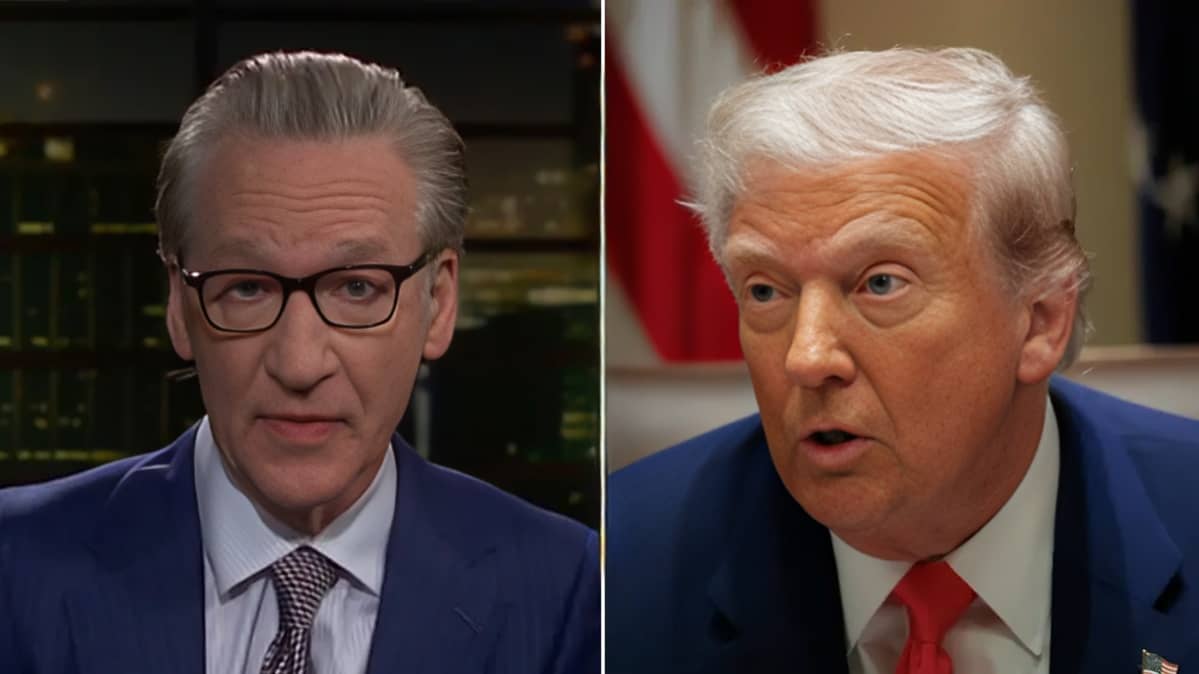
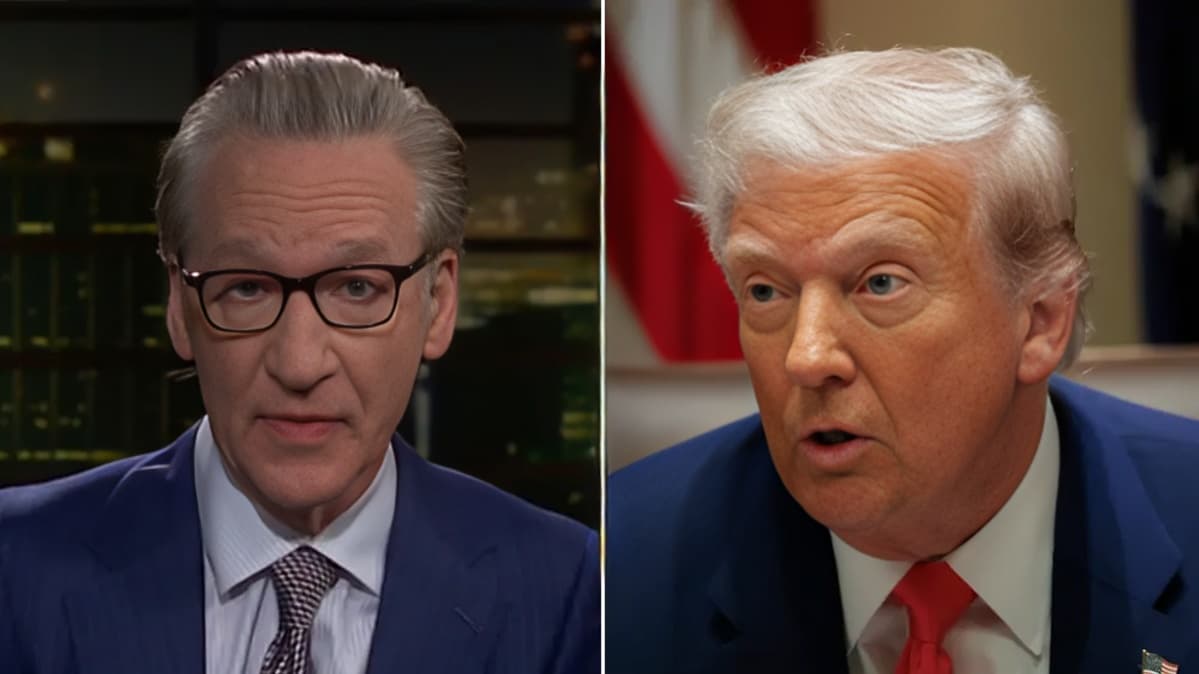
Trump Attacks Bill Maher in Record-Length Truth Social Post After White House Dinner
Trump’s Criticism of Bill Maher
US President Donald Trump has launched a strong public criticism of comedian and television host Bill Maher, describing him as a “complete and total loser” in an unusually lengthy post on his social media platform, Truth Social. The post, published on Sunday, October 25, reportedly contained 1,323 words and was identified by CNN’s analysis as the longest social media post Trump had published to that point.
The criticism came just days after Trump and Maher attended a dinner at the White House. The two had initially appeared to part on friendly terms, with Trump describing the gathering positively. However, the relationship came under renewed strain after Maher discussed the meeting and made jokes about the president during an episode of HBO’s Real Time with Bill Maher.
Trump’s post focused on Maher’s television programme, its ratings, the comedian’s political commentary and his account of the White House meeting. The president also criticised Chuck LaBella, a longtime business associate of Maher who previously worked on Trump’s reality television programme, The Apprentice.
What Triggered Trump’s Response?
The latest dispute followed the October 23 episode of Real Time with Bill Maher. During the programme, Maher discussed his recent dinner with Trump and made jokes about the president’s political standing and approval ratings.
Maher also spoke about the length of the meeting and the subjects discussed during the gathering. His remarks included commentary on Trump’s political popularity and the president’s public image. The programme continued Maher’s established approach of mixing political discussion, interviews and satire.
Trump responded two days later with a lengthy Truth Social post. He criticised Maher’s performance and questioned the quality and popularity of the comedian’s show. Trump also accused Maher of dishonesty and challenged the accuracy of comments made during the broadcast.
The president opened his post by calling Maher a “complete and total loser”. He went on to question the programme’s ratings and criticise HBO, arguing that the network had lost some of the popularity and reputation it once enjoyed.
These statements reflected Trump’s criticism of the comedian and his programme. They should be understood as the president’s views rather than independently established assessments of the show’s performance.
Trump Questions the Show’s Audience Reactions
One of the prominent points in Trump’s post was his criticism of the laughter and applause heard during Maher’s programme. Trump suggested that the show used a “Laughter Machine”, implying that audience reactions were being generated or exaggerated.
He argued that viewers appeared to laugh even when Maher’s remarks were not funny. However, his post did not establish evidence that the programme used an artificial laughter system. The allegation remained part of Trump’s criticism of the comedian.
Trump also accused Maher of lying and said he would no longer watch the programme. His remarks escalated the disagreement from criticism of individual jokes to a broader attack on Maher’s credibility and professional standing.
The exchange highlights the continuing tension between political figures and television commentators who use comedy and satire to discuss public affairs. Maher’s programme regularly addresses American politics, while Trump has frequently responded publicly to media coverage and criticism.
Disagreement Over the White House Dinner
The recent dinner was central to the dispute because Trump’s public reaction initially appeared positive. Following the October 15 gathering, Trump described the dinner as “great” and suggested that he and Maher had a better relationship than people might assume.
The meeting also included ESPN host Stephen A. Smith and musician Kid Rock. It was the second time Trump and Maher had met for a White House dinner, following an earlier meeting in March 2025.
Their accounts of the latest gathering differed in important respects. Maher described the meeting as lasting approximately four hours. Trump disputed that description in his Truth Social post, saying it lasted around two hours or possibly less.
Trump also said he had learned nothing from the discussion and questioned the value of the meeting. His comments represented a significant change in tone from his earlier public description of the dinner.
The disagreement over the meeting’s duration illustrates how the same event can be presented differently by participants. Neither account should be treated as an independently verified timeline without further evidence.
Chuck LaBella Also Comes Under Criticism
Trump’s post did not focus exclusively on Maher. He also directed criticism at Chuck LaBella, who has a longstanding professional relationship with the comedian and previously worked on The Apprentice.
Trump claimed that LaBella had helped facilitate the dinner meetings and had conveyed positive messages about Maher’s attitude towards the president. These statements were part of Trump’s account of how the meetings were arranged.
The post also suggested that Trump believed Maher’s private conduct did not match the comedian’s public criticism. Maher, however, has continued to use his television programme to comment on Trump and his administration.
The claims about private conversations and the motivations behind the meeting remain attributed to Trump. Publicly available accounts do not independently establish every assertion made in the post.
Trump’s Remarks About Political Ratings
Another major theme was Maher’s commentary on Trump’s approval ratings. During his programme, Maher discussed the president’s political standing and made jokes about the level of support Trump receives.
Trump challenged Maher’s interpretation and referred to polling figures that he said supported his position. However, polling results can vary according to the survey organisation, the date of the poll, the group surveyed and the wording of questions.
For that reason, claims about approval ratings need to be assessed against the relevant polling data rather than accepted solely on the basis of statements made by either Trump or Maher.
The dispute over polling reflects a wider disagreement about how political popularity is measured and communicated. While Maher uses satire to comment on political developments, Trump has regularly criticised media coverage that he considers unfair or inaccurate.
Trump Says He Will Stop Watching Maher’s Programme
Towards the end of the post, Trump said he would no longer watch Real Time with Bill Maher. He also directed Maher not to contact him again, signalling a further breakdown in the cordial tone that followed their dinner.
Trump additionally complained about the attention Maher receives from Republican figures and conservative media outlets. The precise scope of his remarks about limiting coverage of Maher was not entirely clear.
The latest confrontation follows an earlier pattern in which Trump and Maher have moved between private meetings and public criticism. Their first White House dinner in March 2025 was also followed by renewed disagreement after Maher returned to making jokes about the president.
A Public Dispute Between Politics and Entertainment
The latest exchange has attracted attention because it followed a private meeting that Trump initially described favourably. The sharp change in tone shows how quickly a cordial public interaction can become a political and media controversy when participants later disagree over its meaning or discuss it publicly.
For Maher, political commentary and satire remain central to his television programme. For Trump, the episode became another occasion to challenge a media personality who has criticised him.
The immediate dispute centres on the dinner, the comedian’s remarks and the president’s response. The broader issue is the continuing relationship between political leadership, entertainment programming and public criticism in the United States.
As of the reports published on October 25 and 26, Trump’s Truth Social post had become the central focus of the controversy. Maher’s comments on the programme and Trump’s allegations should be considered in their respective contexts, with claims and opinions clearly distinguished from independently verified facts.