US Issues Temporary Power Grid Emergency Order Across 13 States to Reduce Blackout Risks
The United States Department of Energy has issued a temporary emergency order to protect electricity reliability across a large regional power network serving parts of 13 states and Washington, DC. The measure authorises additional power generation and the use of backup generators under specified conditions as officials seek to reduce the risk of electricity interruptions.
According to the Department of Energy, the order was issued on October 12, 2026, under Section 202(c) of the Federal Power Act. It took effect on October 13 and is scheduled to remain in force through October 16, 2026, unless renewed.
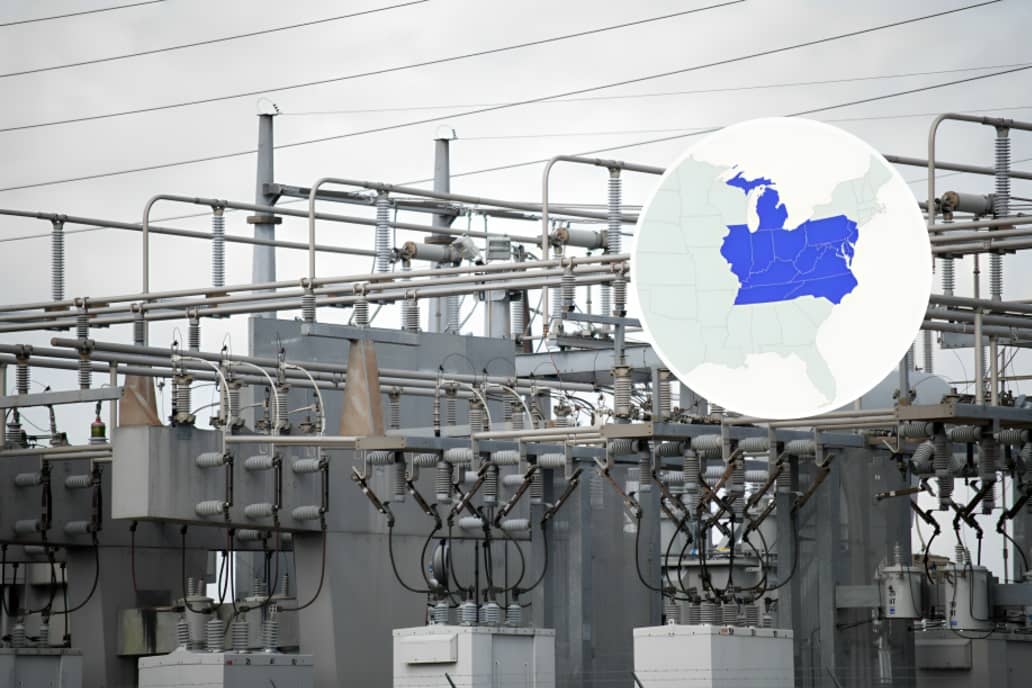
The order applies to PJM Interconnection, one of the largest regional electricity grid operators in the United States. PJM coordinates electricity supply and demand across a network that includes parts of Delaware, Illinois, Indiana, Kentucky, Maryland, Michigan, New Jersey, North Carolina, Ohio, Pennsylvania, Tennessee, Virginia and West Virginia, as well as the District of Columbia.
The emergency action is intended to ensure that enough electricity remains available to meet demand and maintain reliable service during a period of increased pressure on the power system. It does not mean that all the states covered by the network are experiencing blackouts.
Why Did the US Government Issue the Emergency Order?
The Department of Energy said the order followed a request submitted by PJM Interconnection on October 11. The grid operator warned that electricity demand, generating-unit outages and planned transmission maintenance could create conditions that threaten the reliability of the regional power network.
PJM forecast electricity demand of approximately 111,500 megawatts or higher for October 13. It also reported a high level of anticipated generation outages and identified particular reliability concerns in parts of Maryland, the District of Columbia region and Virginia.
Planned maintenance is a routine part of electricity-system management. However, when several generating units and transmission facilities are unavailable at the same time, the amount of electricity that can be delivered to customers may become more limited.
High demand combined with reduced generation availability can leave grid operators with fewer options for balancing supply and consumption. Under severe conditions, operators may need to activate emergency resources or take steps to reduce electricity demand.
The federal emergency order gives PJM additional authority to manage these risks during the specified period.
What Does the Emergency Order Allow?
The order directs PJM to dispatch specified generating units when the grid operator determines that their electricity is necessary to maintain system reliability.
It also authorises PJM to direct certain backup generation resources at large electricity-consuming facilities to operate as a last resort before declaring the highest-level Energy Emergency Alert, known as EEA 3, or while such an alert is in effect.
These resources may include auxiliary generators, standby systems, battery storage and other qualifying equipment at data centres and industrial or commercial facilities.
The aim is to make additional electricity available when the regional grid faces serious supply constraints. Using backup power at eligible facilities may also reduce the amount of electricity those facilities draw from the wider network during an emergency.
However, the order does not instruct every listed power plant to operate at full capacity. PJM has clarified that generating units covered by the order must continue to follow its instructions concerning when and how much electricity they should produce.
The measure is therefore a targeted emergency response rather than a blanket direction to maximise electricity production across the entire network.
Why Are Pollution Limits Part of the Debate?
One of the most significant aspects of the order concerns environmental requirements that can restrict how certain generating facilities operate.
Power plants and backup generators are generally subject to limits covering emissions, fuel use, wastewater releases and other environmental conditions. These restrictions are designed to reduce pollution and protect public health.
PJM warned that some generating units could face operational limitations because of environmental permits or state requirements. Its emergency application also sought authority to use backup generation at large facilities despite certain applicable environmental restrictions.
The Department of Energy's order acknowledges that emergency operations may conflict with some environmental standards. It states that emissions, operating hours and fuel use by qualifying resources during the order's effective period will not count towards certain applicable rolling-average-based limits.
This is a specific, temporary provision, not a general suspension of environmental law.
The order also requires operations to be limited to the times and operating parameters determined by PJM for grid reliability. It directs the operator to minimise environmental impacts to the maximum extent practicable and requires affected resources to comply with applicable environmental monitoring, reporting and recordkeeping requirements to the maximum extent practicable during the emergency.
The measure highlights the difficult balance between maintaining a reliable electricity supply and limiting pollution. Emergency generation can help reduce the risk of power interruptions, but increased use of some fossil-fuel-powered generators can also increase emissions.
Which States Are Covered?
PJM Interconnection serves all or parts of 13 states and Washington, DC. The region includes portions of the Midwest and the Mid-Atlantic, where electricity is supplied through an interconnected network of power stations and transmission lines.
The states within PJM's service region are Delaware, Illinois, Indiana, Kentucky, Maryland, Michigan, New Jersey, North Carolina, Ohio, Pennsylvania, Tennessee, Virginia and West Virginia.
However, the order's geographical reach should not be confused with a declaration that each state is facing an immediate power shortage. Electricity demand, generation availability and transmission conditions differ across the region.
PJM manages electricity flows across the network and identifies where additional generation or other emergency measures are required. The federal order gives the operator additional options to address those needs during the temporary emergency period.
What Is the Risk of Blackouts?
The purpose of the emergency order is to reduce the risk of electricity interruptions. A blackout can occur when electricity supply cannot meet demand or when disruptions affect the transmission and distribution network.
Grid operators typically use several measures before considering interruptions to customers. These may include bringing additional generating units online, activating demand-response programmes, adjusting electricity transfers and using eligible backup resources.
If available measures prove insufficient during a severe emergency, controlled interruptions may be necessary to protect the wider power system. The Department of Energy's order is intended to help PJM avoid that outcome by making additional resources available.
The issuance of an emergency order does not itself establish that a blackout will occur. It indicates that authorities have identified conditions serious enough to justify additional measures to protect reliability.
PJM's operating notices and subsequent Department of Energy updates will provide further information about how the authorised resources are being used.
When Will the Emergency Measures End?
The order is scheduled to remain effective from October 13 through October 16, 2026. Any extension would require further action by the Department of Energy.
During this period, PJM is expected to monitor electricity demand, generation availability and transmission conditions while deciding whether the specified resources are needed. The grid operator must also report relevant information about resources operating under the emergency allowances.
The longer-term challenge is to ensure that electricity supply keeps pace with rising demand while maintaining reliable infrastructure and complying with applicable environmental requirements.
For now, the federal action provides PJM with temporary additional tools to manage a period of heightened grid pressure. The actual effect on electricity supply will depend on operating conditions, the resources deployed and whether the emergency order needs to be extended.