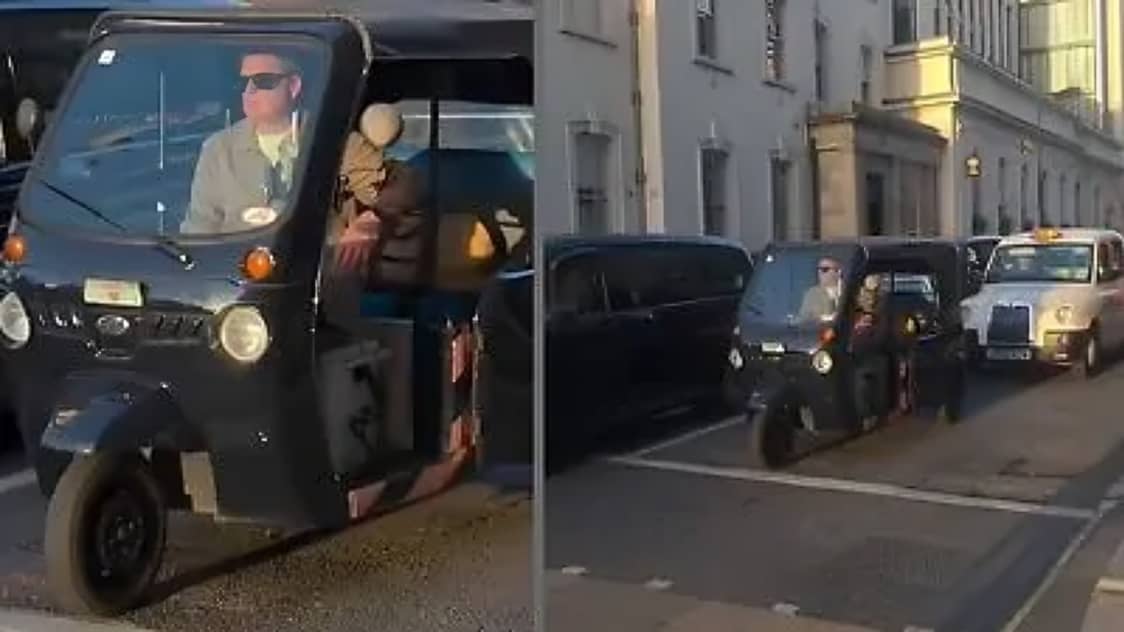
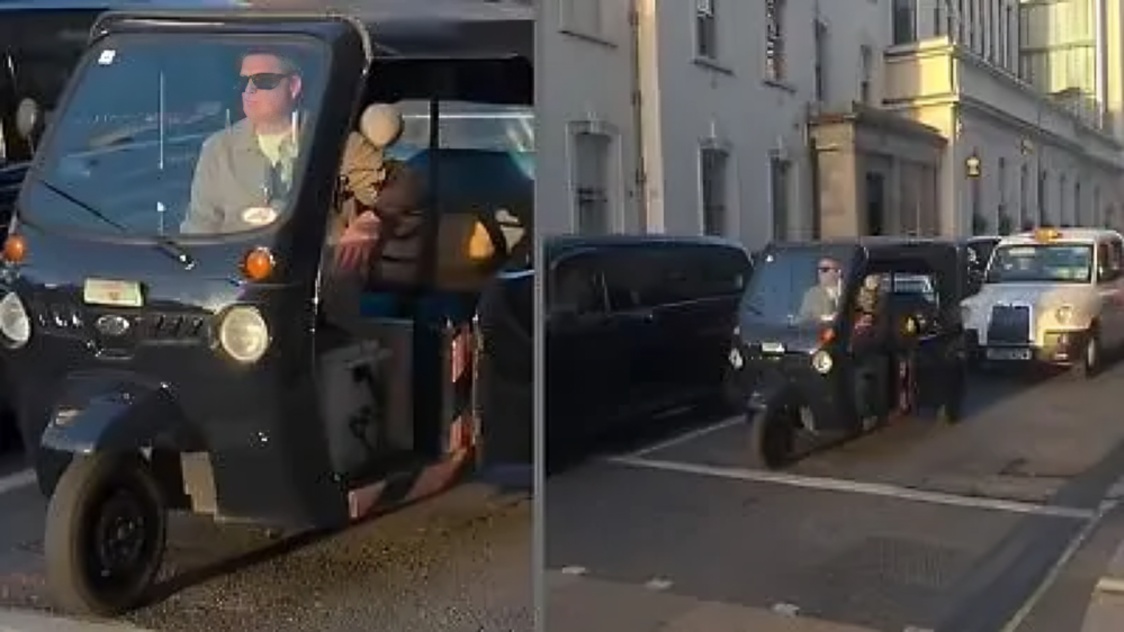
Mahindra Group Chairman Anand Mahindra has shared a video showing a Mahindra auto rickshaw travelling through the streets of London, creating an unusual sight that quickly attracted attention on social media. Auto rickshaws are a familiar part of everyday transportation in India, but seeing a similar three wheeler operating on a British road prompted curiosity and humour among social media users.
Mahindra shared the video on X on October 5, 2026. Along with the video, he posted a short message in Gujarati. The message roughly translates to saying that a rickshaw has arrived in the UK and that it is a Mahindra vehicle. He also indicated that the rickshaw had been imported by a hobbyist.
The video shows a three wheeler travelling through central London traffic. The vehicle can be seen moving among cars and other traffic, with pedestrians and familiar London surroundings visible in the background. According to reports, the clip is around 24 seconds long and shows the rickshaw being driven through a busy section of the city.
For people familiar with Indian roads, the vehicle itself is not unusual. Auto rickshaws are widely used for short distance transportation across Indian cities and towns. They are commonly used for commuting, local travel and last mile transportation. However, the same type of vehicle appearing on a London road created a noticeable contrast because three wheelers are not generally associated with everyday urban transportation in the British capital.
The unusual setting was one of the main reasons the video attracted attention. Several social media users responded to Mahindra’s post by sharing jokes about the presence of an Indian three wheeler in London. Some users referred to familiar phrases and decorations commonly associated with Indian auto rickshaws, while others imagined how the traditional Indian auto experience might look on British roads.
One of the recurring themes in the online discussion was the phrase reverse colonisation. Users used the expression humorously to describe the sight of an Indian vehicle travelling on British roads, drawing on the historical relationship between India and the United Kingdom. The phrase was used as a social media joke rather than as a formal description of an economic or political development.
Other reactions focused on the possibility of experiencing an Indian style auto ride in London. Some users joked about fare negotiations, traffic and the familiar conversations often associated with auto rickshaw journeys in India. Others welcomed the appearance of an Indian manufactured vehicle on British roads and viewed it as an example of the international reach of Indian automotive products.
The video also generated discussion about Mahindra’s presence in the UK. Mahindra has previously exported electric three wheelers to the British market. Reports have noted that Mahindra electric three wheelers have been available in the UK through specialist distributors, where they have been used for different purposes including promotional activities, hospitality transportation and last mile delivery applications.
This background is important because the appearance of a Mahindra three wheeler in Britain is not necessarily evidence of a new mass market passenger transport service. In the video shared by Mahindra, the vehicle was described as having been imported by a hobbyist. Therefore, the social media attention should be understood primarily in the context of the unusual sight rather than as an announcement of a new London auto rickshaw service.
Mahindra has frequently used social media to share interesting automotive developments, unusual vehicles and moments involving the company’s products. His posts often receive significant engagement because of his informal style and willingness to respond to unusual or entertaining developments.
The London rickshaw video follows that pattern. Rather than announcing a new product or commercial launch, the post highlighted an unexpected appearance of a familiar Indian vehicle in a very different setting. The combination of an Indian three wheeler and one of the world’s most recognisable cities gave social media users an opportunity to connect automotive culture with humour.
The incident also illustrates how vehicles can become cultural symbols beyond their original transportation role. In India, the auto rickshaw is closely connected with daily urban life. It is commonly seen near railway stations, bus stands, markets, residential areas and commercial centres. For many Indians, the sight of an auto immediately represents everyday commuting.
In London, the same vehicle appears unusual because the city’s streets are more commonly associated with black cabs, buses, private cars, bicycles and other forms of public transportation. The contrast between these two urban environments helped make the video visually distinctive.
At the same time, the online reactions demonstrate how social media can quickly transform a simple observation into a wider conversation. Users added jokes, cultural references and personal experiences to the original post. Some responses were focused on Indian identity and automotive pride, while others simply treated the sight as an amusing contrast between two cities.
There is no indication from Mahindra’s post that the video represents a new commercial passenger service in London. The available reports instead describe the vehicle as having been imported by a hobbyist. Therefore, claims about widespread commercial operations or a major expansion of auto rickshaw services in the UK should not be inferred from the video.
For Mahindra, however, the incident provides another example of how its three wheeler products can attract attention outside India. The company has an established presence in multiple international markets, and its electric three wheeler range has previously been associated with overseas applications.
The London video has therefore attracted attention for two reasons. First, it presents an unusual visual contrast between an Indian auto rickshaw and the streets of London. Second, it highlights the broader international visibility of Indian manufactured vehicles.
Overall, Anand Mahindra’s post has turned an ordinary three wheeler into an unusual social media talking point. The video does not announce a new London transport service, but it has generated considerable online discussion because of the cultural contrast and the humour surrounding an Indian style rickshaw travelling through the British capital.
The incident also reflects the growing global visibility of Indian automotive products. While the specific vehicle shown in the video was reportedly brought to the UK by a hobbyist, its appearance in central London demonstrates how products traditionally associated with Indian streets can attract attention when they appear in unexpected international settings.