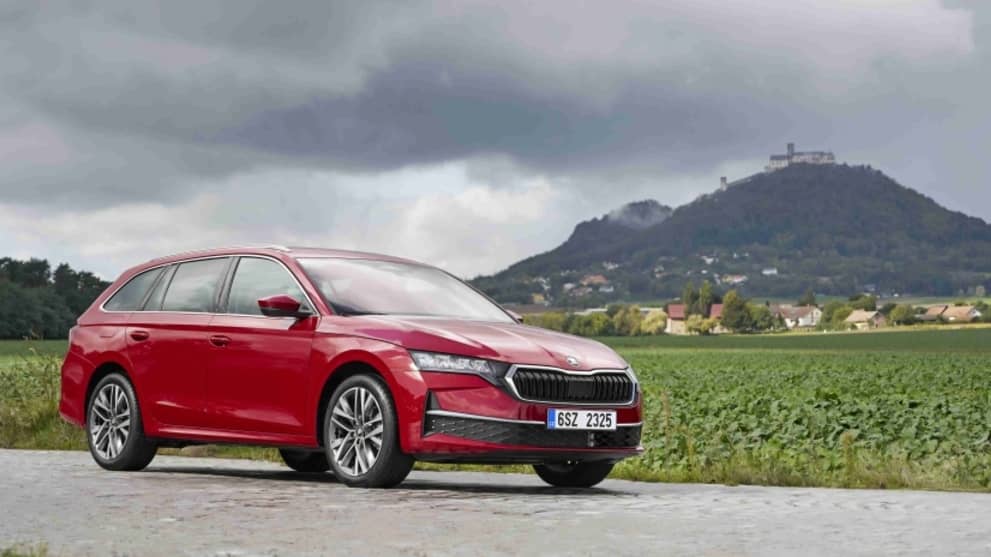
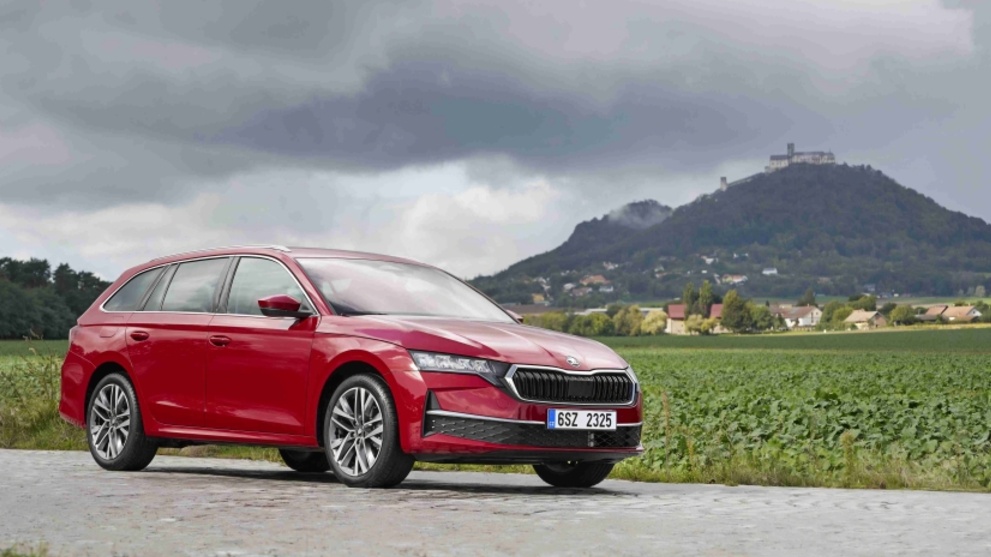
Škoda has introduced a new full hybrid powertrain for the Octavia, making the popular model the first vehicle in the company's range to receive this type of hybrid technology. The new powertrain expands Škoda's electrified vehicle portfolio and is positioned between the brand's existing mild hybrid systems and plug in hybrid technology.
The new Octavia full hybrid uses a series parallel hybrid system that can automatically select between three different operating modes. These are pure electric operation, series hybrid operation and parallel hybrid operation. The system is designed to balance efficiency and performance according to the driving conditions. Unlike a plug in hybrid, the new Octavia does not require the battery to be connected to an external charger.
Two Power Outputs
The new full hybrid Octavia will be available with two system power outputs. The entry version produces 100 kW, equivalent to approximately 136 PS, while the more powerful version develops 125 kW, equivalent to approximately 170 PS.
The two versions use the same electric motors, while the petrol engine specifications differ. The lower output version uses a 1.5 TSI petrol engine producing 96 kW, while the higher output version uses a 1.5 TSI engine with a maximum output of 110 kW.
Both versions have an electronically limited top speed of 180 kmph. Škoda has designed the system to provide electric assistance while retaining the flexibility of a petrol powered vehicle for longer journeys.
Three Hybrid Operating Modes
One of the main highlights of the new Octavia is its three mode hybrid system. The vehicle automatically selects the most appropriate mode depending on factors such as speed, battery charge and driving conditions.
In electric mode, the traction motor drives the front wheels using energy stored in the hybrid battery. Škoda says the vehicle can travel for approximately two kilometres without starting the petrol engine, depending on conditions.
The second operating mode is series hybrid mode. In this mode, the petrol engine drives a generator, which produces electricity for the electric motor. The electric motor then drives the wheels. Škoda says this mode is primarily used at speeds of up to approximately 60 kmph, when the battery charge falls below a specified level or when stronger acceleration is required.
The third mode is parallel hybrid operation. In this mode, the petrol engine is mechanically connected to the driven wheels through a clutch and a fixed gear ratio. The electric motor can provide additional assistance when required. This mode is mainly used at speeds above approximately 60 kmph and during steady driving, where direct mechanical power transmission can be more efficient.
No External Charging Required
Unlike a plug in hybrid vehicle, the new Octavia full hybrid does not have to be connected to an external charging point. Its traction battery receives energy through regenerative braking and, when required, through the petrol engine.
This makes the system different from Škoda's plug in hybrid models, which use larger batteries and can be charged using an external power source.
The Octavia's hybrid battery has a gross capacity of 1.6 kWh and is positioned beneath the rear seats. The vehicle automatically maintains the battery's state of charge between approximately 40 and 90 percent. This allows the electric motor to provide assistance during driving without requiring the owner to manage charging manually.
Engine and Mechanical Setup
The full hybrid system combines a 1.5 TSI petrol engine with two electric motors, a single speed automatic transmission and an automatic clutch.
The smaller electric motor primarily works as a generator and also helps start the combustion engine. The larger traction motor drives the front wheels and recovers energy during braking.
The automatic clutch allows the petrol engine to be mechanically connected to the front wheels when the parallel hybrid mode is selected. The system can therefore switch between electric propulsion, engine generated electric power and direct engine propulsion without requiring driver intervention.
The automatic operation is intended to make the hybrid system straightforward to use. Drivers do not need to manually select the individual hybrid modes because the vehicle's control system determines the most efficient operating strategy based on driving conditions.
Body Styles and Variants
The full hybrid powertrain is available in both the Octavia hatchback and the Octavia estate, known as the Combi in several European markets.
Škoda is offering the new powertrain in Selection and Sportline trim levels. The company has therefore positioned the technology across both a comfort oriented specification and a sportier version of the Octavia.
The hybrid models also receive additional standard equipment compared with versions powered exclusively by combustion engines. This includes a 13 inch infotainment display, a 10 inch Virtual Cockpit and a HYBRID badge on the tailgate.
Boot Space and Practicality
Despite the addition of the hybrid battery beneath the rear seats, the Octavia continues to offer a practical cabin and luggage area.
The hatchback version provides 460 litres of boot space, which can increase to 1,400 litres when the rear seats are folded. The estate version offers 485 litres of luggage capacity, increasing to 1,540 litres with the rear seats folded.
The 40 litre fuel tank works alongside the self charging hybrid system, allowing the vehicle to continue operating without requiring access to an external charging station.
Delivery Timeline
Škoda has already opened orders for the new full hybrid Octavia in selected markets. Customer deliveries are scheduled to begin in December 2026.
The company has not positioned the new powertrain as a replacement for all existing Octavia engines. Instead, it adds another electrified option to the model's broad powertrain range.
The introduction is also part of Škoda's wider strategy of offering different levels of electrification. Mild hybrid models remain available, while full hybrid technology now provides an option for customers who want electric driving capability without the need for external charging. Plug in hybrid models continue to serve customers who want a larger electric driving range and the ability to charge the vehicle separately.
What Makes the Octavia Full Hybrid Different
The key difference between the new Octavia full hybrid and the existing mild hybrid versions is the role played by the electric motor. In a mild hybrid vehicle, the electric system mainly assists the petrol engine and supports functions such as engine restarting and energy recovery.
In the new full hybrid, the electric motor can drive the vehicle on its own for short distances. The system can also use the petrol engine as a generator or mechanically connect it to the wheels when conditions make that approach more efficient.
This gives the Octavia greater flexibility in urban traffic and during low speed driving while retaining the petrol engine's advantages for longer journeys.
For buyers, another important advantage is the absence of a charging requirement. The battery is recharged automatically through regenerative braking and the petrol engine, meaning owners do not need to install a home charger or plan regular charging stops.
Potential India Relevance
Škoda's latest full hybrid announcement is currently focused on overseas markets, and the company has not confirmed an India launch timeline for the full hybrid Octavia.
The Octavia nameplate has previously been sold in India, but the current India product portfolio and the European Octavia range are not identical. Therefore, the specifications, variants and powertrain availability described for the European full hybrid model should not be assumed to apply to India.
If Škoda decides to introduce the full hybrid Octavia in India, the company would need to announce the local specifications, pricing, variant lineup and launch schedule separately.
Overall, the new Škoda Octavia full hybrid represents an important step in the brand's electrification strategy. It is the company's first full hybrid model and combines a 1.5 litre TSI petrol engine with two electric motors and a 1.6 kWh battery.
With 100 kW and 125 kW system outputs, three automatically selected hybrid operating modes and the ability to drive short distances using electric power alone, the new Octavia offers a different approach to electrification. Its self charging system also removes the need for external charging.
The full hybrid Octavia will be offered in both hatchback and estate body styles, with Selection and Sportline trim levels. Orders have opened in relevant markets and customer deliveries are scheduled to start in December 2026.