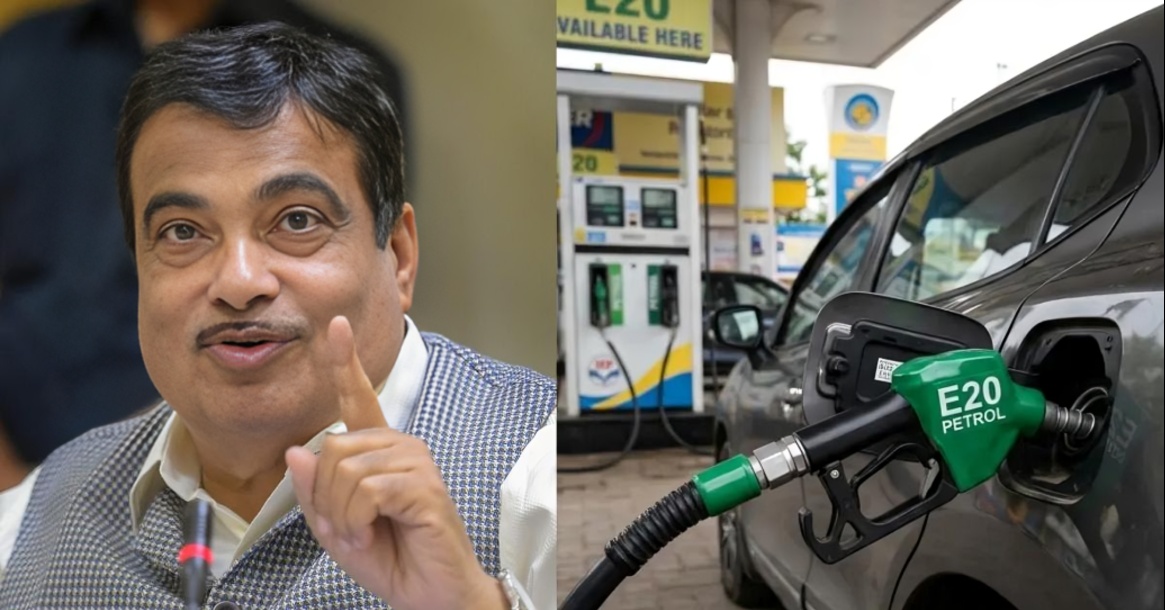
The Central Government has clarified that vehicles operating on E20 petrol may experience a decline in fuel efficiency ranging from 2 to 6 percent, depending on factors such as vehicle category, engine design, and manufacturing year. The clarification was provided by Union Minister for Road Transport and Highways Nitin Gadkari in a written reply to the Lok Sabha, addressing questions regarding the performance of vehicles using ethanol-blended fuel.
According to the minister, the reduction in mileage varies across different vehicle models. Modern vehicles designed or calibrated for higher ethanol blends may experience a relatively smaller impact, while older vehicles could see a comparatively greater reduction in fuel efficiency. The statement addresses concerns that have been raised by motorists since the wider introduction of E20 fuel across India.
E20 petrol is a blend consisting of 20 percent ethanol and 80 percent petrol. The Government of India has been promoting ethanol blending as part of its broader strategy to reduce dependence on imported crude oil, improve energy security, support domestic agriculture, and lower greenhouse gas emissions associated with fossil fuel consumption.
Ethanol is primarily produced from agricultural feedstocks such as sugarcane, maize, damaged food grains, and other approved biomass sources. Increasing ethanol blending is expected to provide additional income opportunities for farmers while encouraging greater use of renewable fuels in the transportation sector.
Experts explain that ethanol contains less energy per litre than conventional petrol. As a result, vehicles operating on higher ethanol blends may require slightly more fuel to travel the same distance, leading to a modest reduction in mileage. However, the actual impact varies depending on engine efficiency, driving conditions, vehicle maintenance, traffic patterns, and fuel management systems.
The government has been encouraging automobile manufacturers to produce E20-compatible vehicles capable of operating efficiently on higher ethanol blends. Many manufacturers have already introduced or announced models designed to support E20 fuel without requiring significant modifications.
The rollout of E20 petrol forms part of India's Ethanol Blended Petrol Programme, which aims to increase the share of renewable fuels in the country's transportation sector. The programme is intended to reduce crude oil imports, lower carbon emissions, and strengthen India's long-term energy security.
Government officials have stated that widespread adoption of ethanol-blended fuel could generate multiple economic and environmental benefits. Reduced dependence on imported petroleum products may help improve India's energy resilience, while increased ethanol production can create additional demand for agricultural commodities and support rural livelihoods.
Automobile experts advise vehicle owners to follow the manufacturer's recommendations regarding fuel compatibility. Owners of older vehicles should consult their vehicle manuals or authorised service centres to determine whether their models are suitable for regular use with E20 petrol. Using the recommended fuel helps maintain engine performance and ensures compliance with manufacturer guidelines.
Industry analysts also note that fuel efficiency is influenced by several factors beyond fuel composition. Driving habits, tyre pressure, engine condition, regular servicing, traffic congestion, weather conditions, and vehicle load all contribute to overall mileage. Therefore, the actual reduction experienced by individual drivers may differ from the general estimates provided by the government.
The government continues to work with automobile manufacturers, fuel retailers, and other stakeholders to expand the availability of E20-compatible vehicles and fuel infrastructure across the country. Public awareness campaigns are also being conducted to educate consumers about ethanol-blended fuels and their role in supporting India's clean energy objectives.
Nitin Gadkari's statement in Parliament provides official clarification regarding the expected impact of E20 petrol on vehicle mileage while reinforcing the government's commitment to expanding the use of cleaner and more sustainable transportation fuels. As India continues to increase ethanol blending, vehicle manufacturers and consumers are expected to adapt to the evolving fuel landscape while balancing environmental goals with practical performance considerations.