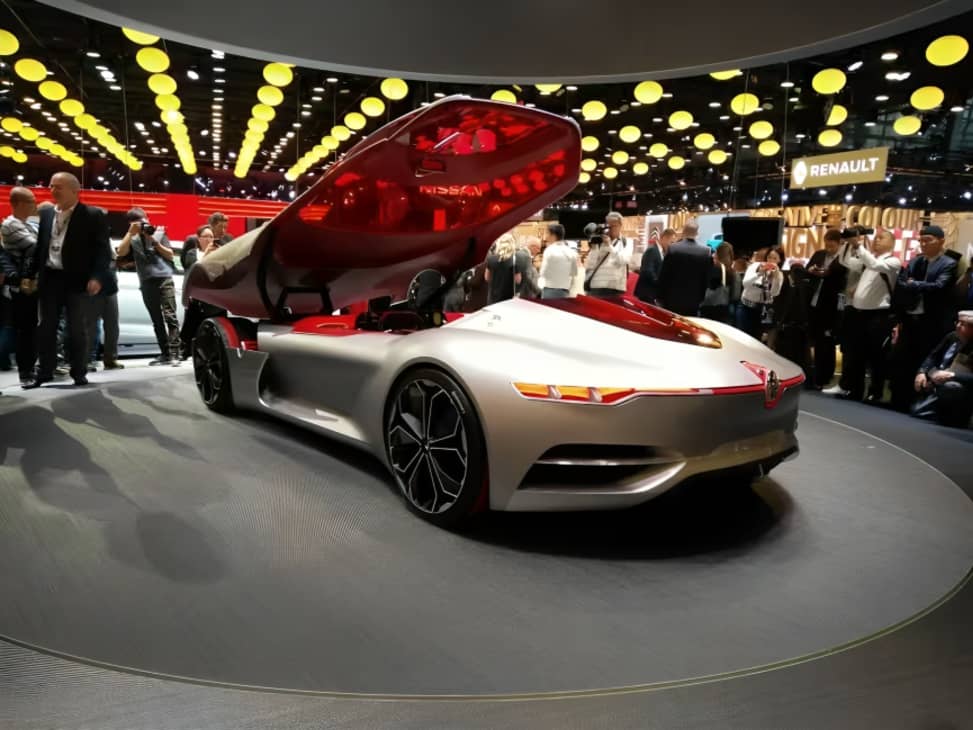
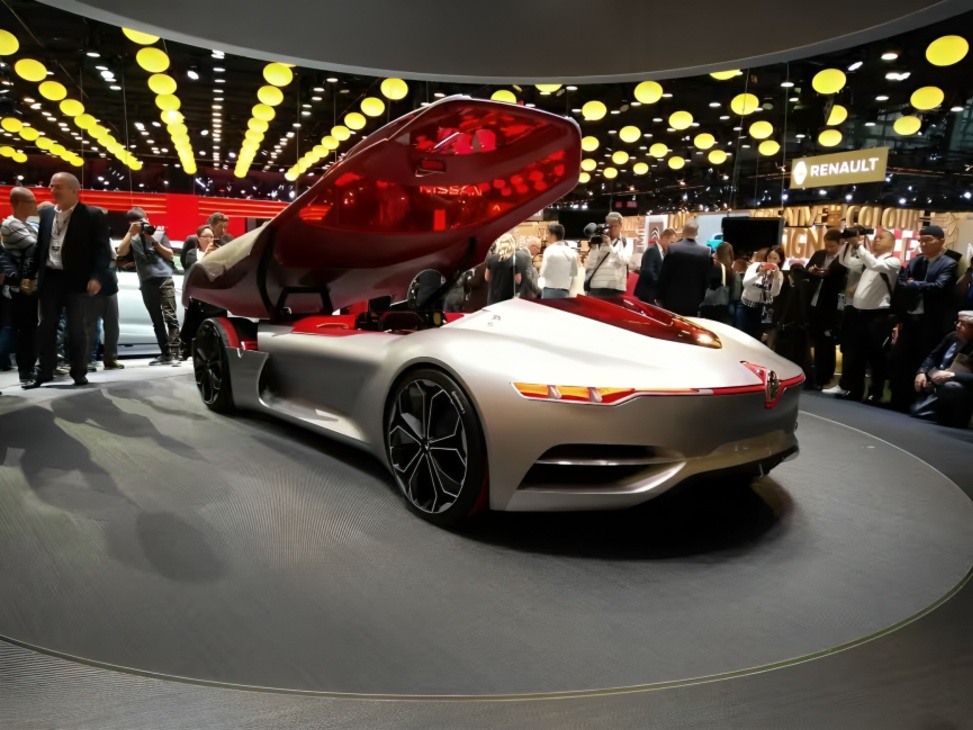
Renault Group is preparing for a major presence at the 2026 Paris Motor Show, where the company plans to display 50 vehicles and concept cars across its Renault, Dacia, Alpine and Renault Pro Plus brands. The showcase will include six models being revealed to the general public for the first time, highlighting the company’s latest product and technology plans.
The 2026 Paris Motor Show is scheduled to take place from October 12 to October 18. Renault Group will occupy four booths in Hall 6, while a separate stand in Hall 7.1 will highlight its long standing partnership with firefighters and emergency response organisations. The company says its presence will cover new vehicle launches, concept cars, electrification and connected technologies.
Renault Group’s Paris presentation comes as the company continues to expand its electrification strategy and refresh its product range. According to Renault Group, the company will showcase six new models to the public for the first time, along with four concept cars. The company says the new product strategy combines vehicle design, electrification and intelligent technologies.
The group is also focusing on reducing development times. Renault says its average vehicle development time has been reduced to around two years, allowing new products to reach customers more quickly. The company is using this approach as part of its broader strategy to develop vehicles that are adapted to individual markets.
India has become an increasingly important market in this strategy. Renault has identified India as a key pillar of its International Game Plan 2027 and is expanding its product portfolio in the country. The new generation Renault Duster is the first major product under this renewed India strategy.
Renault unveiled the new Duster in India in January 2026. The company has described the model as a vehicle developed specifically with Indian requirements in mind, with close to 90 percent of its elements designed for the Indian market. The SUV is based on the Renault Group Modular Platform, or RGMP, which Renault says provides flexibility in dimensions and powertrain configurations.
One of the most significant developments for the Indian Duster is the introduction of a strong hybrid powertrain. Renault has confirmed that the Duster will be offered with its E Tech strong hybrid system in India. The hybrid system combines a petrol engine with two electric motors and a battery pack.
According to Renault’s specifications, the strong hybrid system produces 160hp and 172Nm of combined output. It uses a 1.8 litre naturally aspirated petrol engine, a 1.4kWh battery and two electric motors. Renault has also said that the system can allow a significant proportion of city driving to take place using electric power, although actual efficiency will depend on traffic, driving conditions and driving style.
The strong hybrid Duster will give Renault a presence in an increasingly competitive section of the Indian SUV market. It will compete with other midsize SUVs that offer hybrid technology, including the Maruti Suzuki Grand Vitara, Toyota Urban Cruiser Hyryder and Maruti Suzuki Victoris.
The Duster will also be available with conventional turbo petrol engines. Renault has announced a 1.0 litre turbo petrol engine producing around 100hp and a 1.3 litre turbo petrol engine producing 163hp and 280Nm. Depending on the powertrain, transmission choices include manual and automatic options.
Renault’s India strategy is not limited to the Duster. The company is developing additional models for the market as part of its product expansion programme. One of the important developments is a new platform for smaller Renault vehicles.
According to recent Indian automotive reporting, the new architecture is expected to underpin future versions of the Triber and Kiger. The platform is designed to accommodate additional powertrain options and could allow Renault to introduce a turbo petrol engine for the Triber.
Another upcoming model is the Bridger, a compact SUV that is expected to sit between the Kiger and Duster in Renault’s India portfolio. The model was previewed earlier and is expected to enter production in India in 2027. Reports indicate that Renault is considering petrol, hybrid and electric powertrain options for the model.
The Bridger is also expected to play a role in Renault’s export strategy. India has become an important manufacturing location for Renault, with the company operating an established industrial and engineering ecosystem in Chennai.
Renault has said that the Chennai facility brings together manufacturing, engineering, design and local operations. The company has also described India as one of the important hubs in its global network. The renewed Duster programme is part of this broader effort to use India not only as a domestic sales market but also as a development and manufacturing base.
The company’s focus on India comes after a period in which Renault’s Indian product range remained relatively limited. The new Duster is expected to form the foundation of the company’s product expansion, followed by additional SUVs and updates to existing models.
Renault’s approach also reflects the changing Indian automotive market. SUVs continue to account for a significant share of new vehicle demand, while customers are increasingly considering petrol, hybrid and electric powertrains. Manufacturers are therefore expanding their portfolios to provide multiple powertrain choices.
The introduction of a strong hybrid system in the Duster is particularly significant because it gives Renault an alternative to conventional petrol technology without moving immediately to a fully electric powertrain. Strong hybrid vehicles can operate using electric power for certain driving conditions while using the petrol engine when additional power or sustained operation is required.
At the Paris Motor Show, Renault Group is expected to present its broader approach to electrification across its international brands. Renault says its product offensive is built around electrification and intelligent technologies, while Dacia and Alpine will also have dedicated displays.
Renault’s Paris presence will therefore provide an indication of the company’s international product direction, while its India strategy is developing on a separate but connected path. The company is adapting products and platforms to local requirements while also using India as part of its global manufacturing and development network.
For Indian consumers, the most important developments will be the arrival of the strong hybrid Duster, the expansion of the Renault SUV range and the development of future models based on the new modular platform.
The Duster is particularly important because it carries the name of a model that previously had a major role in Renault’s Indian operations. Renault originally introduced the Duster in India in 2012, and the company says the model sold more than 200,000 units in the country. The new generation is intended to bring the nameplate back with updated technology, design and powertrain options.
Renault has also confirmed that the new Duster is being assembled at its Chennai facility. The company says the vehicle has been developed with a high level of localisation for India and uses the RGMP platform. This approach is intended to make the model suitable for Indian road conditions and customer requirements.
The upcoming product expansion could give Renault a wider presence across different segments. The Duster will target the midsize SUV category, while the Kiger and Triber will continue to serve smaller SUV and seven seat vehicle segments. The future Bridger is expected to occupy a position between the Kiger and Duster.
The company’s strategy also includes the possibility of multiple powertrain technologies. Petrol engines, strong hybrid systems and electric powertrains could be used across different products depending on the vehicle segment and market requirements.
However, the exact specifications, launch timelines and pricing of future India-bound models will depend on Renault’s official announcements. Reports about upcoming vehicles should therefore be treated as preliminary until the company confirms final production versions.
The 2026 Paris Motor Show will be an important international platform for Renault Group to present its latest products and concepts. With 50 vehicles and concept cars planned for display, including six public premieres, the company is using the event to highlight its current product strategy and future direction.
For India, the focus will be on how quickly Renault can expand beyond the new Duster. The company has already confirmed its long term commitment to the Indian market through its International Game Plan 2027. The Duster represents the first step, while upcoming platform developments and new models could further expand Renault’s presence.
The combination of a strong hybrid Duster, additional SUV products, updated smaller vehicles and potential electric options indicates that Renault is preparing a broader product portfolio for India. The coming years will reveal how these products perform in the Indian market and how Renault’s renewed strategy develops.