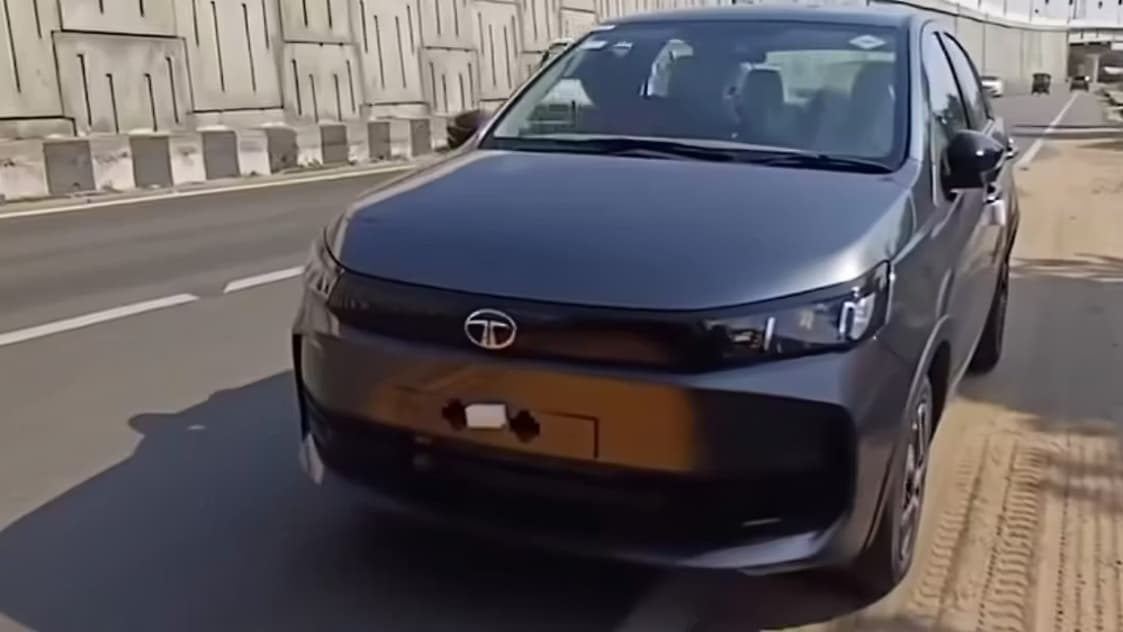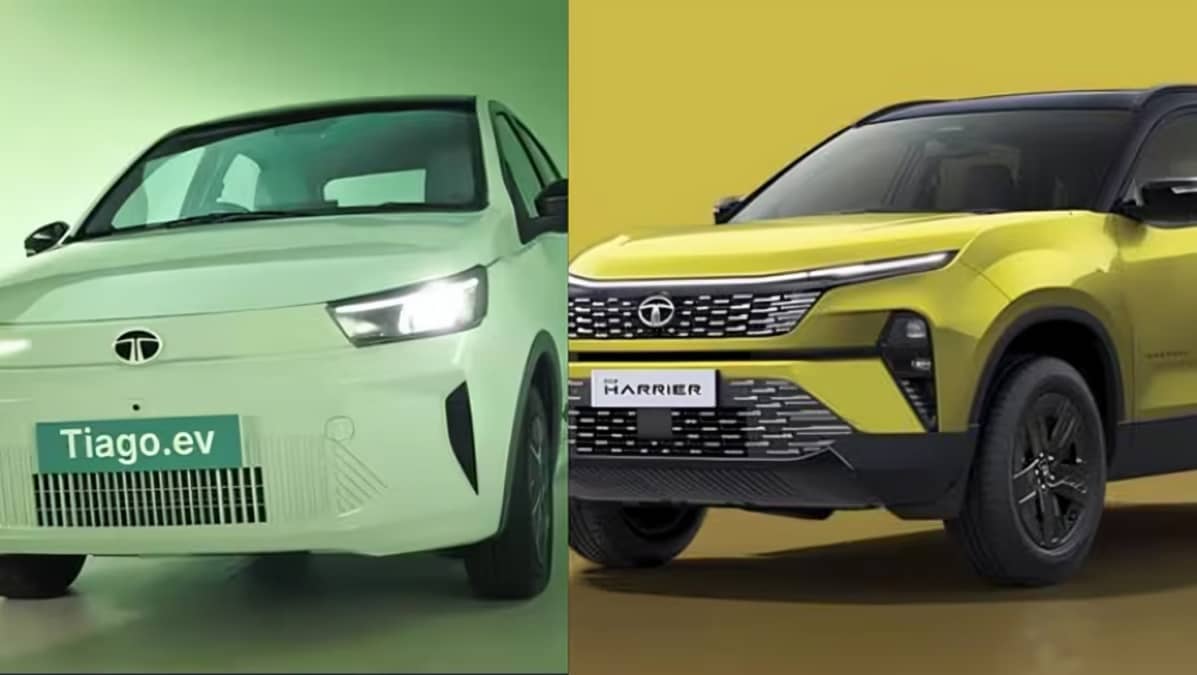
Tata Motors has expanded its Battery-as-a-Service, or BaaS, financing program to its entire electric vehicle portfolio in India. The company had initially introduced the option on the Tiago EV and Punch EV, but the program has now been extended to the Nexon EV, Curvv EV, Sierra EV and Harrier EV.
With the latest expansion, customers buying a Tata electric vehicle can choose between the conventional purchase structure, where the battery cost is included in the vehicle price, and the BaaS model, where the battery cost is separated from the initial vehicle purchase. This allows customers to reduce the upfront amount required to buy the EV while paying separately for battery usage.
The expansion covers all six models in Tata Motors' current electric passenger vehicle range, from the Tiago EV at the entry level to the Harrier EV at the higher end. According to current pricing details, the BaaS starting prices range from Rs 4.69 lakh for the Tiago EV to Rs 14.49 lakh for the Harrier EV.
The Punch EV starts at Rs 6.59 lakh under the BaaS structure, while the Nexon EV starts at Rs 8.99 lakh. The Curvv EV has a starting BaaS price of Rs 10.99 lakh and the Sierra EV starts at Rs 11.99 lakh. The Harrier EV is available from Rs 14.49 lakh under the scheme. These are introductory prices for entry-level variants and can vary depending on the selected version and financing conditions.
The biggest reduction in upfront cost is available with the Harrier EV. Compared with its regular starting price, the BaaS structure lowers the initial vehicle price by up to Rs 7.30 lakh. The Sierra EV gets an upfront reduction of about Rs 6.80 lakh, while the Curvv EV sees a reduction of around Rs 6.20 lakh.
For the Nexon EV, the upfront reduction is around Rs 5.35 lakh. The Punch EV gets a reduction of approximately Rs 3.20 lakh, while the Tiago EV has an upfront reduction of about Rs 2.30 lakh.
The BaaS system works by separating the cost of the vehicle from the cost of its battery. The battery is financed separately, with the repayment structure depending on factors such as battery capacity, down payment and selected loan tenure.
In addition to the separate battery financing, Tata's BaaS structure includes a usage-linked battery charge. The per-kilometre cost varies according to the model and battery pack. Current published figures indicate that the charge starts at around Rs 2.60 per kilometre for the Tiago EV and can rise to around Rs 5.90 per kilometre for the Harrier EV.
For example, the Nexon EV under BaaS starts at Rs 8.99 lakh and has a battery usage cost of around Rs 4.40 per kilometre. The Curvv EV starts at Rs 10.99 lakh, with the battery usage charge listed at around Rs 5 per kilometre. The Sierra EV starts at Rs 11.99 lakh, with the usage charge reported at approximately Rs 5.50 per kilometre.
The Harrier EV, which receives the largest upfront price reduction under the expanded scheme, starts at Rs 14.49 lakh with the BaaS option. Its battery usage charge is reported at around Rs 5.90 per kilometre.
Tata Motors has said the BaaS model is intended to give customers greater flexibility when comparing electric vehicles. By separating the battery cost from the vehicle cost, customers can look at a lower initial purchase price while considering the separate cost associated with battery usage.
However, the lower upfront price does not mean that the battery is free. Customers using the BaaS structure have to account for the separate battery financing and usage-related payments. Therefore, buyers need to consider their expected monthly driving distance, financing tenure and overall ownership period before comparing the BaaS price with the conventional purchase price.
The actual monthly financial commitment can vary considerably from one customer to another. Battery financing depends on the battery size, initial payment and loan tenure, while the usage component depends on how much the vehicle is driven.
Tata's BaaS model is therefore particularly relevant for customers who want to reduce the initial cost of purchasing an electric vehicle. The lower entry price could make higher-priced EV models more accessible to buyers who may otherwise find the conventional upfront price difficult to manage.
The expansion also comes at a time when electric vehicle manufacturers in India are experimenting with different ownership and financing models. Battery costs remain an important component of an EV's overall price, and separating battery payments from the vehicle price is one way manufacturers are attempting to address the initial affordability barrier.
Tata Motors has been expanding its electric vehicle portfolio across multiple segments. Its current electric range includes smaller models such as the Tiago EV and Punch EV, along with the Nexon EV, Curvv EV, Sierra EV and Harrier EV. The company's official electric vehicle platform lists these models as part of its EV range.
The BaaS expansion means customers now have the same financing concept available across Tata's entire electric passenger vehicle lineup. This creates a consistent purchasing option across different price segments.
The company had previously introduced BaaS on the Punch EV, with the model's alternate financing structure allowing customers to purchase the vehicle at a lower initial price and separately finance the battery. Tata's official product information states that the BaaS structure is a dual-loan finance product and is subject to financier approval and applicable terms and conditions.
The company also specifies that certain BaaS prices are based on particular usage assumptions. For instance, published calculations for some models use an estimated daily running of around 60 kilometres. Charging costs are not included in the stated per-kilometre battery usage figures.
This means customers should not treat the BaaS price as the complete cost of owning the electric vehicle. Insurance, road tax, registration and charging expenses can remain separate depending on the model, location and applicable terms.
The new structure could nevertheless change how buyers compare Tata's EVs with conventional petrol or diesel vehicles. A lower upfront price can make an EV appear more accessible at the time of purchase, while the battery usage payment becomes an ongoing ownership expense.
For buyers considering the BaaS option, the most important factors are likely to be daily driving distance, battery size, financing tenure and the expected period of ownership. A customer who drives relatively long distances may have a different overall cost compared with someone who uses the vehicle primarily for short daily trips.
The expanded BaaS offering also gives Tata Motors another way to compete in India's growing electric vehicle market. By providing customers with a choice in how the battery is financed, the company is attempting to address one of the major financial considerations associated with EV ownership.
The move does not change the underlying technology of the vehicles. Instead, it changes the way the vehicle and battery costs are financed. Customers still need to evaluate factors such as driving range, charging infrastructure, performance, warranty coverage, service support and total ownership costs before selecting an EV.
The latest expansion is therefore significant mainly because of its scale. What was previously a financing option for two Tata EVs is now available across six models. The company has effectively made BaaS an option across its entire current electric passenger vehicle portfolio.
With upfront prices beginning at Rs 4.69 lakh for the Tiago EV and extending to Rs 14.49 lakh for the Harrier EV under the BaaS structure, Tata is offering customers a wider range of entry points into its electric vehicle lineup.
The maximum upfront reduction of Rs 7.30 lakh applies to the Harrier EV, making it the model with the largest difference between its conventional starting price and its BaaS starting price. Other models also receive reductions ranging from Rs 2.30 lakh to Rs 6.80 lakh, depending on the vehicle.
For consumers, the key point is that the BaaS scheme reduces the initial purchase amount but introduces separate battery-related payments. The overall financial benefit will therefore depend on individual usage and financing terms rather than simply the difference in showroom prices.
Tata Motors' decision to extend BaaS across its entire EV range shows the company's increasing focus on alternative financing models for electric mobility. As EV adoption grows in India, such ownership structures could become an important part of how customers evaluate the affordability of electric vehicles.