India's electric two wheeler industry achieved an important milestone in June 2026, with the segment accounting for more than 10 percent of the country's overall two wheeler sales for the first time. The achievement reflects the continued expansion of electric mobility as consumer interest in environmentally friendly transportation grows across the country.
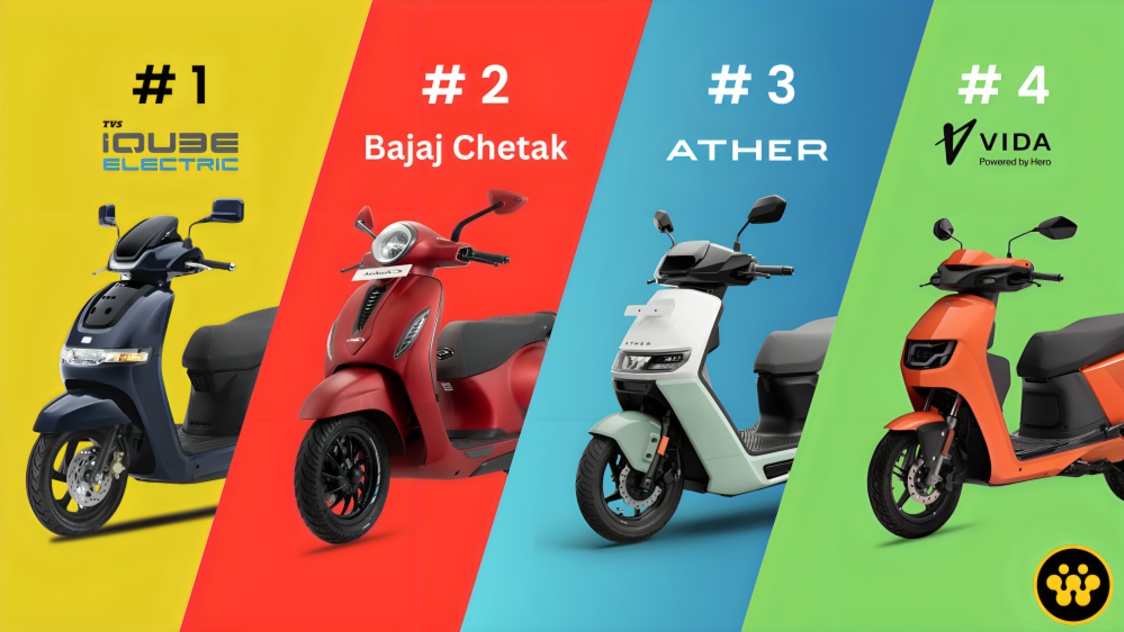
Several manufacturers reported strong sales during the month, with established brands maintaining their leadership positions in the increasingly competitive electric vehicle market. According to industry sales data, TVS Motor Company, Bajaj Auto, and Ather Energy remained among the leading electric two wheeler manufacturers in India.
TVS Motor Company continued to strengthen its position through its expanding electric scooter portfolio and widespread dealership network. The company's focus on product development, after sales support, and charging ecosystem has contributed to consistent demand across multiple regions.
Bajaj Auto also maintained strong market performance with its electric scooter offerings. The company has continued investing in electric mobility while expanding production capacity and enhancing product technology. Its established reputation in the Indian two wheeler industry has supported steady customer adoption.
Ather Energy remained one of the prominent players in the premium electric scooter segment. The company has focused on connected vehicle technologies, software updates, charging infrastructure, and customer experience, helping it retain a significant share of the growing electric mobility market.
Other manufacturers also recorded notable sales during June 2026, contributing to the overall expansion of the industry. Companies including Ola Electric, Hero MotoCorp, Greaves Electric Mobility, Ampere, River, and BGauss continued competing across different price segments by introducing new products and expanding their distribution networks.
Industry experts attribute the market's growth to several factors, including increasing fuel prices, greater consumer awareness of electric vehicles, expanding public and private charging infrastructure, improved battery technology, and government policies encouraging cleaner transportation. Lower operating and maintenance costs have also made electric two wheelers increasingly attractive for daily commuting.
Manufacturers have introduced several technological improvements in recent years, including longer battery range, faster charging capabilities, advanced battery management systems, connected smartphone applications, navigation features, regenerative braking, and enhanced safety equipment. These developments have improved customer confidence and accelerated market adoption.
The electric two wheeler segment continues to play an important role in India's broader transition toward sustainable mobility. Urban commuters, delivery service operators, and fleet owners are increasingly adopting electric scooters due to their lower running costs and environmental benefits.
While the market continues to grow, industry participants remain focused on addressing challenges related to charging accessibility, battery recycling, supply chain resilience, and consumer education. Ongoing investments in manufacturing capacity and research are expected to support future growth.
As competition intensifies, manufacturers are likely to introduce additional models, improved technologies, and expanded service networks to meet evolving customer expectations. The continued rise in electric two wheeler sales demonstrates the increasing acceptance of electric mobility and highlights India's progress toward a more sustainable transportation ecosystem.