
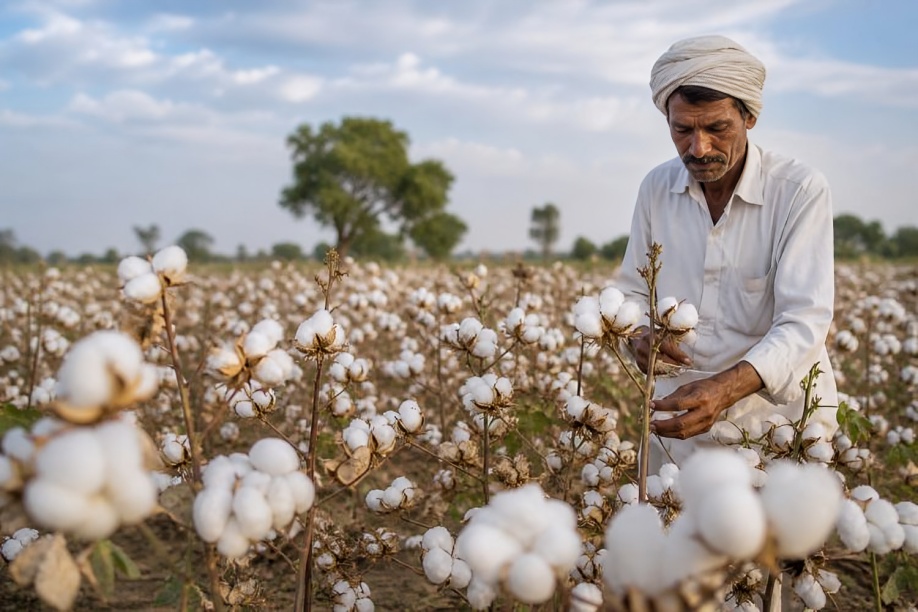
The government has introduced a major initiative to strengthen cotton production by allocating 5659 crore rupees toward improving productivity. The move comes as part of a broader effort to enhance agricultural output and support farmers, with a long term target of significantly increasing cotton yields by 2031.
According to official estimates, India’s cotton production for the 2025 to 2026 crop year, which runs from July to June, stands at 291 lakh bales of 170 kilograms each. While India remains one of the largest producers of cotton globally, productivity levels in several regions continue to lag behind international benchmarks. This has prompted the need for focused interventions aimed at improving efficiency and output.
The initiative is expected to address multiple aspects of cotton farming. These include the adoption of better seed varieties, improved irrigation practices, and the use of modern technology. Enhancing soil health and providing farmers with access to timely information are also seen as key components of the program. By targeting these areas, the government aims to create a more sustainable and productive cotton sector.
Agricultural experts note that increasing cotton yields will require a combination of scientific advancements and effective implementation at the ground level. While financial support is an important step, the success of the initiative will depend on how well it is executed across different states. Training and awareness programs for farmers will play a crucial role in ensuring that new techniques are adopted effectively.
One of the challenges in cotton cultivation is the variation in productivity across regions. Factors such as climate conditions, water availability, and soil quality can influence output. Addressing these regional differences will be essential for achieving the overall target of higher yields.
The push for improved productivity is also linked to the broader goal of strengthening the textile industry, which relies heavily on cotton as a raw material. A stable and increased supply of cotton can support manufacturing, exports, and employment in the sector. This makes the initiative important not only for agriculture but also for the overall economy.
At the same time, there are concerns about whether the target of doubling yields by 2031 is achievable. Experts suggest that while the goal is ambitious, it is possible with sustained efforts and coordinated action. Continuous monitoring and evaluation of the program will be necessary to track progress and address challenges.
The initiative also highlights the importance of innovation in agriculture. The use of advanced farming techniques, digital tools, and research based solutions can help improve productivity and reduce risks. Encouraging collaboration between research institutions, government agencies, and farmers will be key to achieving desired outcomes.
Market factors such as pricing and demand will also influence the success of the program. Ensuring fair prices for farmers and maintaining stable demand for cotton products will support the overall growth of the sector.
Overall, the government’s allocation of 5659 crore rupees for cotton productivity reflects a strategic effort to strengthen one of India’s key agricultural sectors. While challenges remain, the initiative provides an opportunity to improve yields, support farmers, and enhance the country’s position in the global cotton market.