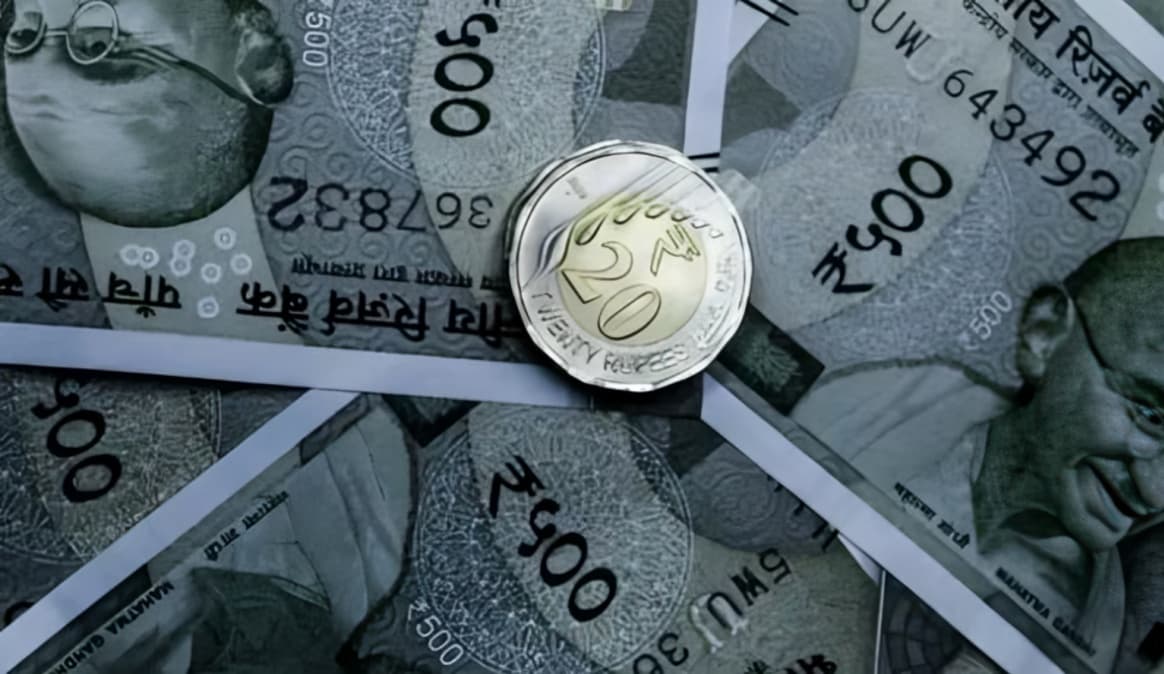
The Indian rupee has fallen to a new historic low of 95.73 against the US dollar, increasing concerns across financial markets and economic sectors. The sharp decline in the domestic currency has triggered discussions among economists, policy experts, import dependent industries, and investors regarding the potential impact on inflation, economic growth, and international trade.
Currency markets witnessed significant volatility as the rupee weakened against the dollar amid ongoing global economic uncertainty. Analysts believe a combination of international and domestic factors contributed to the latest decline in the Indian currency.
One of the major reasons behind the rupee’s weakness is the continued strength of the US dollar in global financial markets. Investors worldwide often move funds toward dollar based assets during periods of economic uncertainty because the US currency is widely viewed as a safer investment option. This trend can place pressure on emerging market currencies, including the Indian rupee.
Economists have also pointed to rising crude oil prices as an important factor affecting the rupee. India imports a large portion of its energy requirements, and higher oil prices increase the country’s import bill. Since crude oil purchases are generally made in US dollars, rising energy costs can increase demand for dollars and weaken the rupee further.
The falling value of the rupee may have both positive and negative economic effects. Export oriented industries could benefit because Indian goods and services become relatively cheaper in international markets. However, sectors dependent on imports may face rising costs, particularly industries involving fuel, electronics, machinery, chemicals, and technology components.
Financial experts warn that a weaker rupee can also contribute to inflationary pressures. Imported goods become more expensive when the domestic currency loses value against the dollar, potentially leading to higher prices for consumers and businesses.
Several economists have reportedly revised India’s growth projections and inflation forecasts following the currency decline. Concerns remain that prolonged pressure on the rupee could affect investor sentiment and increase operational costs for companies dependent on imported materials and foreign borrowing.
The Reserve Bank of India continues to closely monitor currency market developments and broader financial stability conditions. Central banks often use various measures such as foreign exchange interventions, monetary policy adjustments, and liquidity management to reduce excessive market volatility when required.
Global geopolitical tensions, international trade uncertainty, and fluctuations in capital flows have also affected currency markets worldwide in recent months. Emerging economies have particularly faced challenges due to shifting investor behaviour and rising global financial risks.
Stock market participants are also paying close attention to the rupee’s movement because currency fluctuations can influence foreign investment activity in Indian equity and bond markets. Sustained depreciation may impact corporate earnings in certain sectors while benefiting export driven industries such as information technology and pharmaceuticals.
Industry experts note that India’s long term economic fundamentals remain relatively strong despite short term currency volatility. Infrastructure growth, digital expansion, manufacturing development, and domestic consumption continue to support economic activity across the country.
Social media platforms and financial communities have widely discussed the rupee’s latest decline, with many users expressing concerns about rising prices and economic pressures. Currency movements often receive strong public attention because they directly affect travel costs, imports, fuel prices, and international education expenses.
Analysts believe future rupee movement will depend on several factors including global oil prices, US monetary policy decisions, foreign investment trends, inflation data, and geopolitical developments.
Overall, the rupee’s fall to a record low against the US dollar reflects broader global financial uncertainty and economic pressures. While experts expect authorities to continue monitoring the situation closely, economists warn that the currency could remain under pressure if international market volatility persists in the coming months.