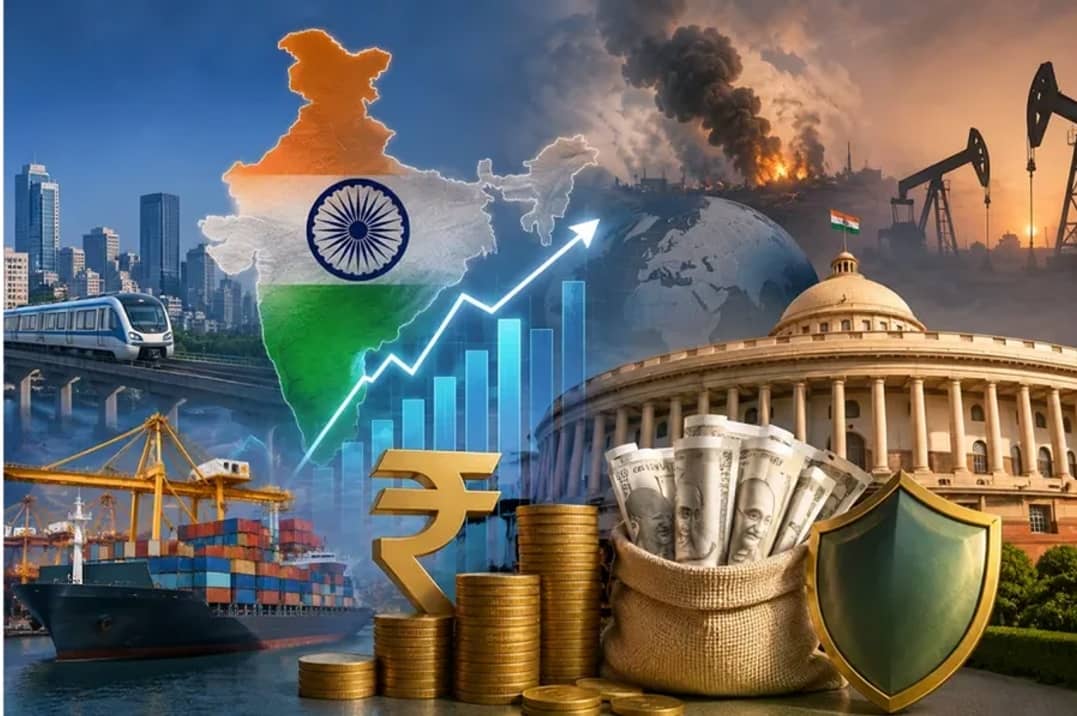
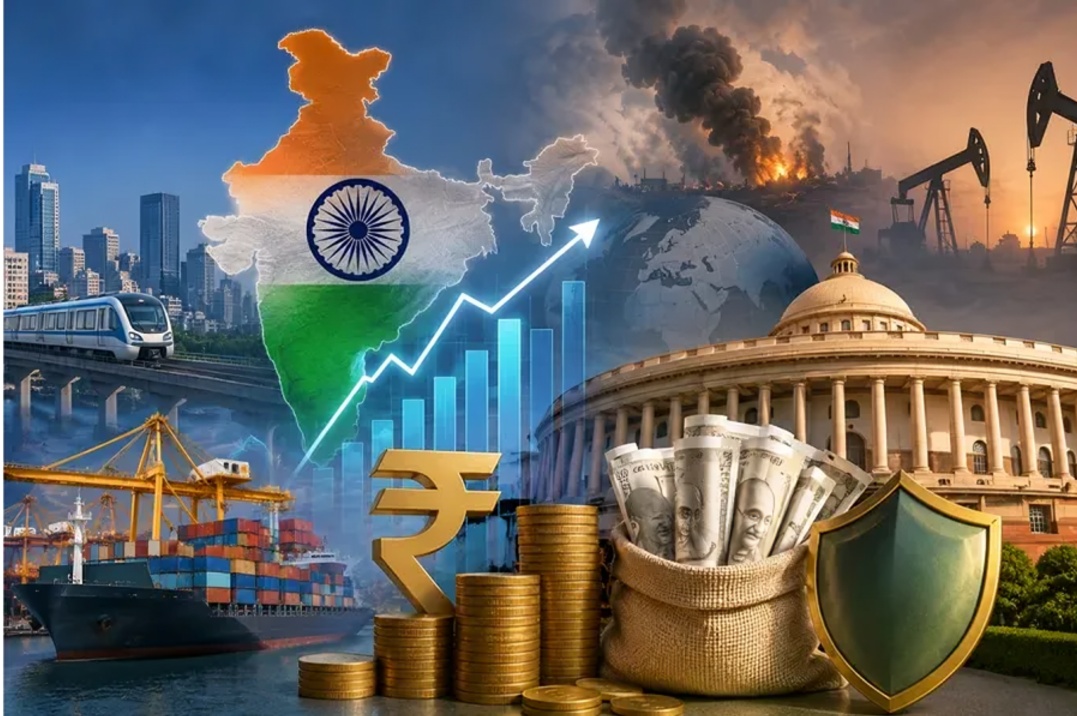
India's economic outlook remains stable despite ongoing global financial uncertainties, according to a recent economic report that highlights the country's strong macroeconomic fundamentals. While international markets continue to face volatility driven by fluctuating crude oil prices, currency movements and uncertainty over interest rate decisions by the US Federal Reserve, India's growth story continues to show resilience.
The report notes that rising global crude oil prices remain one of the key risks for emerging economies, including India, because higher energy costs can increase inflation and widen the country's import bill. Since India imports a significant portion of its crude oil requirements, sustained increases in international oil prices could place additional pressure on both inflation and the fiscal balance.
Another area being closely monitored is the movement of the Indian rupee against the US dollar. Currency fluctuations can influence import costs, export competitiveness and foreign investment flows. However, the report suggests that India's substantial foreign exchange reserves provide an important buffer against external financial shocks and help maintain overall economic stability during periods of market volatility.
The report also points to uncertainty surrounding future monetary policy decisions by the US Federal Reserve. Higher interest rates in the United States often lead to shifts in global capital flows, affecting emerging markets. Despite these external challenges, India has continued to attract investment due to its strong economic fundamentals, expanding domestic market and ongoing structural reforms.
One of the strongest indicators supporting the economy is the continued growth in Goods and Services Tax (GST) collections. Robust GST revenues indicate healthy economic activity, stronger business performance and steady consumer demand across sectors. Higher tax collections also strengthen government finances by providing additional resources for infrastructure development and public welfare programmes.
The report further highlights India's healthy external sector. Adequate foreign exchange reserves and a diversified economy have helped reduce vulnerability to global economic disruptions. These reserves provide confidence to investors and support financial stability by enabling the Reserve Bank of India to manage excessive volatility in the currency market when required.
Domestic consumption continues to play a significant role in supporting India's growth. Strong demand from households, improving manufacturing activity and sustained investment in infrastructure projects have contributed positively to economic performance. Government initiatives aimed at expanding digital infrastructure, manufacturing capabilities and public investment are also expected to support long-term growth.
The report acknowledges that external risks remain, including geopolitical tensions, commodity price fluctuations and global financial market uncertainty. Nevertheless, India's economic resilience is supported by prudent fiscal management, stable banking sector conditions and ongoing policy measures designed to strengthen investment and employment.
Economists believe that maintaining inflation within the target range, supporting private investment and continuing structural reforms will remain important priorities in sustaining economic momentum. They also note that global developments, particularly energy prices and international monetary policy, will continue to influence market sentiment in the coming months.
Overall, the report concludes that while global uncertainties persist, India's economic fundamentals remain strong. Stable tax collections, a sizeable external buffer, resilient domestic demand and continued policy support position the country to navigate external challenges while maintaining its long-term growth trajectory.