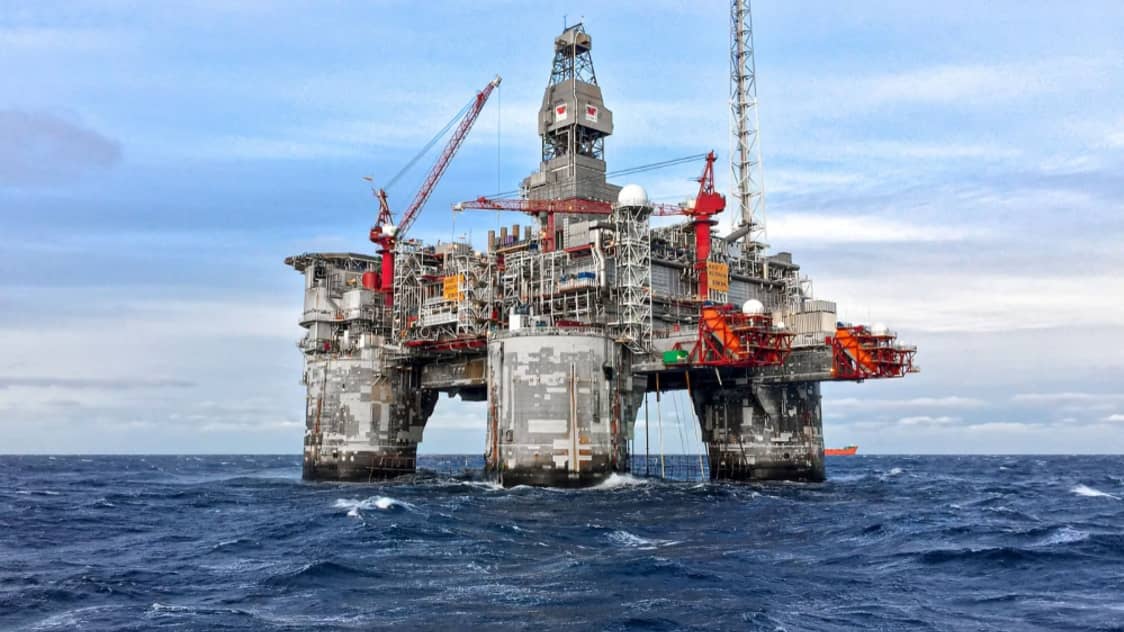
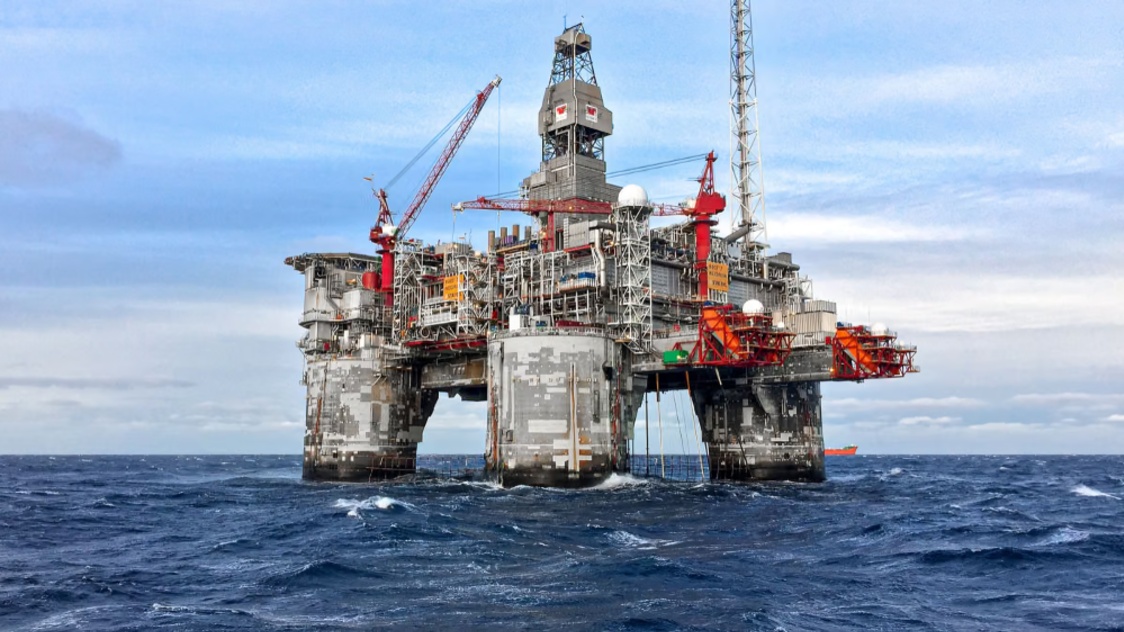
India's offshore energy exploration programme is entering a new phase with the Union government's Rs 84,084 crore Samudra Manthan National Offshore Exploration Scheme. Approved by the Union Cabinet in July 2026, the programme is designed to expand exploration across India's offshore basins, particularly deepwater and ultra deepwater areas, while reducing some of the financial risks associated with exploratory drilling.
The scale of the programme reflects India's effort to increase domestic oil and natural gas exploration at a time when the country continues to depend significantly on imported energy. According to the government, Samudra Manthan will be implemented through financial year 2030 to 2031 and combines seismic data acquisition, exploratory drilling, common offshore infrastructure and the development of oil and gas manufacturing and services capabilities.
A major part of the scheme is focused on improving the geological information available before drilling begins. The government has allocated Rs 28,534 crore for offshore data acquisition, including 2D and 3D seismic surveys, reprocessing of existing data and the use of artificial intelligence tools. Another Rs 43,200 crore has been earmarked for accelerated offshore exploration, including 60 deepwater and ultra deepwater exploration wells.
The government has also proposed financial support of up to 50 percent of eligible drilling costs, subject to a ceiling of Rs 675 crore per well, under the exploration component. The stated objective is to share part of the financial risk involved in drilling costly offshore wells and encourage exploration activity by public and private exploration and production companies.
The need for better subsurface information is particularly important in deepwater exploration because drilling an exploratory well can require a substantial investment. The government's own background material estimates the cost of a single deepwater exploratory well at approximately 125 million to 150 million US dollars. It also notes that moving from the award of an exploration block to commercial production can typically take five to ten years.
Against this backdrop, Dr Ravi Kumar, Co Founder and Chief Technology Officer of Atomionics, has argued that India's offshore exploration programme should look beyond conventional seismic methods and incorporate additional forms of subsurface measurement. His comments were made in an article discussing how advanced sensing could complement the geological information generated through traditional exploration techniques.
Kumar's argument centres on quantum gravimetry, a technology that measures small variations in the Earth's gravitational field. Atomionics says its GRAVIO system uses cold atom interferometry to collect high resolution gravity data and its ORE O platform uses artificial intelligence to convert that information into three dimensional subsurface models.
The basic idea is that different underground materials have different densities and therefore produce variations in the local gravitational field. Gravity measurements can potentially provide information that complements seismic imaging. According to Atomionics, combining gravity information with geological and seismic datasets could help exploration teams develop a more detailed understanding of subsurface structures before committing resources to drilling.
This approach does not mean that seismic exploration would be replaced. Seismic surveys remain a major part of the government's Samudra Manthan programme and are specifically funded under its offshore data acquisition component. The technology argument presented by Atomionics is instead about adding another layer of information to existing exploration workflows.
The distinction is important because seismic surveys and gravity measurements provide different types of geological information. Seismic methods use sound waves to study underground structures, while gravimetry measures variations associated with subsurface density. Supporters of combining the techniques argue that integrating different datasets can provide a broader picture of geological conditions before drilling.
Atomionics has been developing quantum sensing technology for subsurface exploration and says its systems are intended to create three dimensional models of underground structures. The company has offices and operations across Singapore, Australia, India and the United States. Its technology platform combines quantum sensing with artificial intelligence for resource exploration and other subsurface applications.
The company has also been expanding its work in marine applications. In July 2026, Atomionics announced the opening of an integrated quantum sensing hub in Singapore focused on bringing quantum gravimetry into ocean sensing. The company said the technology is intended to map through water, across the seabed and into the ground below.
The relevance of such technology to offshore exploration is connected to the challenge of making drilling decisions in areas where geological information is limited. Deepwater wells require expensive drilling equipment and significant logistical planning. Improving the quality of information available before drilling could therefore become an important area of technological development, although the commercial effectiveness of any particular technology must be established through field deployment and independent evaluation.
Samudra Manthan itself is structured around more than just exploration wells. The government has allocated Rs 10,000 crore for common offshore infrastructure intended to support production and evacuation from discoveries. Another Rs 2,000 crore is intended for oil and gas manufacturing and services zones, while additional funding has been provided for programme monitoring, digital interventions, capacity building and related activities.
The government expects the programme, subject to exploration success, to increase India's hydrocarbon resource base from about 1.6 billion tonnes of oil equivalent to 2.2 billion tonnes of oil equivalent. It has also set an objective of increasing annual domestic oil and gas production from around 62 million tonnes of oil equivalent to 80 million tonnes of oil equivalent. These are targets and projections rather than guaranteed outcomes.
The programme is also being implemented at a time when offshore exploration activity is showing new results. In September 2026, ONGC reported a natural gas discovery in a deepwater well in the Mahanadi Offshore Basin, around 43 kilometres off the Odisha coast. The well encountered gas between approximately 1,441 and 1,452 metres and showed encouraging initial flow and reservoir pressure. However, ONGC said commercial production had not yet been established and further appraisal would be required.
The Mahanadi discovery illustrates both the potential and uncertainty associated with offshore exploration. Finding hydrocarbons during drilling is an important exploration result, but determining whether a discovery can be developed commercially requires additional geological, technical and economic assessment.
For Samudra Manthan, the central challenge will therefore involve not only increasing the number of wells drilled but also improving the quality of decisions made before drilling. Government funding is intended to reduce financial barriers and expand exploration, while technologies such as advanced seismic processing, artificial intelligence and quantum sensing are being explored as ways to improve subsurface understanding.
The discussion around quantum sensing is consequently part of a broader shift toward data driven exploration. Rather than depending on a single geological measurement, exploration companies can combine seismic information, gravity data, geological models, well information and artificial intelligence based interpretation. Such integration could potentially help identify drilling targets more efficiently, although the performance of these technologies will ultimately depend on field validation and their ability to deliver reliable results in offshore conditions.
Samudra Manthan represents a large public investment in India's offshore energy exploration capacity. Its success will depend on exploration results, technology deployment, infrastructure development, private sector participation and the commercial viability of discoveries. The government's scheme provides the financial and institutional framework, while technology companies such as Atomionics are arguing for the use of additional sensing capabilities to improve subsurface understanding.
The broader objective is to reduce uncertainty before expensive drilling decisions are made. For India, which is seeking to expand domestic energy production while managing import dependence, the ability to identify promising offshore resources accurately could become an important part of its long term exploration strategy.