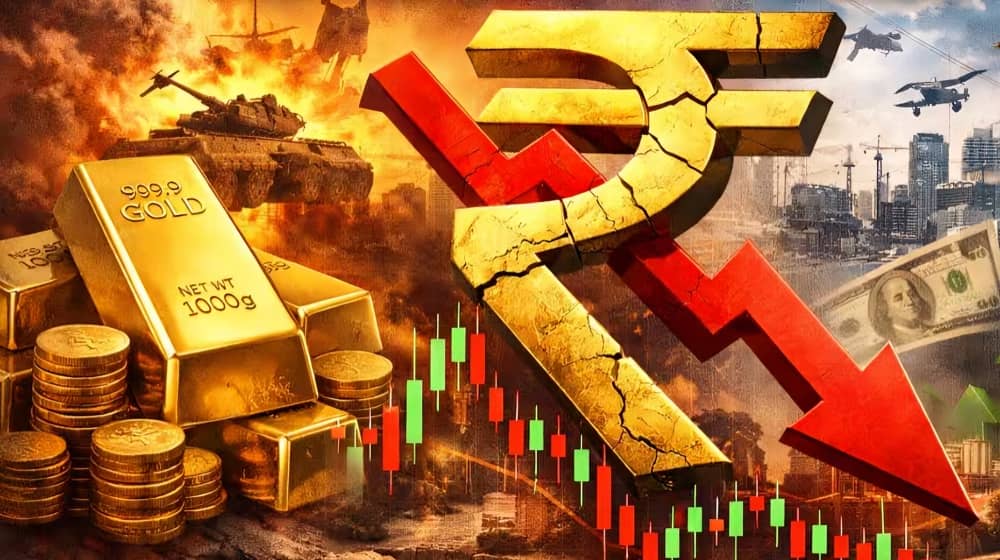

The ongoing discussion surrounding the value of the Indian rupee compared to rising gold prices has once again drawn attention to broader concerns about India’s economic stability, trade balance, and foreign exchange management. Economists and financial analysts believe recent developments reflect the government’s and policymakers’ efforts to navigate global economic uncertainty while maintaining financial stability.
Gold has traditionally been viewed as a safe investment during periods of economic instability and international market volatility. In India, gold also carries strong cultural and financial significance, making it one of the most preferred investment and savings options among households and investors.
At the same time, the performance of the Indian rupee against major international currencies remains an important indicator of economic strength, foreign investment confidence, and import costs. Movements in the rupee often directly influence inflation, fuel prices, trade expenses, and the overall cost of imports.
Experts suggest that recent economic strategies are primarily focused on managing the trade deficit and preserving foreign exchange reserves. India imports large quantities of crude oil, gold, electronic goods, and industrial materials, making the country sensitive to global price fluctuations and currency movements.
When gold imports rise sharply, they can increase pressure on the country’s trade deficit because large amounts of foreign currency are required to pay for imports. Economists note that controlling excessive imports while maintaining healthy reserve levels becomes especially important during uncertain global conditions.
Global geopolitical tensions, inflation concerns, fluctuating energy prices, and interest rate decisions by major central banks have contributed to uncertainty in international financial markets. These developments often influence both gold prices and currency valuations worldwide.
Financial experts believe that a weaker rupee can make imports more expensive, potentially increasing inflationary pressure within the country. However, a controlled currency movement may also help exports remain competitive in international markets.
Gold prices have also remained volatile due to increased global demand for safe investment assets. During periods of uncertainty, investors across the world often shift toward gold as a relatively stable store of value. This trend frequently affects domestic gold prices in India.
Analysts say India’s economic policymakers are attempting to strike a balance between supporting growth, controlling inflation, maintaining currency stability, and protecting foreign exchange reserves. Reserve management plays a critical role in ensuring that the country can meet international payment obligations and maintain investor confidence.
The Reserve Bank of India and financial authorities continue to monitor global economic trends, capital flows, inflation patterns, and currency movements while shaping monetary and financial policies. Economists believe stable foreign exchange reserves remain essential for economic resilience during periods of global instability.
Business experts also point out that India’s growing focus on domestic manufacturing, renewable energy, exports, and digital economic expansion could help strengthen long term economic stability and reduce dependence on certain imports over time.
Meanwhile, investors continue to closely watch movements in gold prices, the rupee exchange rate, crude oil costs, and global financial market developments. These factors often influence investment decisions, consumer spending, and business confidence across sectors.
Economists stress that short term fluctuations in currencies and commodities are common in global markets. However, long term economic strength is generally determined by factors such as industrial growth, employment generation, export performance, infrastructure development, and financial discipline.
As international economic conditions continue to evolve, discussions surrounding the rupee, gold prices, and India’s economic management are expected to remain important topics in business and financial circles.