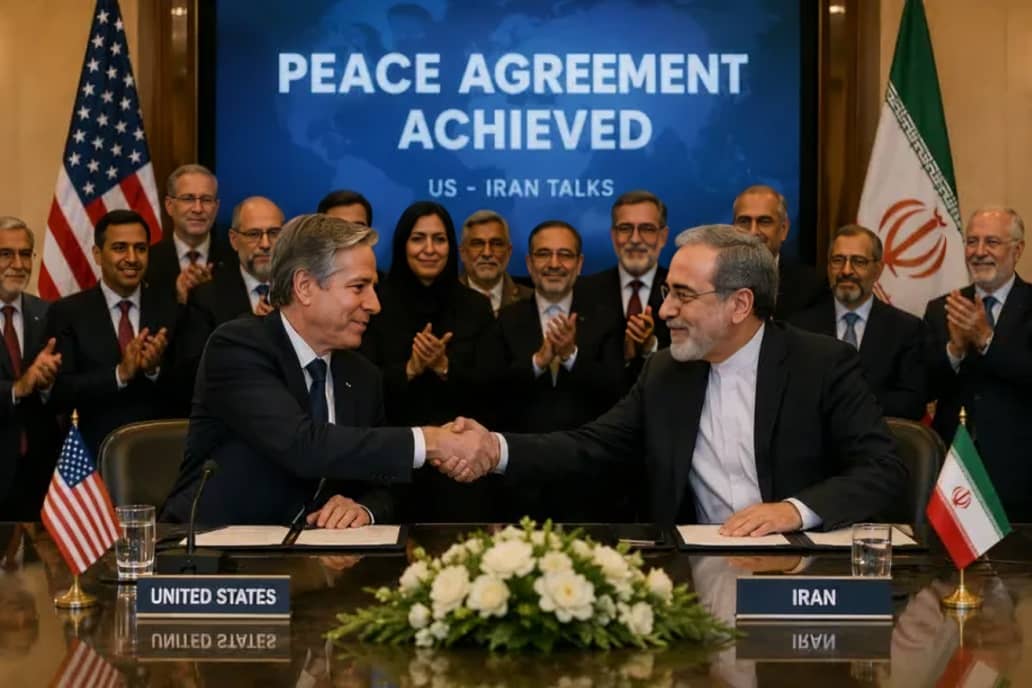

The announcement of a peace agreement between the United States and Iran is being viewed by logistics and trade industry experts as a potentially significant development for global freight markets and supply chain operations. Industry leaders believe that easing tensions in one of the world's most strategically important regions could create favorable conditions for international trade, shipping, and transportation services.
According to Shankar Shinde, Immediate Past Chairman of the Federation of Freight Forwarders' Association in India, the agreement could provide a much needed boost to the logistics industry. He noted that reduced geopolitical uncertainty often helps improve business confidence, supports smoother transportation networks, and contributes to greater stability in freight markets.
For several years, tensions in the Middle East have remained a major concern for shipping companies, exporters, importers, and energy market participants. The region is home to critical maritime trade routes that facilitate the movement of oil, gas, raw materials, and manufactured goods to destinations around the world. Any uncertainty affecting these routes can influence freight costs, insurance rates, delivery schedules, and overall trade efficiency.
Industry experts explain that peace and stability in key global trade corridors can have a direct impact on logistics operations. When geopolitical risks decline, shipping companies often face fewer disruptions, allowing them to optimize routes and improve operational planning. This can lead to more predictable transportation schedules and better utilization of shipping capacity.
One of the areas expected to benefit from reduced tensions is maritime trade. Global shipping companies rely heavily on secure and accessible sea routes to move goods between continents. Greater regional stability can help lower risk perceptions among shipping operators and insurers, potentially reducing costs associated with freight transportation.
The energy sector may also experience positive effects. The Middle East remains one of the world's most important energy producing regions, and any improvement in regional stability can support uninterrupted oil and gas exports. Stable energy supplies are often linked to greater predictability in fuel prices, which directly affect logistics and transportation costs.
Analysts believe that improved diplomatic relations can encourage stronger international trade activity. Businesses generally prefer operating in environments where geopolitical risks are lower, as this allows for better long term planning and investment decisions. Reduced uncertainty can therefore contribute to stronger economic activity across multiple sectors.
India's logistics industry closely monitors developments in international trade routes because of the country's growing role in global commerce. As one of the world's largest importers of energy resources and an important exporter of manufactured goods and services, India benefits from efficient and stable transportation networks. Positive developments in global trade conditions can support business growth and strengthen supply chain resilience.
Experts caution that the full economic impact of the agreement will depend on its implementation and long term sustainability. Freight markets are influenced by multiple factors, including fuel costs, trade volumes, economic growth, and global demand conditions. Nevertheless, reduced geopolitical tensions are generally considered a positive factor for the logistics sector.
The announcement has been welcomed by many participants in the freight and shipping industries who see it as an opportunity for improved market conditions. Industry stakeholders believe that stronger stability in key regions could encourage smoother movement of goods, enhance trade connectivity, and support continued growth in global commerce.
As international markets assess the implications of the agreement, logistics companies, exporters, and trade organizations will continue to monitor developments closely. For now, the peace agreement is being viewed as a constructive step that could contribute to greater confidence and stability across the global logistics and freight ecosystem.