
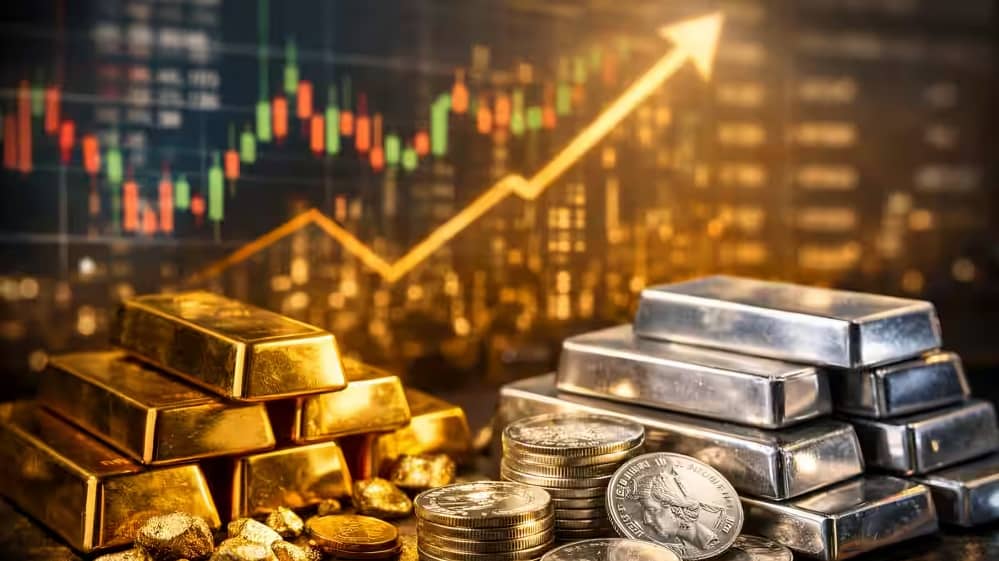
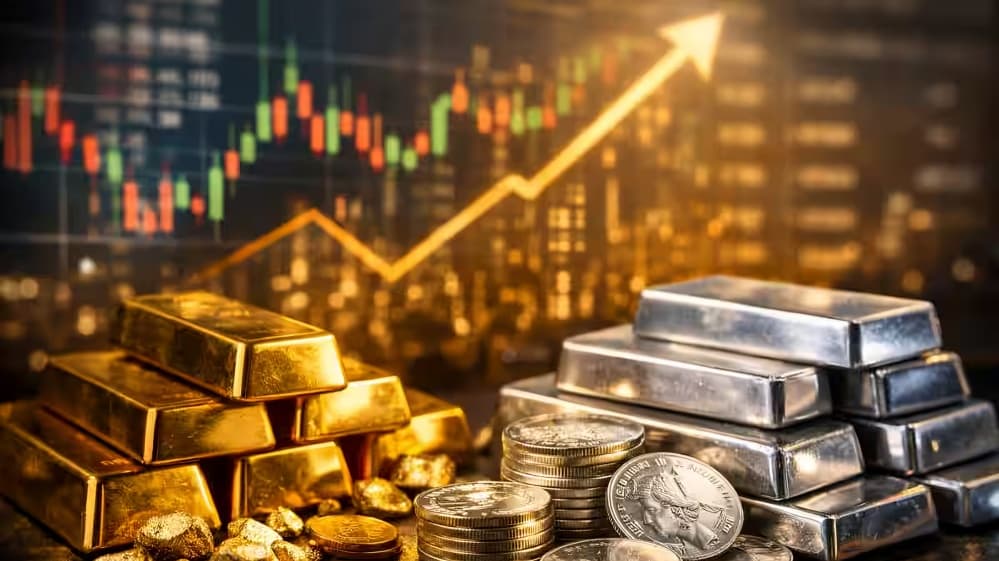
Gold and silver prices witnessed strong gains in early trading sessions as escalating geopolitical tensions in the Middle East triggered heightened investor caution across global financial markets. Precious metals, traditionally considered safe haven assets, attracted fresh buying interest amid concerns over potential economic disruptions.
On the international front, gold futures on the Commodity Exchange, commonly known as COMEX, surged to 5400 dollars per ounce on March 2. The price reflected an intraday increase of more than 2.5 percent during early trading hours. Silver futures also moved sharply higher, touching 96.930 dollars per ounce within minutes of the opening session, registering a gain of around 2 percent.
Market participants observed that investors shifted capital toward precious metals in response to growing tensions between Iran and Israel. Such geopolitical developments often prompt volatility in equity and currency markets, increasing the appeal of commodities perceived as stable stores of value.
Indian commodity markets mirrored the global trend. On the Multi Commodity Exchange, gold contracts opened at Rs 1,65,501 per 10 grams and climbed to an intraday high of Rs 1,67,915. The move represented a gain of more than Rs 5,500 per 10 grams within a single session. Similarly, MCX silver opened at Rs 2,78,644 per kilogram and advanced to Rs 2,85,978, reflecting an increase of nearly 3.75 percent.
Analysts suggest that the rally is primarily driven by risk aversion among global investors. During periods of geopolitical instability, demand for gold and silver typically rises as traders seek to hedge against potential currency fluctuations, stock market corrections and broader economic uncertainty.
In addition to geopolitical concerns, currency movements and global interest rate expectations also play a role in determining precious metal prices. A weaker dollar generally supports gold prices, as it makes the metal more affordable for holders of other currencies. Investors are closely monitoring central bank signals and macroeconomic indicators that could influence monetary policy decisions in the coming months.
Domestic demand in India may also be influenced by seasonal buying trends, though short term price spikes are largely linked to international market cues. Traders note that volatility could persist if geopolitical developments intensify or if financial markets react sharply to emerging news.
While current momentum reflects strong safe haven buying, experts caution that commodity prices can experience rapid corrections once uncertainty subsides. Investors are therefore advised to assess risk exposure carefully and monitor market updates before making trading decisions.
The movement in gold and silver underscores the sensitivity of global commodity markets to geopolitical events. As developments unfold in the Middle East, precious metals are likely to remain in focus for both institutional and retail investors.


