
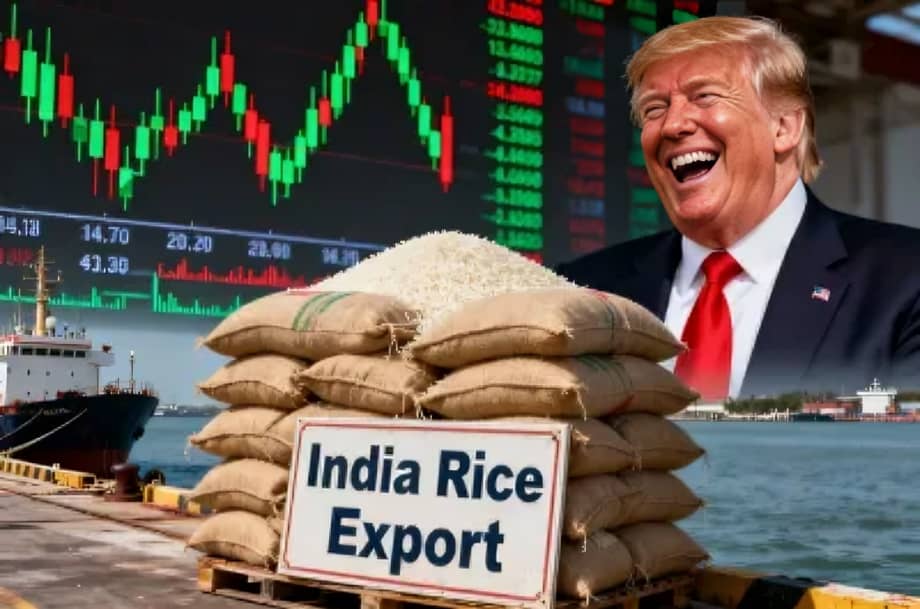
India’s basmati rice sector faced significant turbulence after US President Donald Trump made remarks regarding the possibility of imposing tariffs on Indian rice imports. Following the announcement, key basmati rice stocks in India dropped by almost 10%, signaling investor concern over potential disruptions to exports.
The US is one of the largest importers of Indian basmati rice, and any tariff could increase the cost of shipments, reducing India’s competitive edge in the international market. Exporters have voiced concern that higher duties could lead to lower demand from buyers and affect long-term trade agreements. The threat of tariffs has created uncertainty not only for large-scale producers but also for smaller traders who rely heavily on exports to the US.
Analysts suggest that the market reaction was swift due to the scale of the potential impact. Basmati rice, often considered a premium product in international markets, relies on India’s reputation for quality and consistency. Tariffs could disrupt the pricing structure, affect order volumes, and force exporters to adjust shipment schedules to maintain competitiveness.
Investors are reportedly reassessing exposure to rice stocks and closely monitoring policy developments. The market downturn reflects broader concerns about how international trade policies influence agricultural exports, particularly in commodities that are price-sensitive. In addition to potential tariffs, exporters are evaluating currency fluctuations, shipping costs, and demand from other international markets to mitigate losses.
Historically, India has faced similar challenges in its rice export sector, where changes in global trade policies and tariffs significantly affected revenues. Experts indicate that while a 10% drop in stocks is substantial, proactive strategies such as diversifying markets and negotiating favorable trade terms could help mitigate the impact. Some exporters are also exploring alternate destinations to reduce dependency on a single market and protect revenue streams.
Government agencies and trade bodies are expected to engage with US authorities and industry stakeholders to understand the potential implications of any tariff imposition. Policy intervention may include negotiations, trade diplomacy, and exploring incentives for exporters to maintain market stability.
In conclusion, President Trump’s remarks about potential tariffs on Indian rice imports have triggered a nearly 10% plunge in basmati rice stocks, highlighting the sensitivity of India’s agricultural export sector to international trade policies. Exporters and investors are carefully monitoring the situation, with strategies being devised to navigate market uncertainty and maintain competitiveness in global rice trade. The coming weeks will be crucial in determining the extent of impact and the measures taken to stabilize the sector.


