
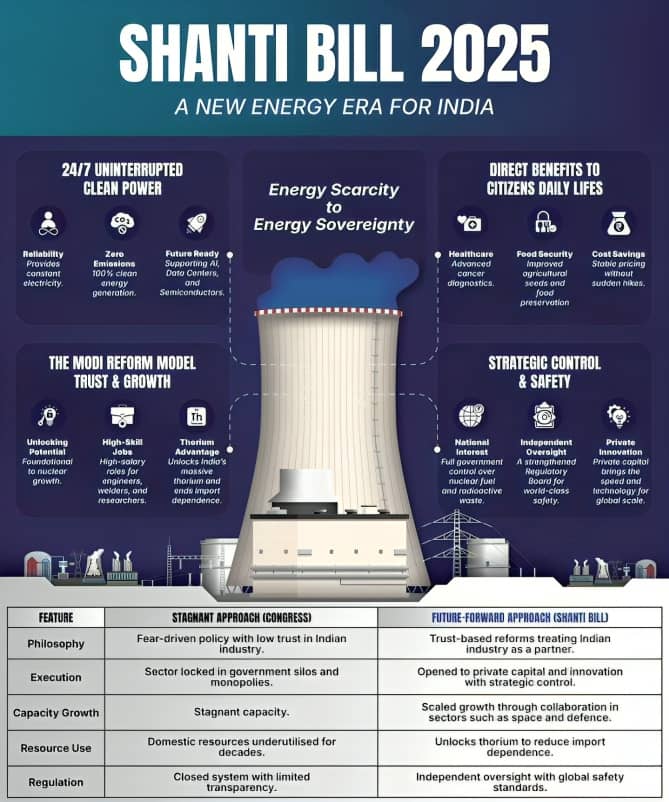
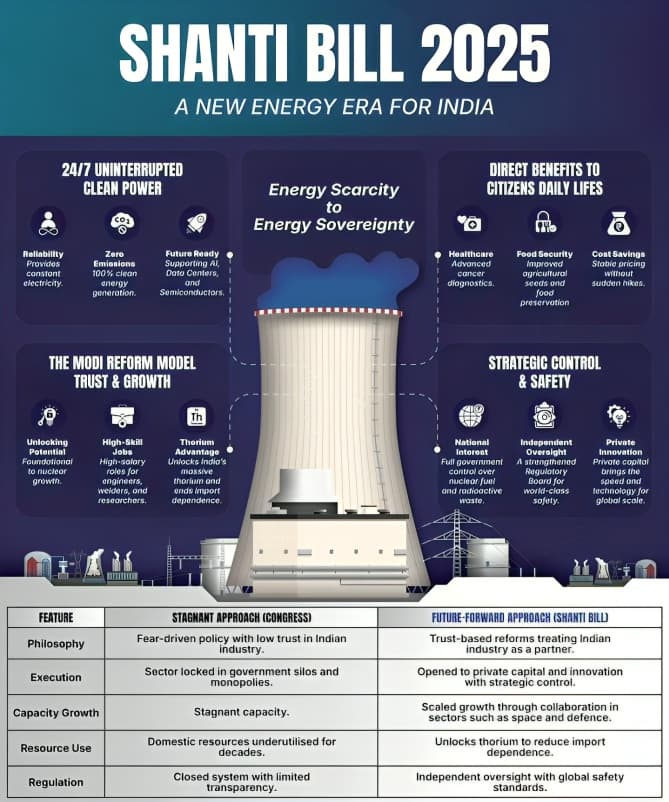
India’s proposed SHANTI Bill 2025 represents a major policy initiative aimed at reshaping the country’s nuclear energy landscape. As India looks to meet its growing energy needs while reducing carbon emissions, nuclear power is being positioned as a critical component of the nation’s clean energy strategy. The SHANTI Bill seeks to update and streamline existing nuclear regulations to support this objective.
At its core, the SHANTI Bill 2025 focuses on strengthening safety, transparency, and regulatory efficiency in the nuclear sector. The legislation proposes clearer guidelines for the development, operation, and oversight of nuclear power facilities. By reinforcing safety protocols and accountability mechanisms, the bill aims to enhance public confidence in nuclear energy projects.
One of the key highlights of the SHANTI Bill is its emphasis on regulatory clarity. The bill seeks to reduce ambiguity around licensing, liability, and operational responsibilities by clearly defining the roles of regulatory authorities and operators. This clarity is expected to improve coordination between government agencies and project developers, reducing delays and procedural bottlenecks.
The proposed law also aims to encourage greater investment in nuclear energy. By modernising legal provisions and aligning them with international best practices, the SHANTI Bill is expected to make India’s nuclear sector more attractive to both domestic and international stakeholders. This could support the expansion of nuclear capacity, including the development of new reactors and advanced nuclear technologies.
Another important aspect of the bill is its focus on sustainability and energy security. Nuclear power offers a stable and low carbon source of electricity, which can complement renewable energy sources such as solar and wind. By strengthening the legal framework for nuclear energy, the SHANTI Bill supports India’s broader climate commitments and long term energy security goals.
The bill also addresses safety oversight and emergency preparedness. Enhanced monitoring systems, stricter compliance requirements, and updated safety standards are intended to ensure that nuclear facilities operate in line with global norms. Policymakers have emphasized that public safety and environmental protection remain central to the proposed reforms.
Experts note that while the SHANTI Bill 2025 could unlock new opportunities for nuclear energy development, its implementation will require careful coordination, transparent communication, and strong institutional capacity. Public engagement and trust will be essential, particularly in regions where nuclear projects are planned.
If passed and effectively implemented, the SHANTI Bill 2025 could mark a turning point in India’s nuclear energy policy. By modernising regulations and reinforcing safety and investment frameworks, the bill has the potential to strengthen nuclear power’s role in India’s transition toward a cleaner and more secure energy future.


